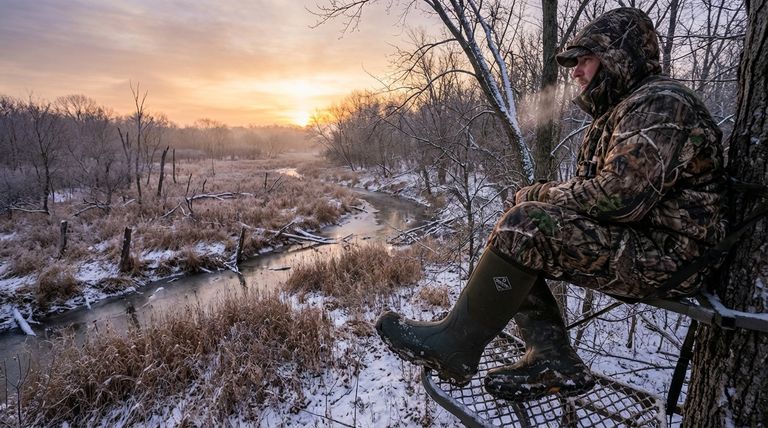
For Midwest hunting, the primary advantages of insulated rubber boots are their complete waterproof protection, exceptional scent control, and reliable warmth, making them uniquely suited for the region's often wet, cold, and scent-sensitive hunting conditions. Their durable, non-porous construction is ideal for traversing swamps, creeks, and snow-covered terrain while minimizing your human odor signature.
Insulated rubber boots provide an unparalleled combination of environmental protection—from water, cold, and scent detection. However, their core benefit is also their main trade-off: their non-breathable nature makes choosing the right insulation level for your activity and the specific weather absolutely critical for comfort.
The Core Advantages for Midwest Terrain
The Midwest presents a unique set of challenges, from saturated marshlands in the early season to sub-zero temperatures in the late season. Insulated rubber boots are engineered to address these specific demands directly.
Unmatched Waterproofing for Wet Conditions
The most significant advantage of a rubber boot is that it is 100% watertight. Unlike treated leather or fabric boots that can eventually soak through, a vulcanized rubber shell creates an impenetrable barrier.
This is essential for crossing creeks, sitting in damp waterfowl blinds, or navigating muddy, half-frozen fields, ensuring your feet remain completely dry.
Essential Scent Concealment
Rubber is a non-porous material, which means it does not absorb and retain odors the way leather or textiles do. This makes rubber boots a superior choice for scent-conscious deer hunters.
By preventing human scent from permeating your footwear, you drastically reduce the scent trail you leave when walking to and from your stand, a critical factor for hunting wary whitetails.
Reliable Warmth Through Insulation
For static activities like sitting in a treestand during a cold November morning, warmth is paramount. Insulated rubber boots, with options like 1200g Thinsulate, are designed to retain heat effectively.
Many hunters find that with the proper insulation level, they can remain comfortable in frigid temperatures, sometimes as low as -10°F, without needing excessive layers of socks which can restrict circulation.
Built for Durability
High-quality rubber boots are known for their durability and ability to maintain their shape over many seasons. The process of vulcanization strengthens the rubber, making it resistant to cracking and wear. This means they are a long-term investment that can handle the rigors of a harsh hunting environment.
Understanding the Trade-offs and Limitations
No piece of gear is perfect for every situation. Objectivity requires acknowledging where insulated rubber boots fall short.
The Challenge of Breathability
The same waterproof quality that keeps moisture out also traps it in. Rubber does not breathe, which can lead to your feet sweating during strenuous walks to your hunting spot.
If that sweat cools down once you become stationary, your feet can get cold even in well-insulated boots. Proper sock selection (avoiding cotton) is crucial to manage this moisture.
Support and Long-Distance Comfort
Compared to a traditional leather or synthetic lace-up hunting boot, rubber boots typically offer less ankle support and a less customized fit.
For hunters who cover many miles over uneven or hilly terrain, the lack of support can lead to foot fatigue and discomfort over extended periods.
Temperature Mismatches
A heavily insulated rubber boot that is perfect for a December deer hunt will be excessively hot and uncomfortable during an early-season archery hunt in September.
This lack of versatility means that dedicated Midwest hunters may need different footwear for different parts of the season to remain comfortable and effective.
Making the Right Choice for Your Hunt
Your decision should be based on your primary hunting style and the conditions you expect to face.
- If your primary focus is late-season, stationary treestand hunting: A heavily insulated rubber boot is arguably the best tool for the job, prioritizing warmth and scent control.
- If your primary focus is hunting in swamps, marshes, or river bottoms: The absolute waterproof nature of a rubber boot makes it a non-negotiable choice.
- If your primary focus is active, mobile hunting over many miles: Carefully weigh the scent control of rubber against the superior support and breathability of a quality leather or synthetic boot.
Ultimately, selecting the right boot is about matching the equipment's strengths to the precise demands of your hunt.
Summary Table:
| Key Advantage | Why It Matters for Midwest Hunting |
|---|---|
| 100% Waterproof | Keeps feet dry in swamps, creeks, and muddy fields. |
| Superior Scent Control | Non-porous rubber minimizes human odor for wary game. |
| Reliable Insulated Warmth | Ideal for stationary hunts in sub-zero temperatures. |
| Durable & Long-Lasting | Vulcanized rubber withstands harsh terrain season after season. |
Ready to Gear Up for Your Next Hunt?
As a large-scale manufacturer, 3515 produces a comprehensive range of high-performance insulated rubber boots for distributors, brand owners, and bulk clients. Our production capabilities ensure durable, 100% waterproof footwear designed for the toughest conditions.
Contact us today to discuss your hunting boot needs and discover how we can provide the right footwear for your target market.
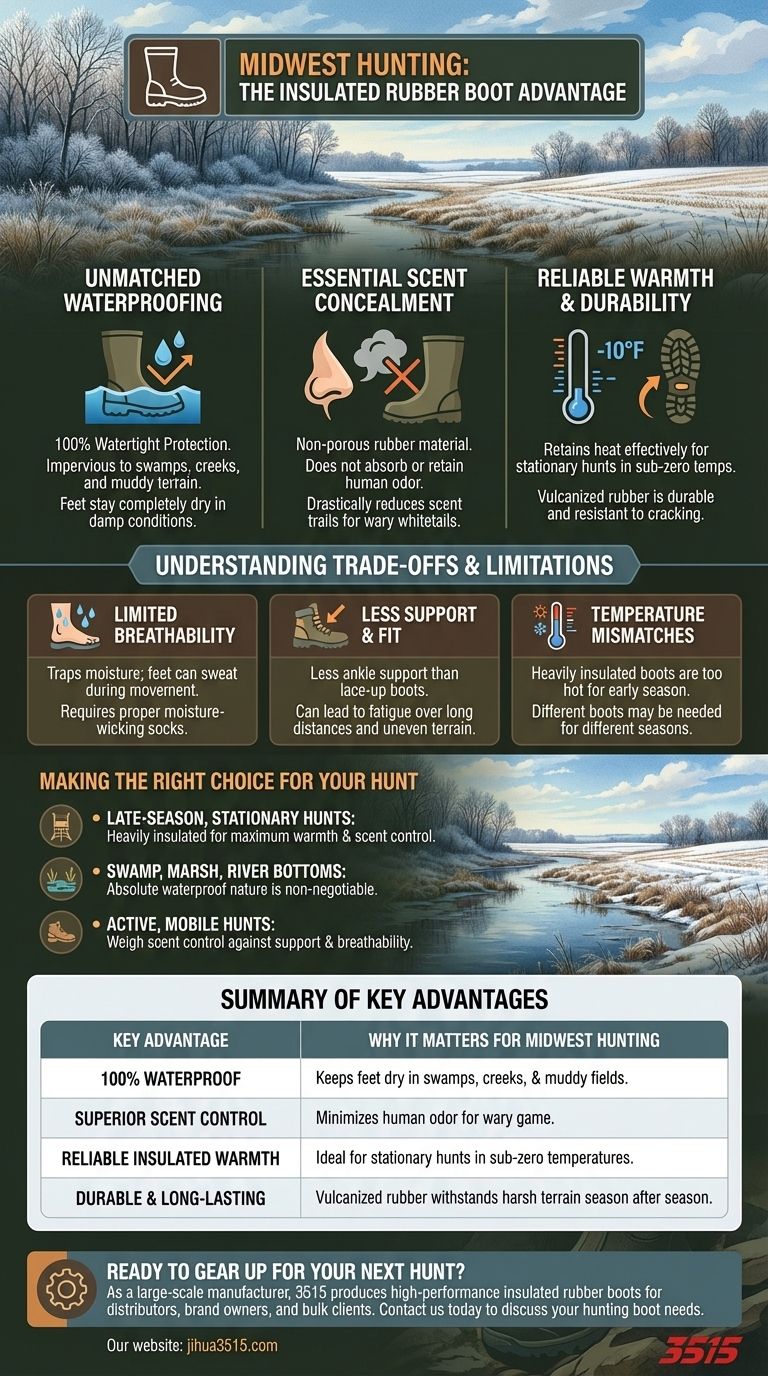
Visual Guide
Related Products
- Premium Insulated Safety Boots and Shoes for Wholesale & Bulk Orders
- Factory Direct Wholesale Rain Boots Durable Waterproof & Fully Customizable
- Durable Rubber Sole Outdoor Shoes Wholesale & Custom Manufacturing
- Wholesale Waterproof Tactical Boots Custom Suede & High-Traction Soles
- High-Traction Suede Tactical Boots Wholesale & Custom Manufacturing
People Also Ask
- What are the recommended insulation ratings for mild winter conditions? A Guide for Active & Stationary Workers
- How does insulation thickness correlate with temperature ranges? A Guide to Choosing the Right Warmth
- What insulation level is needed for severe cold and stationary work? 1200g or Higher is Essential
- What safety advantages do insulated boots offer beyond warmth? Dielectric Protection & Superior Grip
- How does fleece lining contribute to the warmth of insulated boots? Trapping Air for Superior Cold Protection