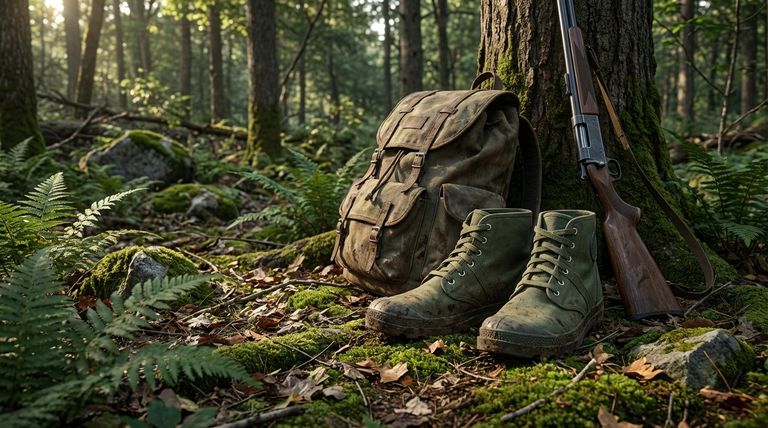
Ultimately, your hunting boots are a critical piece of performance gear. They are purpose-built tools that directly impact your safety, endurance, and ability to remain focused on the hunt. Their importance is second only to your primary weapon, as they provide the stable and comfortable foundation required to navigate challenging environments successfully.
The core function of a hunting boot is not just to cover your feet, but to mitigate the risks and fatigue associated with challenging terrain. Choosing the right boot is an investment in your safety, comfort, and overall effectiveness as a hunter.
The Functional Pillars of a Hunting Boot
A successful hunt often depends on your ability to move confidently and comfortably through the wilderness. The right boots are engineered to make this possible.
Ensuring Stability with Ankle Support
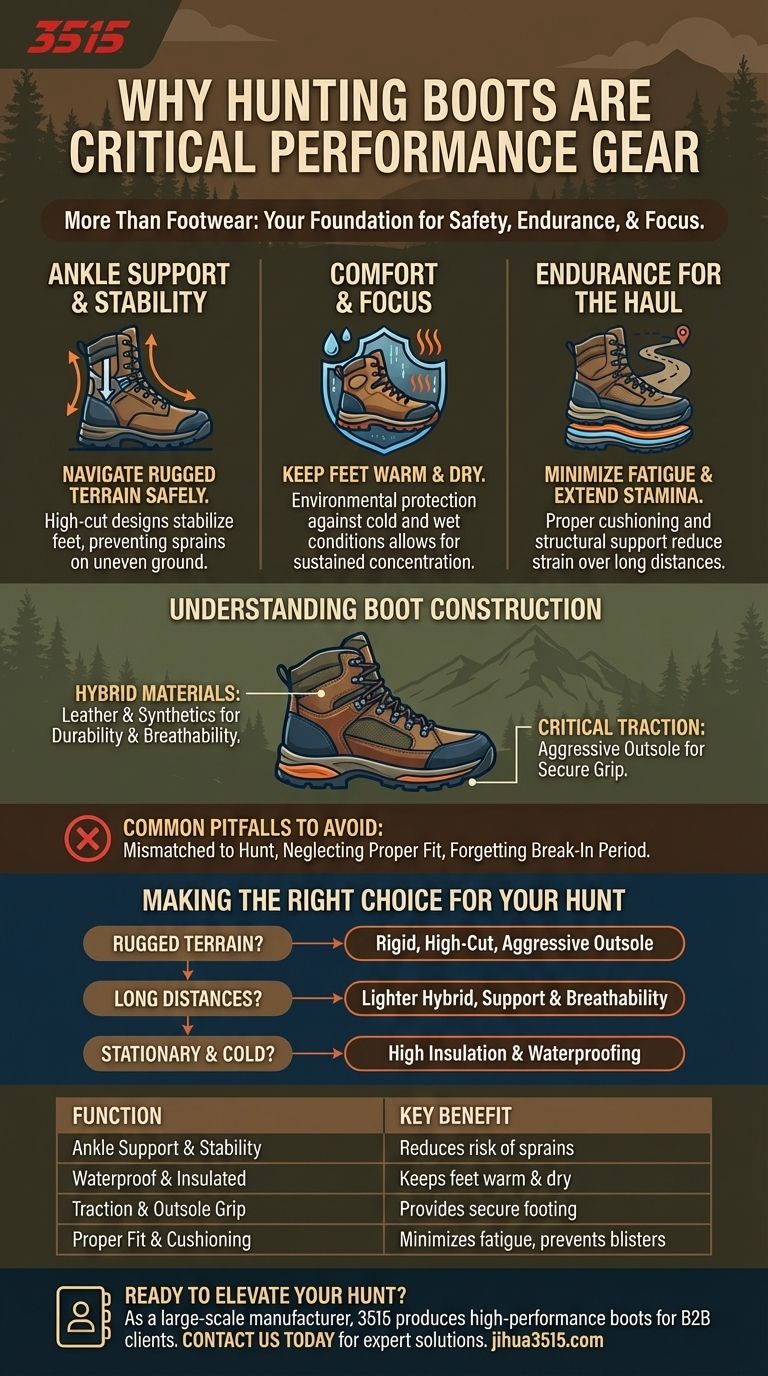
When navigating uneven or rugged terrain, the risk of a sprain or twisted ankle is significant. This is a primary safety concern that a quality boot addresses.
Boots with high-cut designs and rigid ankle support are essential. They work to stabilize your foot, keeping it properly aligned and drastically reducing the risk of rolling an ankle on rocks, hidden roots, or steep inclines.
Maintaining Comfort and Focus
Your ability to concentrate is directly tied to your physical comfort. Cold, wet feet are a major distraction and can quickly end a hunt.
Quality hunting boots are designed to keep your feet warm and dry. This environmental protection allows you to remain patient and focused for longer periods, whether you are trekking or remaining stationary.
Providing Endurance for the Long Haul
Hunting often involves covering long distances over difficult ground. Improper footwear leads to premature fatigue.
The right boots provide the necessary cushioning and structural support to minimize the strain on your feet and legs. This support is crucial for extending your range and stamina throughout the day.
Understanding Boot Construction
The materials and design of a boot dictate its performance in the field. Understanding these differences helps you match the boot to your specific needs.
The Impact of Materials
Modern hunting boots often blend different materials to achieve a balance of competing characteristics. There is no single "best" material; it depends on the intended use.
Hybrid hunting boots are a common and effective solution. They combine durable leather with lighter synthetic fabrics, offering a balance of ruggedness, reduced weight, and improved breathability.
The Critical Role of Traction
A boot's outsole is your only point of contact with the ground. An aggressive tread pattern is non-negotiable for providing a secure grip on wet leaves, mud, scree, or steep hillsides.
Common Pitfalls to Avoid
Even the best boots can fail if chosen or used incorrectly. Being aware of common mistakes is key to getting the most from your investment.
Mismatching the Boot to the Hunt
Using a lightweight, uninsulated boot for a cold, stationary hunt is a recipe for misery. Conversely, a heavily insulated boot will cause excessive sweating and discomfort during an active, warm-weather hunt.
Neglecting Proper Fit
Focusing only on features while ignoring fit is a critical error. A boot that is too loose will cause heel lift and blisters, while one that is too tight will create painful pressure points and restrict circulation.
Forgetting the Break-In Period
Wearing a brand-new, stiff pair of boots on a long hunt is a common mistake that can cause significant pain and ruin your experience. Always allow time to break in new footwear on shorter walks before a major trek.
Making the Right Choice for Your Hunt
Your choice should be dictated by the specific demands of your environment and hunting style.
- If your primary focus is navigating steep, rugged terrain: Prioritize boots with a rigid, high-cut design for maximum ankle support and an aggressive outsole for superior traction.
- If your primary focus is covering long distances on trails: Look for a lighter hybrid boot that balances support with flexibility and breathability to reduce fatigue.
- If your primary focus is staying warm and dry in a stationary position: Emphasize high levels of insulation and proven waterproof materials to ensure comfort during long sits.
Investing in the correct footwear is an investment in your own performance and safety in the field.
Summary Table:
| Hunting Boot Function | Key Benefit |
|---|---|
| Ankle Support & Stability | Reduces risk of sprains on rugged terrain |
| Waterproof & Insulated | Keeps feet warm and dry for long hunts |
| Traction & Outsole Grip | Provides secure footing on mud, rocks, and slopes |
| Proper Fit & Cushioning | Minimizes fatigue and prevents blisters |
Ready to Elevate Your Hunt with Superior Footwear?
As a large-scale manufacturer, 3515 produces a comprehensive range of high-performance hunting boots for distributors, brand owners, and bulk clients. Our production capabilities ensure durable, purpose-built footwear designed for stability, comfort, and endurance in any environment.
Contact us today to discuss your needs and discover how our boots can enhance your hunting experience. Get in touch via our contact form for expert support and custom solutions.
Visual Guide
Related Products
- Wholesale Lightweight Tactical Boots Custom Manufacturer for Desert & Combat Use
- High-Traction Suede Tactical Boots Wholesale & Custom Manufacturing
- Durable Leather Tactical Boots Wholesale & Custom Manufacturing for Brands
- Durable Military Combat Boots with Water Drainage for Wholesale & OEM
- Wholesale Waterproof Tactical Boots Custom Suede & High-Traction Soles
People Also Ask
- What are the common types of combat boots? Find the Right Boot for Your Mission
- What specialized protections do tactical boots offer? Maximize Endurance with High-Performance Footwear
- How does additive manufacturing equipment reduce environmental risks? Sustainable Tactics for Modern Footwear Production
- How is the compatibility of polymer materials demonstrated in smart footwear? Enhancing Tactical & Training Performance
- What are the different types of tactical boots available? Find the Right Boot for Your Mission