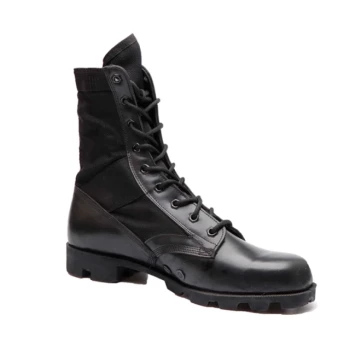
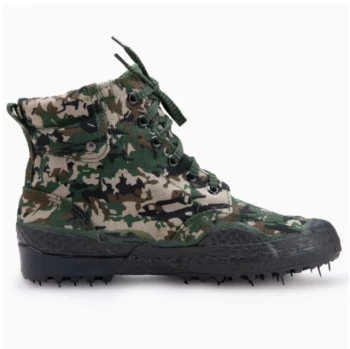
Choosing the right hunting boots is critical because they are your single most important interface with the environment. Your feet carry you over rocky trails, through muddy swamps, and across snowy fields. If your boots fail—causing pain, blisters, or wetness—your hunt can be compromised, no matter how skilled you are or how good your other gear is.
The goal is not to find the single "best" hunting boot, but to select the right boot for your specific terrain, season, and physical demands. Mismatching your footwear to the conditions is the most common reason for discomfort and failure in the field.
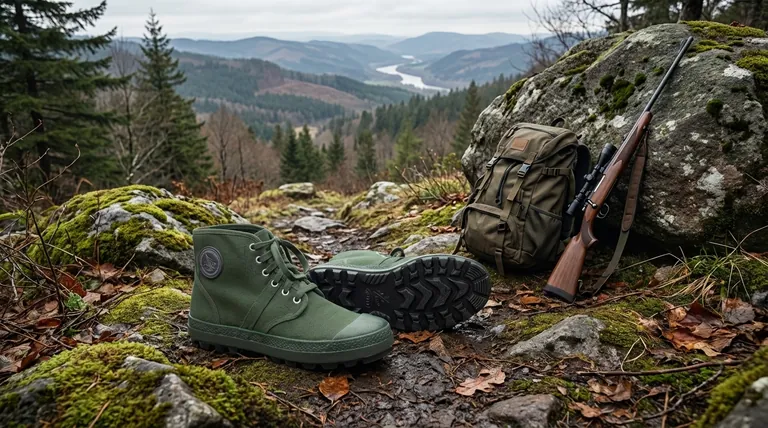
The Core Framework: Terrain, Season, and Load
Every decision about boot features flows from three fundamental questions. Before looking at any specific boot, you must first define the conditions you will face.
1. Where will you be hunting? (Terrain)
The ground beneath your feet dictates the necessary structure and material of your boot.
For Rocky, Mountainous Terrain Boots designed for mountains require a stiff sole and significant ankle support. This rigidity prevents your feet from flexing over every sharp rock and provides stability when navigating steep inclines and declines.
For Swamps, Marshes, and Wet Lowlands In sloppy, wet conditions, rubber boots are the superior choice. They are 100% watertight and inherently scent-free, which is a critical advantage. Their vulcanized rubber construction ensures durability in mud and water.
For Rolling Hills or Farmland On less demanding terrain, you can prioritize comfort and mobility. Lightweight boots, often made with synthetic materials like nylon, reduce leg fatigue over long distances and allow for a quieter stalk.
The Core Framework: Terrain, Season, and Load
Every decision about boot features flows from three fundamental questions. Before looking at any specific boot, you must first define the conditions you will face.
1. Where will you be hunting? (Terrain)
The ground beneath your feet dictates the necessary structure and material of your boot.
For Rocky, Mountainous Terrain Boots designed for mountains require a stiff sole and significant ankle support. This rigidity prevents your feet from flexing over every sharp rock and provides stability when navigating steep inclines and declines.
For Swamps, Marshes, and Wet Lowlands In sloppy, wet conditions, rubber boots are the superior choice. They are 100% watertight and inherently scent-free, which is a critical advantage. Their vulcanized rubber construction ensures durability in mud and water.
For Rolling Hills or Farmland On less demanding terrain, you can prioritize comfort and mobility. Lightweight boots, often made with synthetic materials like nylon, reduce leg fatigue over long distances and allow for a quieter stalk.
2. When will you be hunting? (Season)
Weather and temperature are the primary drivers for insulation and waterproofing needs.
Insulation for Cold Weather For cold climates, insulated boots are non-negotiable for warmth and safety. Insulation is measured in grams, and the right amount depends on your activity level and the ambient temperature.
Breathability for Warm Weather In warmer seasons, breathability becomes key to preventing sweaty, blister-prone feet. Non-insulated boots, especially those with synthetic mesh panels, allow moisture to escape, keeping your feet drier and more comfortable.
The Role of Waterproofing Nearly all hunting scenarios benefit from a waterproof membrane. Whether from morning dew, creek crossings, or unexpected rain, keeping your feet dry is essential for comfort and preventing blisters.
3. What will you be carrying? (Load)
Your body weight plus the weight of your pack determines how much support you need from your footwear.
Heavy Packs Demand More Support If you are carrying a heavy pack for a multi-day backcountry hunt, you need a stiffer boot with robust ankle support. The extra load puts immense strain on your feet and ankles, and a flimsy boot will lead to fatigue and potential injury.
Light Loads Allow for Lighter Boots For day hunts with a light pack, a more flexible and lightweight boot is ideal. It allows for greater mobility and conserves energy, letting you cover more ground comfortably.
Understanding the Trade-offs
There is no perfect, one-size-fits-all hunting boot. Every design choice involves a compromise.
Weight vs. Durability
Lightweight synthetic boots are excellent for reducing fatigue but may offer less long-term durability and protection than a traditional, heavy-duty leather boot.
Stiffness vs. Flexibility
A stiff, mountaineering-style boot provides incredible support on treacherous terrain but can feel clumsy and restrictive on flat ground. A flexible boot is quiet and comfortable for stalking but offers poor support under a heavy load.
Waterproofing vs. Breathability
While waterproof membranes are excellent at keeping water out, they can limit a boot's ability to vent sweat. In hot, dry conditions, a highly breathable, non-waterproof boot might keep your feet drier overall than a waterproof one.
Making the Right Choice for Your Hunt
Your boot choice should be a direct reflection of your primary hunting style and environment.
- If your primary focus is big game in steep, rugged mountains: Prioritize a stiff sole, robust ankle support, and durable leather or synthetic construction.
- If your primary focus is hunting in wet, marshy, or swampy lowlands: Choose tall, scent-free, and completely watertight rubber boots.
- If your primary focus is covering long distances on moderate terrain: Select a lightweight, flexible boot made from synthetic materials to minimize fatigue and maximize comfort.
Ultimately, the right hunting boots are the ones you don't notice, freeing you to focus completely on the pursuit.
Summary Table:
| Hunting Condition | Recommended Boot Type | Key Features |
|---|---|---|
| Rocky, Mountainous Terrain | Stiff-Sole Boots | Ankle support, rigid sole for stability |
| Swamps, Marshes, Wet Lowlands | Rubber Boots | 100% waterproof, scent-free, durable |
| Rolling Hills, Farmland | Lightweight Boots | Flexible, quiet, reduces fatigue |
| Cold Weather | Insulated Boots | Measured in grams for warmth and safety |
| Warm Weather | Breathable Boots | Mesh panels, moisture-wicking for comfort |
| Heavy Loads/Backpacking | Supportive Boots | Stiff construction, robust ankle support |
| Light Loads/Day Hunts | Flexible Boots | Lightweight, energy-efficient for mobility |
Ready to equip your next hunt with the perfect boots? As a large-scale manufacturer, 3515 produces a comprehensive range of hunting and outdoor footwear for distributors, brand owners, and bulk clients. Our production capabilities encompass all types of boots—from rugged mountain designs to lightweight, breathable options—ensuring durability, comfort, and performance tailored to your specific needs. Let us help you deliver the right footwear for every terrain and season. Contact us today to discuss your requirements and explore our full catalog!
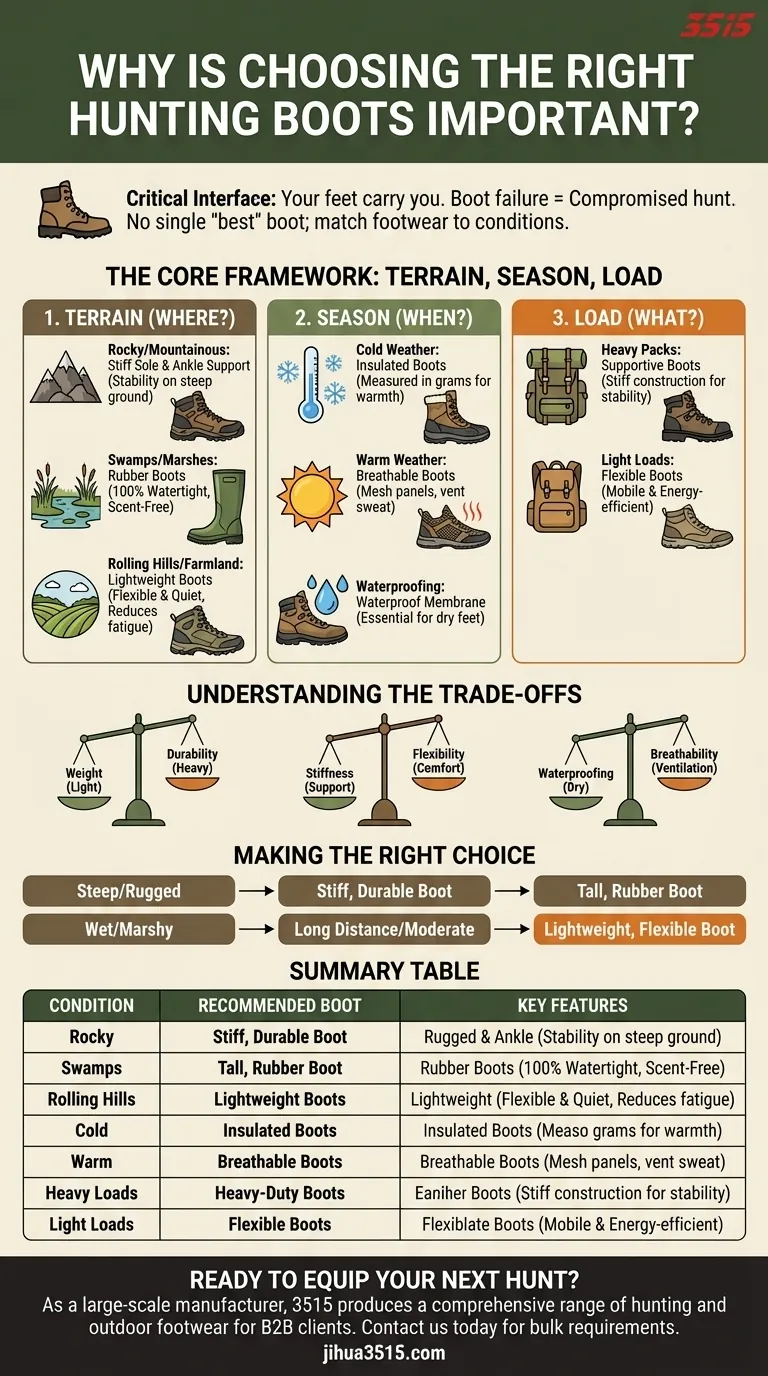
Visual Guide
Related Products
- Wholesale Lightweight Tactical Boots Custom Manufacturer for Desert & Combat Use
- High-Traction Suede Tactical Boots Wholesale & Custom Manufacturing
- Durable Leather Tactical Boots Wholesale & Custom Manufacturing for Brands
- Durable Military Combat Boots with Water Drainage for Wholesale & OEM
- Durable Spiked Camouflage Boots Wholesale & Factory Production
People Also Ask
- What are the common types of combat boots? Find the Right Boot for Your Mission
- What specialized protections do tactical boots offer? Maximize Endurance with High-Performance Footwear
- What is the role of high-frequency acquisition hardware in technical skill analysis for outdoor and tactical boots?
- How does additive manufacturing equipment reduce environmental risks? Sustainable Tactics for Modern Footwear Production
- How is the compatibility of polymer materials demonstrated in smart footwear? Enhancing Tactical & Training Performance