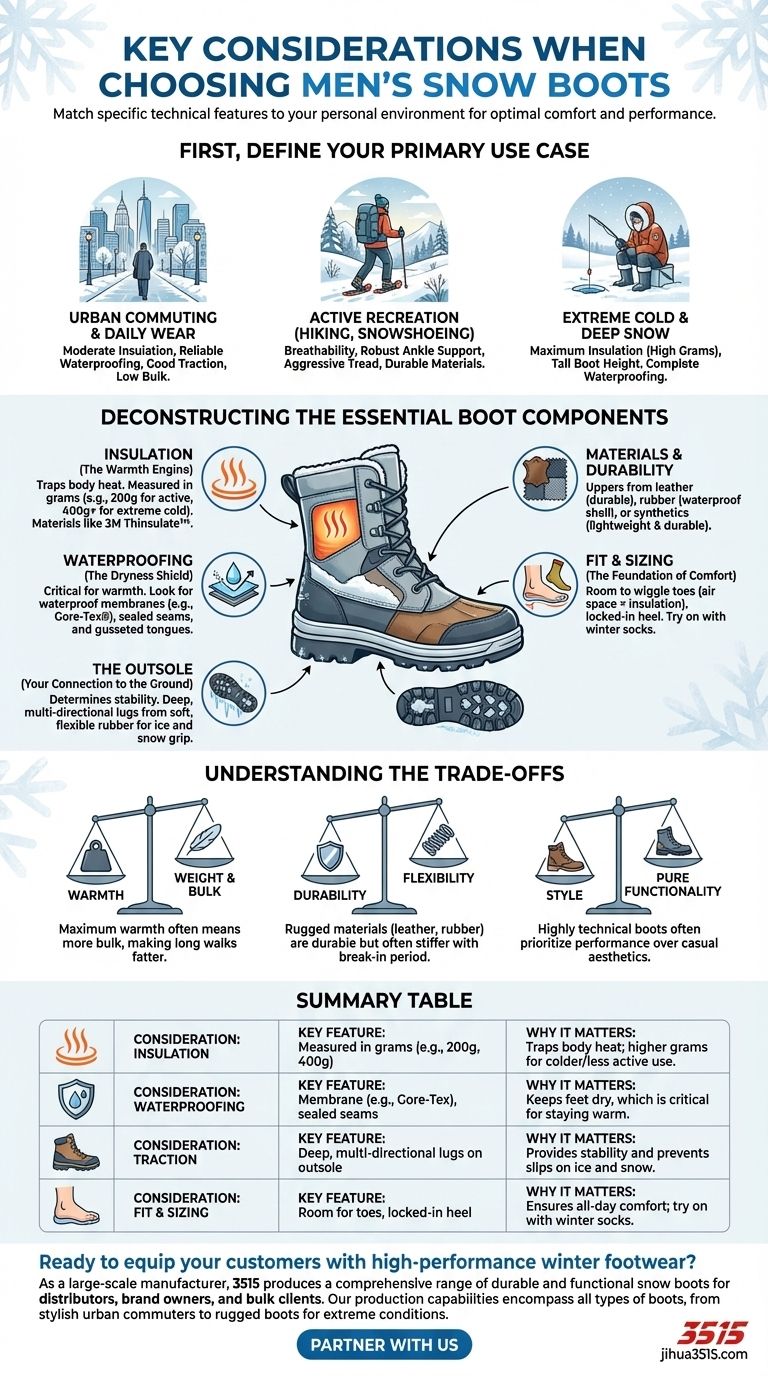
Choosing the right snow boot is a matter of matching specific technical features to your personal environment. The most critical considerations are the boot's level of insulation for warmth, its waterproofing system to keep you dry, the outsole's traction for safety on ice and snow, and a precise fit to ensure all-day comfort and performance.
The most common mistake is over-buying for your needs. The best snow boot isn't the one with the most insulation or the most aggressive tread; it's the one perfectly calibrated to your specific climate, activity level, and daily routine.
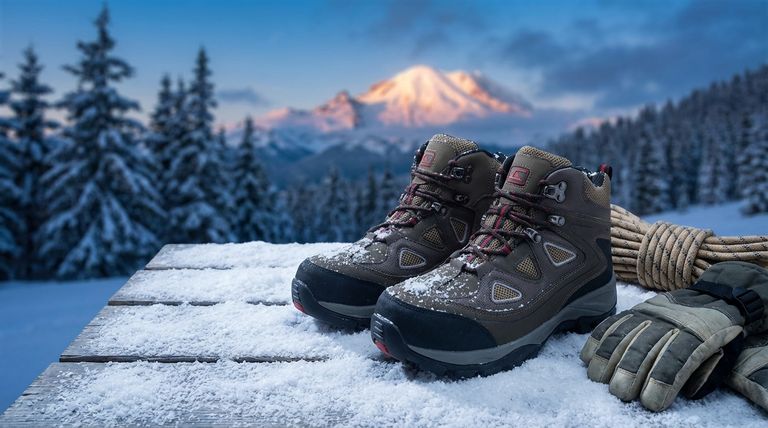
First, Define Your Primary Use Case
Before you can evaluate technical specifications, you must first be honest about how you will use the boots. A boot designed for arctic expeditions will be cumbersome and inefficient for a walk through a slushy city.
Urban Commuting and Daily Wear
For navigating cleared but potentially slushy or icy sidewalks, your priority is a balance. You need moderate insulation, reliable waterproofing, and good traction without excessive weight or bulk that makes walking feel clumsy.
Active Recreation (Hiking, Snowshoeing)
When you're generating your own body heat through activity, breathability becomes as important as insulation. Look for boots with robust ankle support, a more aggressive tread pattern for uneven terrain, and durable materials that can withstand abrasion.
Extreme Cold and Deep Snow
For prolonged periods in deep snow or frigid, static conditions (like late-season hunting or ice fishing), your focus must be on maximum protection. This means prioritizing a high insulation rating (often expressed in grams), taller boot heights to keep snow out, and complete waterproofing.
Deconstructing the Essential Boot Components
Once you understand your environment, you can effectively assess the features of any given boot.
Insulation (The Warmth Engine)
Insulation, often measured in grams (e.g., 200g, 400g), traps your body heat. Common materials include synthetics like 3M Thinsulate, which provide warmth without excessive bulk. A 200g rating is suitable for cool conditions or active use, while 400g and above is intended for very cold, less active scenarios.
Waterproofing (The Dryness Shield)
Staying dry is critical to staying warm. Look for boots with a waterproof membrane like Gore-Tex or a proprietary equivalent. Additionally, sealed seams and a gusseted tongue (one that is attached to the boot on both sides) are essential for preventing water from seeping in.
The Outsole (Your Connection to the Ground)
The outsole, or bottom of the boot, determines your stability. Look for deep, multi-directional lugs made from a soft rubber compound, which remains flexible and grippy in freezing temperatures. This provides the traction necessary to prevent slips on snow and ice.
Materials and Durability
Boot uppers are typically made from leather, rubber, or synthetics like nylon and Cordura. Full-grain leather is highly durable and can be waterproofed, while rubber shells offer guaranteed protection from slush and water. Synthetics offer an excellent balance of durability and low weight.
Fit and Sizing (The Foundation of Comfort)
A poor fit negates all other features. You should have enough room to wiggle your toes freely, as this air space contributes to insulation. However, your heel should be locked in place to prevent blisters. Always try boots on with the type of thick sock you'll wear in the winter, and consider wide-width options if you have wider feet.
Understanding the Trade-offs
There is no single "perfect" snow boot; every design choice involves a compromise. Understanding these trade-offs is key to making an intelligent decision.
Warmth vs. Weight and Bulk
Heavily insulated boots designed for extreme cold are, by necessity, heavier and bulkier. While they provide maximum thermal protection, they can be fatiguing to walk in over long distances and feel cumbersome for everyday tasks.
Durability vs. Flexibility
The most rugged materials, like thick leather or rubber, offer the best long-term durability and protection. However, they often require a break-in period and can feel stiffer than lighter, synthetic options.
Style vs. Pure Functionality
Many highly functional snow boots prioritize performance over aesthetics. You must decide where you fall on this spectrum. While many brands now offer stylish and capable options, the most technically advanced boots for extreme conditions rarely look like a casual shoe.
Making the Right Choice for Your Goal
Filter your options by identifying your single most important priority.
- If your primary focus is commuting in cold, slushy cities: Prioritize a waterproof boot with moderate (around 200g) insulation and a low-profile design for comfortable walking.
- If your primary focus is active winter hiking and recreation: Select a boot with excellent ankle support, an aggressive outsole for variable terrain, and a breathable waterproof membrane.
- If your primary focus is maximum protection in extreme cold and deep snow: Choose a taller boot with a high insulation rating (400g+) and a fully waterproof rubber shell or sealed-seam construction.
A well-chosen boot empowers you to move through winter with confidence and comfort.
Summary Table:
| Consideration | Key Feature | Why It Matters |
|---|---|---|
| Insulation | Measured in grams (e.g., 200g, 400g) | Traps body heat; higher grams for colder/less active use. |
| Waterproofing | Membrane (e.g., Gore-Tex), sealed seams | Keeps feet dry, which is critical for staying warm. |
| Traction | Deep, multi-directional lugs on outsole | Provides stability and prevents slips on ice and snow. |
| Fit & Sizing | Room for toes, locked-in heel | Ensures all-day comfort and performance; try on with winter socks. |
Ready to equip your customers with high-performance winter footwear?
As a large-scale manufacturer, 3515 produces a comprehensive range of durable and functional snow boots for distributors, brand owners, and bulk clients. Our production capabilities encompass all types of boots, from stylish urban commuters to rugged boots for extreme conditions, ensuring your customers get the perfect blend of warmth, traction, and comfort.
Partner with us to source reliable winter footwear that builds trust and drives sales.
Contact our team today to discuss your specific needs and request a catalog.
Visual Guide
Related Products
- Wholesale Leather Ankle Boots with Lug Soles for Custom Brand Manufacturing
- Factory Direct Wholesale Rain Boots Durable Waterproof & Fully Customizable
- Factory Direct Wholesale Leather Comfort Shoes with Dial Closure
- Durable Waterproof Rain Boots | Custom Manufacturer for Wholesale & Brands
- Wholesale Waterproof Tactical Boots Custom Suede & High-Traction Soles
People Also Ask
- What is the difference between full-grain and top-grain leather? Premium Material Guide for Boot Manufacturers
- What are the key qualities of leather for work boots? Superior Durability, Breathability & Custom Fit
- What is the complete process for deep cleaning leather work boots? A Step-by-Step Guide to Preserve Your Investment
- What are the advantages of leather uppers in work boots? Unmatched Durability & Protection
- How should new leather work boots be broken in? A Guide to Comfort and Durability