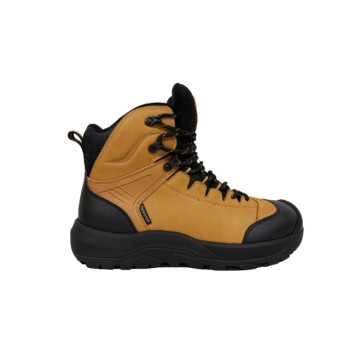
At its core, the primary difference is one of purpose-built design. Snow boots are engineered with waterproofing as a non-negotiable, core feature for direct contact with deep snow and slush. Winter boots are a broader category where water resistance is a variable feature, often secondary to style or warmth for cold, dry conditions.
The critical distinction is not simply "waterproof vs. non-waterproof." It's about understanding that snow boots are a specialized tool for wet winter conditions, while winter boots offer a wider range of protection levels for more varied, often less severe, environments.
What Defines a Snow Boot's Waterproofing?
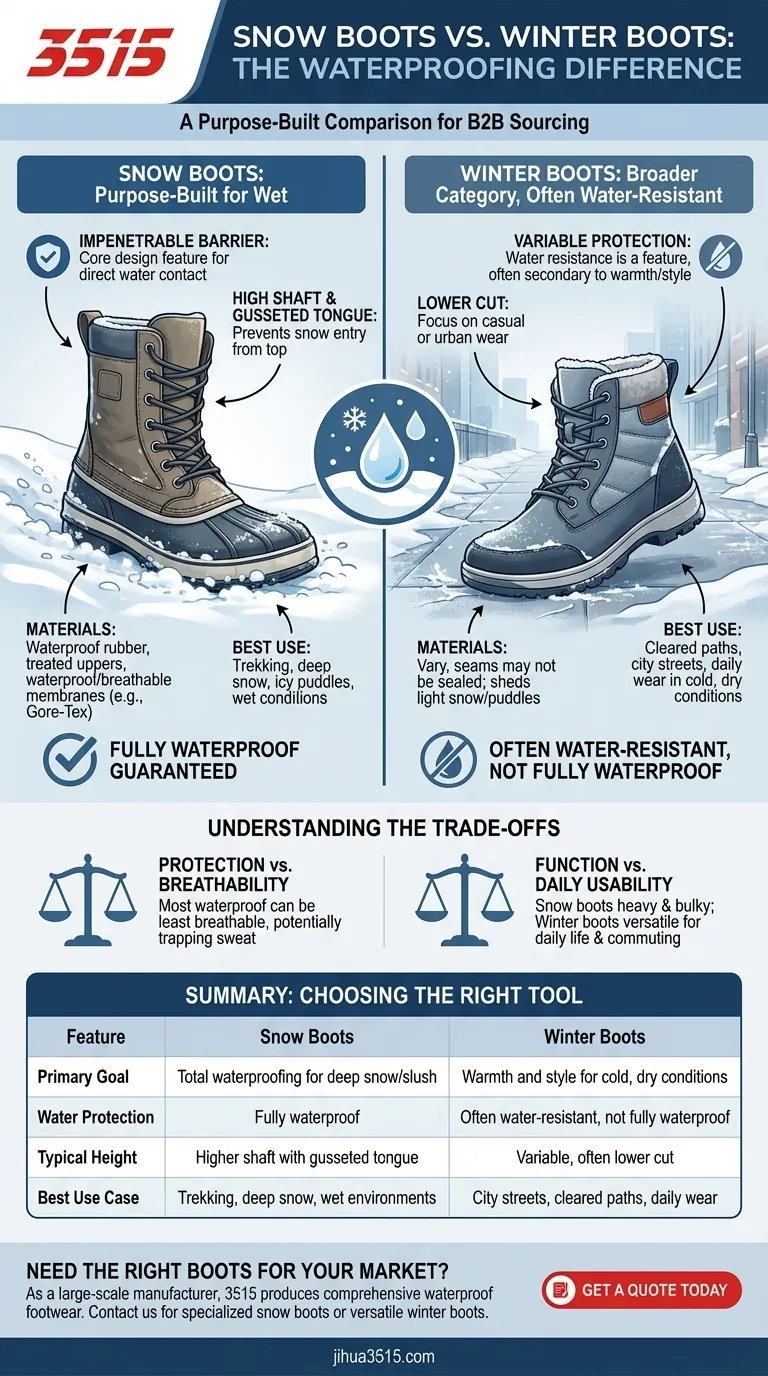
Snow boots are built on the principle that your feet will be submerged in wetness. Their design choices all stem from the need to create an impenetrable barrier against moisture, because wet feet in freezing temperatures are a serious problem.
Purpose-Built for Snow and Slush
A true snow boot assumes you will be trekking through deep snow, stepping in icy puddles, and dealing with melting slush. Its entire construction is focused on keeping that moisture out.
The Role of Height and Gusseted Tongues
Snow boots typically have higher shafts to prevent snow from entering from the top. They also feature a "gusseted" tongue, where the tongue is connected to the upper along the sides to create a waterproof seal up to the ankle.
Materials and Construction
Most snow boots use a combination of a waterproof rubber shell on the lower portion and treated leather or synthetic uppers. Critically, they often include a built-in waterproof and breathable membrane, such as Gore-Tex, that is laminated between the outer material and the inner lining.
Where Do Winter Boots Fit In?
Winter boots are designed to solve a different, broader problem: keeping feet warm and stable during the cold season. Their approach to water protection is more varied and less absolute than that of a dedicated snow boot.
A Focus on Warmth and Style
Many winter boots prioritize insulation for warmth and a design that is suitable for casual or urban wear. They are intended for use on cleared sidewalks, maintained paths, and in cold but relatively dry environments.
Water-Resistance vs. Waterproofing
A winter boot is often water-resistant, meaning its materials will shed light snow or resist soaking from a brief walk through a puddle. However, its seams may not be sealed, and its materials may eventually become saturated with prolonged exposure to wetness.
When Versatility is Key
Winter boots are the ideal choice for daily errands in a cold city, commuting to work, or general use where you aren't expecting to trudge through deep, wet snow. They offer a balance of warmth, grip, and style that a specialized snow boot often lacks.
Understanding the Trade-offs
Choosing the right boot means acknowledging that every design feature comes with a compromise. Absolute protection in one area often means a sacrifice in another.
Protection vs. Breathability
The most waterproof boots, like those with a full rubber shell, can also be the least breathable. While they keep external moisture out, they can also trap sweat, which can lead to cold, damp feet. This is why high-end snow boots use breathable membranes to allow sweat vapor to escape.
Function vs. Daily Usability
Snow boots are highly functional but can be heavy, bulky, and stylistically limiting. They are specialized equipment. Winter boots offer far more versatility for everyday life, easily transitioning from a cold street to an indoor office.
The Need for Maintenance
No waterproofing is permanent. Over time, coatings wear off and materials can degrade. To maintain performance, both boot types may require cleaning and the reapplication of waterproofing sprays, waxes, or creams depending on their material.
Making the Right Choice for Your Needs
Your decision should be based entirely on the conditions you most frequently expect to face.
- If your primary focus is deep snow, slush, and very wet conditions: You need a dedicated snow boot with a high shaft and guaranteed waterproof construction.
- If your primary focus is cold, dry city streets and cleared paths: A stylish, insulated winter boot with water-resistant properties is the more practical and versatile choice.
- If your primary focus is a mix of moderate snow and urban commuting: Look for a hybrid winter boot that features sealed seams and a waterproof membrane for enhanced protection.
Ultimately, choosing the right footwear is about selecting the correct tool for the job to ensure your feet remain warm, dry, and comfortable all winter long.
Summary Table:
| Feature | Snow Boots | Winter Boots |
|---|---|---|
| Primary Goal | Total waterproofing for deep snow/slush | Warmth and style for cold, dry conditions |
| Water Protection | Fully waterproof (e.g., Gore-Tex membrane) | Often water-resistant, not fully waterproof |
| Typical Height | Higher shaft with gusseted tongue | Variable, often lower cut |
| Best Use Case | Trekking, deep snow, wet environments | City streets, cleared paths, daily wear |
Need the Right Boots for Your Market?
As a large-scale manufacturer, 3515 produces a comprehensive range of waterproof footwear for distributors, brand owners, and bulk clients. Whether you need specialized snow boots with guaranteed waterproofing or versatile winter boots for urban styles, our production capabilities encompass all types of shoes and boots to meet your exact specifications and market demands.
Let's discuss your next order: Contact our team today to get a quote and learn how we can deliver quality, comfort, and performance for your customers.
Visual Guide
Related Products
- Premium Insulated Safety Boots and Shoes for Wholesale & Bulk Orders
- Factory Direct Wholesale Rain Boots Durable Waterproof & Fully Customizable
- Durable Waterproof Rain Boots | Custom Manufacturer for Wholesale & Brands
- Wholesale Waterproof Tactical Boots Custom Suede & High-Traction Soles
- Wholesale Lightweight Tactical Boots Custom Manufacturer for Desert & Combat Use
People Also Ask
- What are the recommended insulation ratings for mild winter conditions? A Guide for Active & Stationary Workers
- How does insulation thickness correlate with temperature ranges? A Guide to Choosing the Right Warmth
- What insulation level is needed for severe cold and stationary work? 1200g or Higher is Essential
- What safety advantages do insulated boots offer beyond warmth? Dielectric Protection & Superior Grip
- How does fleece lining contribute to the warmth of insulated boots? Trapping Air for Superior Cold Protection