
For most common gardening tasks, short boots are recommended because they provide the ideal balance of protection, breathability, and mobility. They shield your feet from mud, moisture, and insects without the restrictive heat and weight of a taller boot, making them the most practical choice for a wide range of activities.
The decision between short and tall gardening boots is not about which is universally "better," but about matching the level of coverage to your specific environment and the intensity of your work.
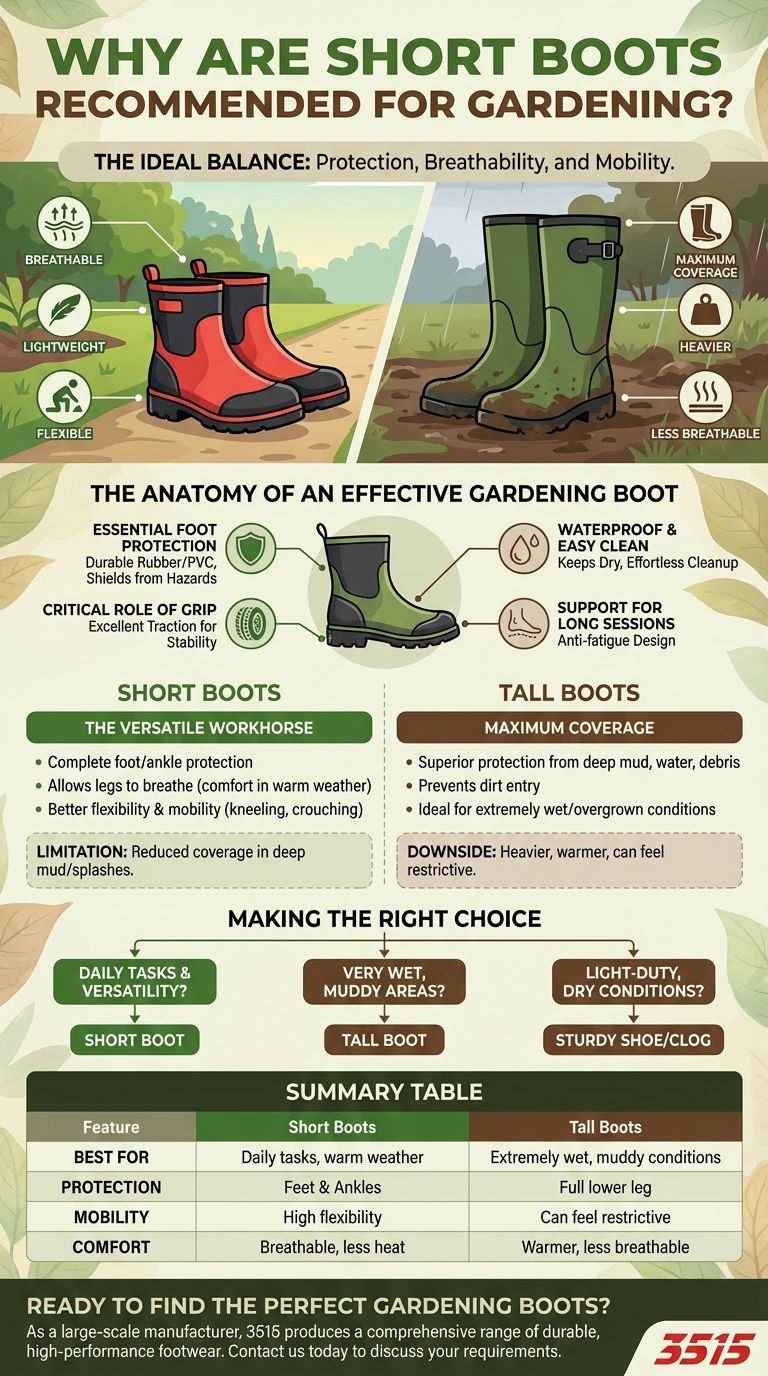
The Anatomy of an Effective Gardening Boot
Before focusing on height, it's crucial to understand the foundational features that separate proper gardening footwear from standard shoes. These elements are non-negotiable for safety, comfort, and efficiency.
Essential Foot Protection
Dedicated gardening boots are designed to shield your feet from hazards. Unlike everyday shoes, they use durable materials like natural rubber or PVC to protect against moisture, sharp tools, and biting insects.
This specialized construction also prevents the premature wear and tear that regular sneakers or shoes would suffer in damp, abrasive garden environments.
The Critical Role of Grip and Traction
Gardening often requires you to work on uneven, soft, or slippery surfaces. A quality boot must have excellent grip and traction soles to prevent falls on wet soil, slick grass, or muddy inclines.
This feature is a cornerstone of safety, providing the stability needed to work confidently.
Waterproofing and Ease of Cleaning
Effective gardening boots are inherently waterproof. This not only keeps your feet dry and comfortable but also makes cleanup effortless.
Materials like flexible rubber are designed to let mud slide off with a simple rinse, extending the life of the boots and keeping your home clean.
Support for Long Sessions
Gardening can involve standing, crouching, and walking for extended periods. Good boots provide necessary foot and ankle support, often with anti-fatigue designs, to enhance comfort and reduce strain during long sessions in the garden.
Why Boot Height is the Deciding Factor
With the core features established, the choice between a short and a tall boot comes down to a direct trade-off between coverage and comfort.
The Case for Short Boots: Balanced Performance
Short boots are the versatile workhorse for the majority of gardening scenarios. They provide complete foot and ankle protection while allowing your legs to breathe, which significantly increases comfort in warm or moderate weather.
Their lower height offers better flexibility and mobility, making them ideal for tasks that require frequent kneeling or crouching, such as deep weeding or planting.
The Case for Tall Boots: Maximum Coverage
Tall boots, like traditional rain boots, excel in providing maximum protection from the elements. Their high shaft is superior at preventing water, dirt, and debris from entering the boot.
They are the best choice when working in extremely wet, muddy conditions, tall wet grass, or areas where you need to guard against pests on your lower legs.
Understanding the Trade-offs
Choosing the right boot means acknowledging the limitations of each style. Objectivity is key to making the best decision for your needs.
The Limitation of Short Boots
The primary drawback of short boots is their reduced coverage. They offer less protection against deep mud, significant water splashes, and determined insects. In messy conditions, soil and other debris can more easily fall inside the boot.
The Downside of Tall Boots
While highly protective, tall boots can be a disadvantage in many situations. They are often heavier, warmer, and less breathable, which can lead to discomfort during long work sessions in the sun. Their height can also feel restrictive and cumbersome for agile movements.
Making the Right Choice for Your Garden
Select your footwear by matching its design to your most common gardening activities and climate.
- If your primary focus is all-around versatility for daily tasks: A short, waterproof boot offers the best combination of protection, comfort, and mobility.
- If your primary focus is working in very wet, muddy, or overgrown areas: A tall boot provides the superior coverage needed to keep you clean and dry.
- If your primary focus is light-duty work in consistently dry conditions: A sturdy, closed-toe gardening shoe or clog can provide adequate protection and maximum breathability.
Ultimately, the right gardening boot is the one that lets you focus on your plants, not on your feet.
Summary Table:
| Feature | Short Boots | Tall Boots |
|---|---|---|
| Best For | Daily gardening tasks, warm weather | Extremely wet, muddy conditions |
| Protection | Feet & ankles from mud, moisture | Full lower leg from deep mud & debris |
| Mobility | High flexibility for kneeling/crouching | Can feel restrictive and heavy |
| Comfort | Breathable, less heat buildup | Warmer, can be less comfortable in sun |
Ready to find the perfect gardening boots for your needs?
As a large-scale manufacturer, 3515 produces a comprehensive range of durable, high-performance footwear for distributors, brand owners, and bulk clients. Our production capabilities encompass all types of waterproof boots and shoes, ensuring you get the ideal product for your market.
Contact us today to discuss your requirements and discover how we can support your business with reliable, high-quality footwear solutions.
Visual Guide
Related Products
- Wholesale Durable Mid-Cut Tactical Boots for Custom & Private Label Brands
- Wholesale Lightweight Tactical Boots Custom Manufacturer for Desert & Combat Use
- Wholesale Lightweight Tactical Boots with Dial Closure OEM & Bulk Orders
- Premium Wholesale Tactical Style Safety Shoes Boots with Quick Lacing
- Durable Goodyear Welt Leather Work Boots for Wholesale & Private Label
People Also Ask
- What are the weight and mobility differences between combat and tactical boots? Choose the Right Boot for Your Mission
- Can tactical boots be stylish for everyday wear? Yes, with the right styling and features.
- What are some key features of top-tier tactical boots for 2023? Find the Perfect Boot for Your Mission
- What are the main construction similarities between tactical boots and tactical sneakers? Built for Performance & Durability
- How should tactical boots be stored to maintain their condition? Protect Your Gear Investment














