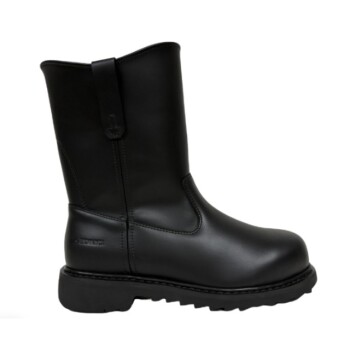
In short, high-quality oil field boots are defined by three pillars: certified protection, rugged durability, and environment-specific comfort. These boots must feature non-negotiable safety elements like a certified safety toe and a slip-resistant outsole, be constructed from durable materials like high-grade leather with a Goodyear welt, and include features like waterproofing or insulation to match your specific work climate.
The most effective oil field boot is not the one with the most features, but the one with the right system of features. It functions as a piece of essential personal protective equipment (PPE) designed to mitigate the specific hazards of your job site, from impact and puncture to chemical spills and extreme weather.
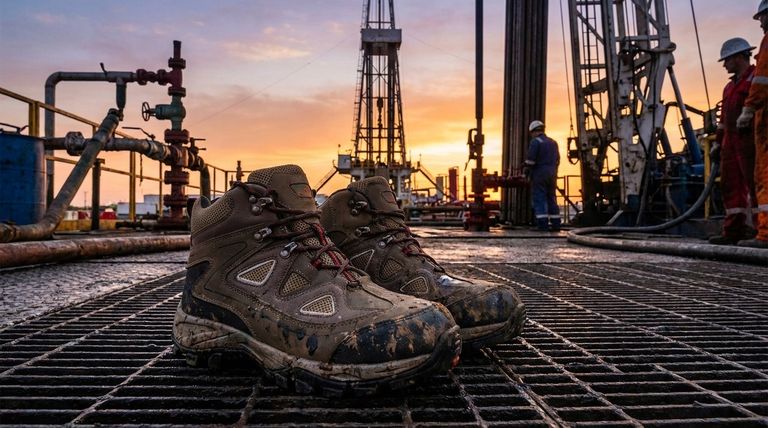
The Foundation of Protection: Core Safety Features
Your boots are your first line of defense against immediate, on-site hazards. These features are not optional; they are the baseline for any boot you should consider for oil field work.
Impact & Compression Resistance (Safety Toes)
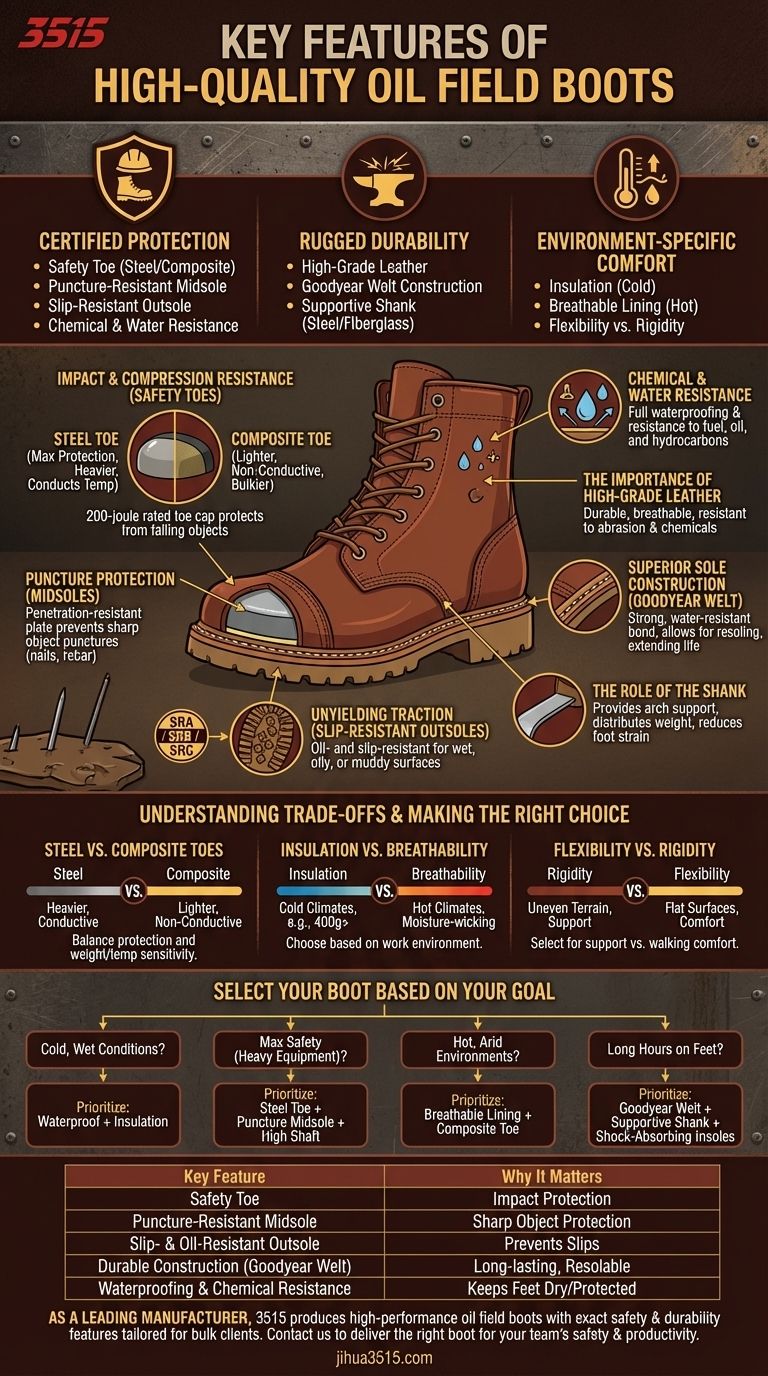
A safety toe cap is critical for protecting your feet from falling objects and heavy rolling equipment. The industry standard is a 200-joule rated toe cap, which comes in two primary materials: steel and composite.
Puncture Protection (Midsoles)
The ground on a work site is often littered with sharp objects like nails, scrap metal, and rebar. A penetration-resistant midsole is a plate integrated above the outsole to prevent these hazards from piercing through the bottom of your boot.
Unyielding Traction (Slip-Resistant Outsoles)
Slips, trips, and falls are a leading cause of injury, especially on surfaces slick with oil, water, or drilling mud. Look for an oil- and slip-resistant outsole. These are often rated with codes like SRA, SRB, or SRC (SRC being the highest, tested on both ceramic and steel surfaces).
Chemical & Water Resistance
Your boots must shield you from the elements and workplace chemicals. Full waterproofing is essential for most environments, while resistance to fuel and oil ensures the boot's materials won't degrade upon exposure to common hydrocarbons.
Built to Last: Hallmarks of Durability
An oil field subjects footwear to extreme abuse. Durability isn't a luxury; it's a requirement for both safety and long-term value. A boot that fails prematurely is a safety risk.
The Importance of High-Grade Leather
The upper part of the boot should be made from a high-quality, full-grain leather. This material offers the best combination of durability, breathability, and resistance to abrasion and chemicals.
Superior Sole Construction (Goodyear Welt)
Goodyear welt construction is a time-tested method of stitching the boot's upper to the sole, creating an exceptionally strong, stable, and water-resistant bond. This also allows the boot to be resoled, extending its usable life significantly.
The Role of the Shank
A shank, typically made of steel or fiberglass, is a rigid piece built into the midsole between the heel and the ball of your foot. It provides crucial arch support, distributes your weight evenly, and reduces the strain on your feet during long hours of standing or climbing.
Understanding the Trade-offs
Choosing the perfect boot involves balancing competing features. Understanding these trade-offs will help you select a boot optimized for your specific needs rather than a generic one.
Steel vs. Composite Toes
Steel toes offer maximum protection and have been the industry standard for decades. However, they are heavier and conduct heat and cold. Composite toes are lighter, don't conduct temperature, and won't set off metal detectors, but can be slightly bulkier to achieve the same safety rating.
Insulation vs. Breathability
You cannot have maximum levels of both. For cold climates, look for boots with dedicated insulation (e.g., Thinsulate). For hot environments, prioritize a breathable, moisture-wicking lining to manage sweat and prevent blisters.
Flexibility vs. Rigidity
A more rigid boot with a stiff shank offers superior support and protection on uneven, rocky terrain. However, a more flexible boot will be more comfortable for walking long distances on flat surfaces like concrete or steel grating.
Making the Right Choice for Your Goal
Select your boots based on the most demanding aspects of your specific job and environment.
- If your primary focus is working in cold, wet conditions: Prioritize a fully waterproof boot with a significant level of insulation (e.g., 400g or higher) to prevent heat loss.
- If your primary focus is maximum safety around heavy equipment: Insist on a steel toe, a penetration-resistant midsole, and a higher boot shaft (8 inches or more) for added ankle protection.
- If your primary focus is working in hot, arid environments: Seek out boots with a breathable, moisture-wicking lining and consider a lighter composite safety toe to reduce heat transfer.
- If your primary focus is long hours on your feet: Look for superior construction like a Goodyear welt, a supportive steel shank, and high-quality, shock-absorbing insoles to combat fatigue.
Investing in the right boot is a direct investment in your safety and performance on the job.
Summary Table:
| Key Feature | Why It Matters |
|---|---|
| Safety Toe (Steel/Composite) | Protects feet from impact and compression hazards (200-joule rating). |
| Puncture-Resistant Midsole | Shields against sharp objects like nails and rebar. |
| Slip- & Oil-Resistant Outsole | Prevents slips on slick surfaces (look for SRA/SRB/SRC ratings). |
| Durable Construction (e.g., Goodyear Welt) | Ensures long-lasting performance and can be resoled. |
| Waterproofing & Chemical Resistance | Keeps feet dry and protected from hydrocarbons and harsh elements. |
As a leading manufacturer, 3515 produces a comprehensive range of high-performance oil field boots tailored for distributors, brand owners, and bulk clients. Our boots are engineered with the exact safety and durability features outlined above—from certified safety toes and puncture-resistant midsoles to rugged Goodyear welt construction. We ensure your workforce is equipped with reliable PPE that meets the toughest on-site demands. Contact us today to discuss your specific requirements and discover how our manufacturing expertise can deliver the right boot for your team's safety and productivity.
Visual Guide
Related Products
- Premium Oil Wax Leather Safety Boots for Bulk Purchase
- Heavy-Duty Goodyear Welted Pull-On Safety Rigger Boot
- Durable Military Combat Boots with Water Drainage for Wholesale & OEM
- Wholesale High-Traction Camo Boots - Custom Manufacturer for Brands
- Premium Wholesale Waterproof Safety Boots High Performance Protection for Industrial Markets
People Also Ask
- What materials are commonly used for outsoles in safety boots? A Guide to Durability, Grip, and Comfort
- How do safety boots reduce cutting hazards? Essential Protection for Your Workforce
- What are the common types of safety boots and their primary uses? A Guide to Industrial Footwear
- Which organizations develop safety standards for work boots? Ensure Compliance & Worker Safety
- What primary protective functions do professional safety boots provide in urban solid waste recovery and waste picking processes? Discover Dual-Layer Protection.