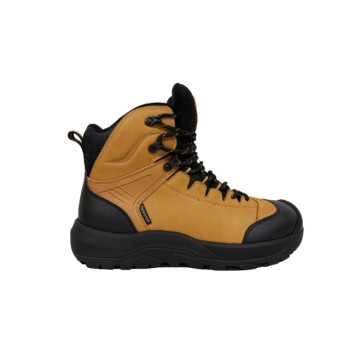
High-performance cold-weather boots are a non-negotiable safety asset for railway operations in extreme temperatures because they directly prevent physiological decline. These boots provide essential thermal insulation that maintains body heat, thereby minimizing the environmental stress that leads to critical behavioral errors and safety incidents during early morning shifts.
Extreme cold is a major environmental factor that degrades human performance and decision-making capabilities. High-performance footwear functions as a safety barrier, preventing the loss of focus and physical coordination that causes accidents in -20°C environments.
The Critical Link Between Temperature and Behavior
Preventing Physiological Decline
In temperatures reaching -20°C, the body prioritizes core warmth, leading to rapid cooling of extremities. High-performance boots provide the high-level thermal insulation necessary to prevent frostbite and mitigate the physical degradation that occurs during long exposures.
Reducing Behavioral Errors
Environmental stress causes more than just physical discomfort; it impacts cognitive function. When workers are fighting to stay warm, their focus shifts away from operational procedures.
Mitigating Risk Events
By maintaining foot warmth, specialized boots reduce the cognitive load caused by cold stress. This helps maintain standard safety behaviors, directly reducing the occurrence of risk events in the railway work environment.
Essential Technical Features for -20°C
Superior Insulation Systems
Standard winter boots are often insufficient for extreme railway conditions. High-performance options often feature removable inner boots or thick linings like shearling or felt, utilizing a layered approach similar to snowboard boots for maximum heat retention.
Specialized Traction Control
Railway environments often involve ice, snow, and slush. Essential boots for this climate feature specialized outsoles with tread designs similar to winter tires, ensuring grip on slippery surfaces.
Stability on Uneven Terrain
Railway workers frequently operate on sloped or unstable surfaces (ballast). Professional boots provide the necessary arch support and shock absorption to enhance standing stability and reduce lower limb muscle fatigue.
Waterproofing and Coverage
To be effective in these extremes, footwear must be below-the-knee and lace-up to prevent snow ingress. They must be fully waterproof to protect against melting snow and slush, which can freeze if moisture penetrates the boot.
Understanding the Trade-offs
Specialized vs. Versatile Usage
Boots designed for -20°C are often heavier and bulkier due to thick insulation and durable construction. While they offer superior protection for extreme cold, they may cause fatigue during high-activity tasks in milder winter weather.
The Need for Multiple Options
One pair of boots may not suffice for an entire winter season. It is often recommended to have multiple footwear options to address varying winter conditions, ensuring workers are not over-equipped (sweating) or under-equipped (freezing) as temperatures fluctuate.
Making the Right Choice for Your Goal
To select the correct footwear for your railway operations, consider your specific environmental challenges:
- If your primary focus is Reducing Accident Rates: Prioritize boots with high-level thermal insulation to minimize environmental stress and the resulting behavioral errors.
- If your primary focus is Worker Endurance: Select boots with removable liners and professional arch support to reduce muscle fatigue and Low Back Pain (LBP) during long shifts.
- If your primary focus is Physical Safety on Ballast: Ensure the boots feature winter-tire tread patterns and lace-up designs for maximum ankle stability on uneven ground.
Investing in high-performance footwear is an investment in cognitive clarity and operational continuity.
Summary Table:
| Feature | Benefit for Railway Operations | Technical Requirement |
|---|---|---|
| Thermal Insulation | Prevents frostbite & reduces cognitive fatigue | Multi-layered liners (Shearling/Felt) |
| Traction Control | Ensures grip on ice, snow, and slush | Winter-tire tread patterns |
| Stability Design | Supports movement on unstable ballast | High-top lace-up with arch support |
| Waterproofing | Keeps feet dry to prevent freezing | Below-the-knee waterproof construction |
Secure Your Workforce with Professional-Grade Cold-Weather Footwear
As a large-scale manufacturer serving distributors and brand owners, 3515 offers comprehensive production capabilities for all footwear types, anchored by our flagship Safety Shoes series. We understand that for railway operations, the right boot is a critical safety barrier against extreme environments.
Our extensive portfolio covers high-performance work and tactical boots, outdoor shoes, training shoes, and sneakers, as well as Dress & Formal shoes to meet your diverse bulk requirements. Partner with us to provide your clients with footwear that ensures cognitive clarity and physical stability on the job.
Ready to elevate your safety standards? Contact us today to discuss custom manufacturing and bulk supply solutions.
References
- Huafeng Zhang, Mingyuan Ma. Grid-Based Employee Safety Behavior Risk Assessment of the Train Operation Department. DOI: 10.3390/pr10050913
This article is also based on technical information from 3515 Knowledge Base .
Related Products
- Premium Insulated Safety Boots and Shoes for Wholesale & Bulk Orders
- Durable Waterproof Rain Boots | Custom Manufacturer for Wholesale & Brands
- Factory Direct Wholesale Rain Boots Durable Waterproof & Fully Customizable
- Durable Goodyear Welt Leather Work Boots for Wholesale & Private Label
- Wholesale Waterproof Tactical Boots Custom Suede & High-Traction Soles
People Also Ask
- What are the recommended insulation ratings for mild winter conditions? A Guide for Active & Stationary Workers
- How does insulation thickness correlate with temperature ranges? A Guide to Choosing the Right Warmth
- What insulation level is needed for severe cold and stationary work? 1200g or Higher is Essential
- What safety advantages do insulated boots offer beyond warmth? Dielectric Protection & Superior Grip
- How does fleece lining contribute to the warmth of insulated boots? Trapping Air for Superior Cold Protection