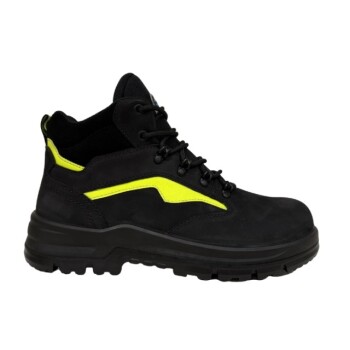
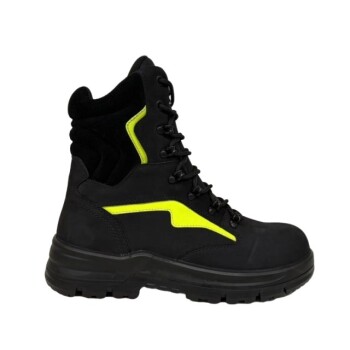
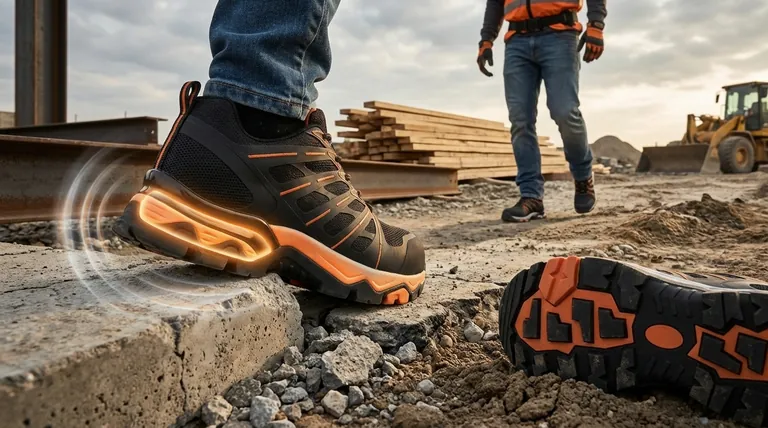
At its core, midsole support in a Western work boot is achieved through materials engineered for shock absorption and cushioning. This critical layer is specifically designed to dissipate the impact forces generated from walking on hard surfaces, which in turn reduces stress on your feet, knees, and back, minimizing fatigue during long hours of wear.
The midsole is the unseen workhorse of a boot, acting as a suspension system for your body. Its primary role is to provide a stable, cushioned platform that absorbs shock, distinguishing a genuine piece of work equipment from a simple fashion accessory.
The Core Functions of the Midsole
To understand how a midsole provides support, it's essential to break down its primary responsibilities. These functions work in concert to protect your foot and reduce physical strain.
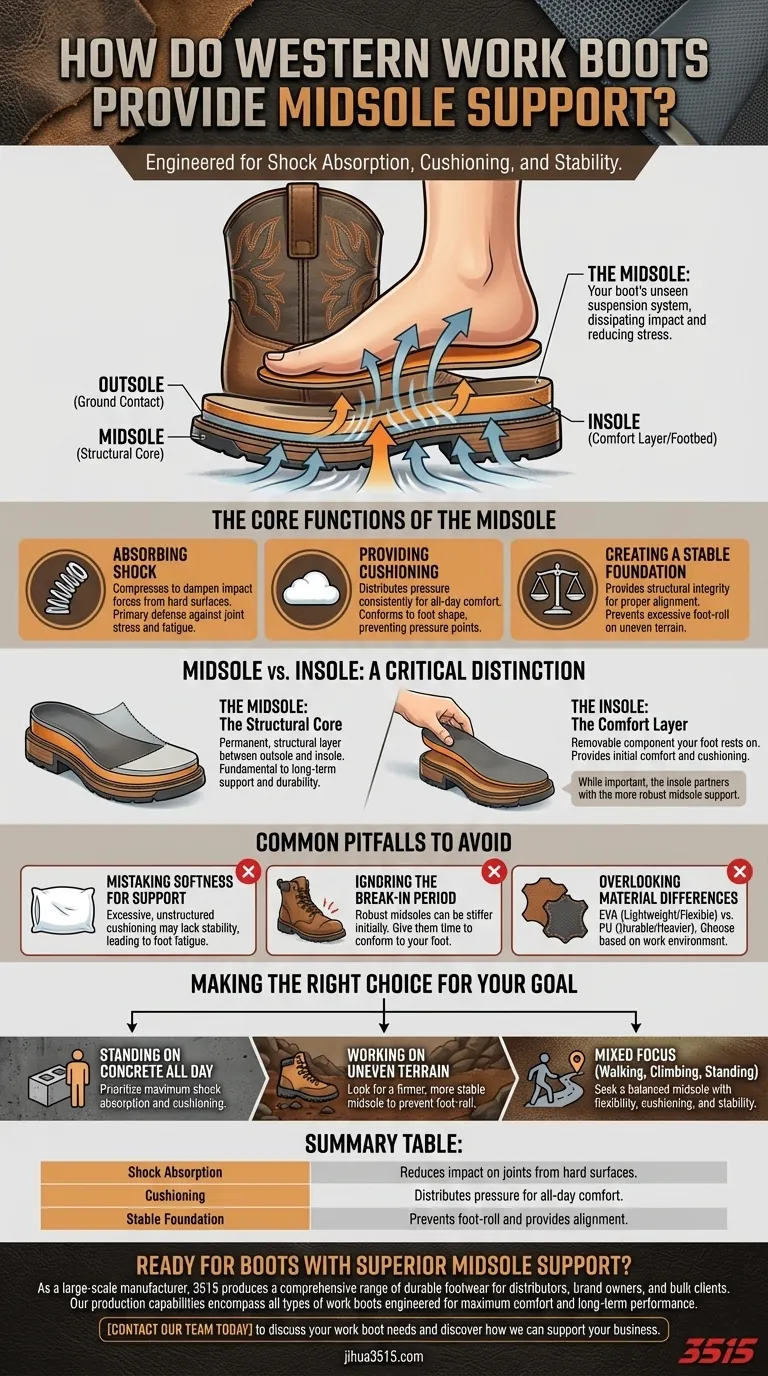
Absorbing Shock
Every step you take, especially on concrete or compacted ground, sends an impact shock up through your body. The midsole's most crucial job is to compress slightly upon impact, absorbing and dampening this force before it reaches your joints.
This function is the primary defense against the jarring sensations that lead to soreness and long-term fatigue.
Providing Cushioning
While shock absorption deals with impact, cushioning provides consistent comfort and pressure distribution throughout your stride.
A well-designed midsole offers a forgiving surface that conforms to the shape of your foot, preventing pressure points from developing and enhancing overall comfort during a long shift.
Creating a Stable Foundation
Support isn't just about softness; it's also about structure. The midsole provides a stable platform that helps keep your foot properly aligned.
This structural integrity prevents your foot from rolling inward or outward excessively, which helps reduce the risk of sprains and strains, particularly when navigating uneven surfaces.
Midsole vs. Insole: A Critical Distinction
Users often confuse the midsole with the insole, but they serve different purposes within the boot's support system.
The Midsole: The Structural Core
The midsole is a permanent, structural layer sandwiched between the outsole (the part that touches the ground) and the insole. You cannot see it or remove it. Its quality and material composition are fundamental to the boot's long-term support and durability.
The Insole: The Comfort Layer
The insole, or footbed, is the component your foot rests on directly. It is often removable and provides the initial feeling of comfort and cushioning.
While a high-quality insole is important for immediate comfort, it works in partnership with the more robust, structural support provided by the underlying midsole.
Common Pitfalls to Avoid
Choosing the right boot requires understanding the potential downsides and misconceptions about support.
Mistaking Softness for Support
The softest boot is not always the most supportive. Excessive, un-structured cushioning can feel comfortable at first but may lack the stability needed for demanding work. This can lead to foot fatigue and instability as your foot muscles work harder to stay balanced.
Ignoring the Break-in Period
A robust midsole, designed for durability and support, is often stiffer out of the box. It may require a break-in period to conform to your foot and walking patterns. Dismissing a boot as "uncomfortable" after a single try can cause you to overlook a superior, more supportive option.
Overlooking Material Differences
Midsoles are typically made from materials like EVA (Ethylene-vinyl acetate), which is lightweight and flexible, or PU (Polyurethane), which is heavier but more durable and compression-resistant. Choosing the wrong material for your work environment can lead to premature breakdown or unnecessary weight.
Making the Right Choice for Your Goal
Select a boot by matching its midsole properties to your primary work environment.
- If your primary focus is standing on concrete all day: Prioritize boots with maximum shock absorption and cushioning to combat the constant impact of hard surfaces.
- If your primary focus is working on uneven terrain: Look for a firmer, more stable midsole that prevents foot-roll and provides a secure platform.
- If your primary focus is a mix of walking, climbing, and standing: Seek a balanced midsole that offers a blend of flexibility, cushioning, and all-around stability.
Ultimately, understanding the function of the midsole empowers you to choose a boot based on its engineered performance, not just its appearance.
Summary Table:
| Function | Benefit |
|---|---|
| Shock Absorption | Reduces impact on joints from hard surfaces. |
| Cushioning | Distributes pressure for all-day comfort. |
| Stable Foundation | Prevents foot-roll and provides alignment. |
Ready for boots with superior midsole support?
As a large-scale manufacturer, 3515 produces a comprehensive range of durable footwear for distributors, brand owners, and bulk clients. Our production capabilities encompass all types of work boots engineered for maximum comfort and long-term performance.
Contact our team today to discuss your work boot needs and discover how we can support your business.
Visual Guide
Related Products
- Durable Goodyear Welt Leather Work Boots for Wholesale & Private Label
- Durable Leather Work Boots for Wholesale & Custom Manufacturing
- Durable Leather Work Boots for Wholesale & Custom OEM Manufacturing
- Durable Moc-Toe Wedge Work Boots | Wholesale Manufacturing for Brands
- Wholesale Leather Work Boots with Customizable Wedge Sole for Brands
People Also Ask
- What is the difference between full-grain and top-grain leather? Premium Material Guide for Boot Manufacturers
- What are the advantages of leather as an upper material for work boots? Unmatched Durability & Custom Comfort
- Why is it important to waterproof leather work boots? Protect Your Investment and Performance
- How should new leather work boots be broken in? A Guide to Comfort and Durability
- What are the advantages of leather uppers in work boots? Unmatched Durability & Protection