To identify high-quality boots, you must look beyond the brand name and focus on the core components of its creation. The most reliable indicators are the use of premium materials like full-grain leather, the precision and density of the stitching, and a sturdy construction method that durably attaches the sole to the upper. A manufacturer's warranty and features designed for comfort, like arch support, further signal a boot built to last.
True quality in a boot isn't found in a single feature, but in the intelligent combination of superior materials, robust construction, and a design that is purpose-built for its intended environment.
The Foundation: Materials Matter Most
The materials used are the first and most critical indicator of a boot's potential lifespan and performance. Cheap materials will fail regardless of how well they are assembled.
Full-Grain Leather: The Gold Standard
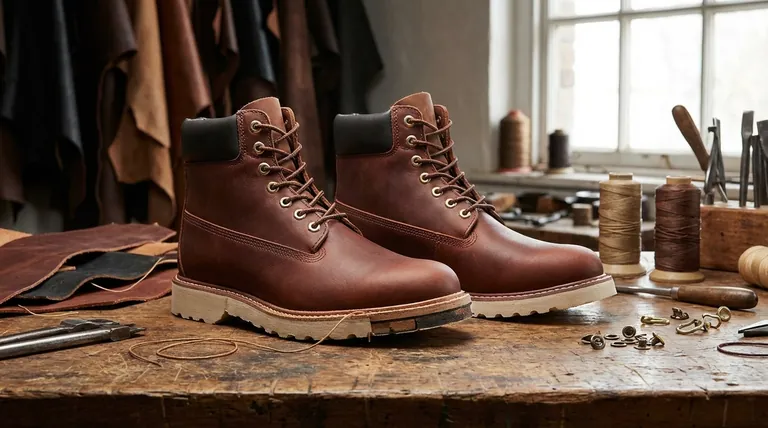
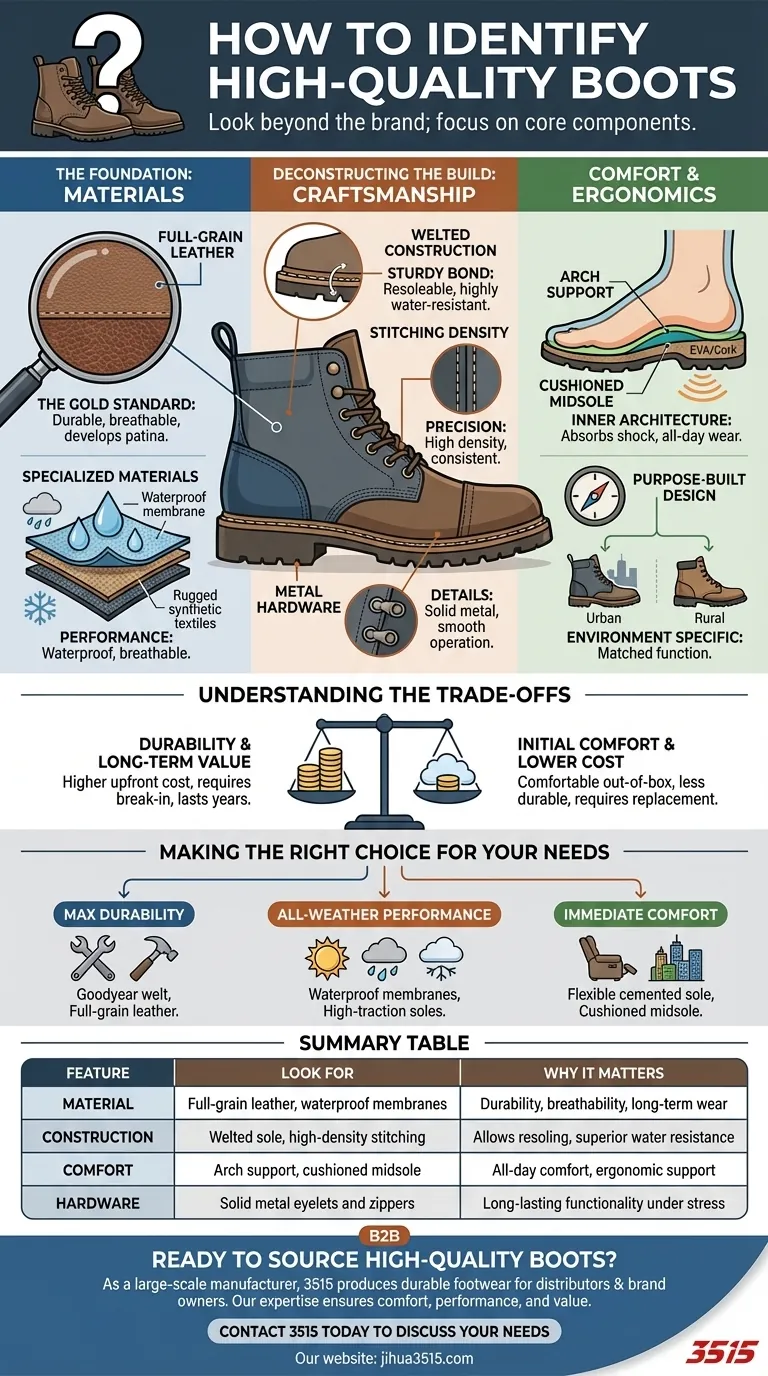
Full-grain leather is the highest quality grade available. It comes from the top layer of the hide and includes all the natural grain, making it exceptionally durable, breathable, and water-resistant. Over time, it develops a rich patina rather than wearing out.
Specialized Materials for Performance
For specific conditions, look for advanced materials. High-quality winter or hiking boots often feature waterproof yet breathable membranes to keep feet dry from both external moisture and internal sweat. These are often paired with rugged synthetic textiles in high-wear areas.
Deconstructing the Build: How It's Put Together
Craftsmanship is the difference between a boot that looks good on the shelf and one that endures years of use. The construction method reveals the manufacturer's commitment to quality.
The Sole's Attachment
The most durable boots often use a welted construction, where a strip of leather (the welt) is stitched to the upper and the sole. This creates a highly water-resistant and sturdy bond that allows the boot to be resoled multiple times, drastically extending its life. A less expensive, cemented construction simply glues the sole on, which is less durable and often not repairable.
Stitching as a Sign of Craftsmanship
Examine the stitching closely, especially where different pieces of material join. Look for high stitch density (more stitches per inch) and clean, parallel lines with no loose threads. Precise and consistent stitching is a hallmark of careful manufacturing.
The Hardware Details
Don't overlook the small parts. Eyelets, hooks, and zippers should be made of solid metal, not coated plastic. Quality hardware operates smoothly and is a sign that the maker didn't cut corners on the components that receive constant stress.
Comfort and Ergonomics
A durable boot is useless if it's too uncomfortable to wear. True quality integrates ergonomic design from the inside out to support your foot.
The Inner Architecture
Look for boots with a well-designed insole that offers arch support. A cushioned midsole, often made of materials like EVA foam or cork, is critical for absorbing shock and providing comfort during long periods of wear.
Purpose-Built Design
High-quality boots are designed for a specific environment. An urban boot will have a different sole and support structure than a rural hiking boot. The boot's overall shape should match its function, providing support where needed without unnecessary bulk.
Understanding the Trade-offs
Choosing a boot always involves balancing competing factors. Understanding these compromises is key to making an informed decision.
Durability vs. Initial Comfort
The most robust, welted boots made from thick full-grain leather often require a break-in period. They may feel stiff at first. Lighter, more flexible boots with cemented soles are often more comfortable out of the box but lack the same long-term durability.
Upfront Cost vs. Long-Term Value
A high-quality boot is an investment. The initial price is higher, but its longevity and the ability to be repaired and resoled often make it a more economical choice over its lifetime compared to replacing cheaper boots every year or two.
Making the Right Choice for Your Needs
Match the boot's characteristics to your primary goal to ensure satisfaction and performance.
- If your primary focus is maximum durability and longevity: Prioritize boots with a Goodyear welt construction and full-grain leather uppers.
- If your primary focus is all-weather performance for hiking or work: Seek out boots with specialized waterproof membranes and purpose-built, high-traction outsoles.
- If your primary focus is immediate comfort for casual, urban wear: A boot with a flexible, cemented sole and a cushioned midsole will likely provide the best out-of-the-box experience.
By understanding these core principles of material, construction, and design, you can confidently invest in footwear that will serve you well for years to come.
Summary Table:
| Key Feature | What to Look For | Why It Matters |
|---|---|---|
| Material | Full-grain leather, waterproof membranes | Durability, breathability, and long-term wear |
| Construction | Welted (stitched) sole, high-density stitching | Allows for resoling, superior water resistance |
| Comfort | Arch support, cushioned midsole | All-day comfort and ergonomic support |
| Hardware | Solid metal eyelets and zippers | Long-lasting functionality under stress |
Ready to source high-quality boots built to last?
As a large-scale manufacturer, 3515 produces a comprehensive range of durable footwear for distributors, brand owners, and bulk clients. Our expertise in using premium materials and robust construction methods ensures your customers receive boots that combine comfort, performance, and exceptional value.
Contact 3515 today to discuss your specific needs and leverage our full production capabilities.
Visual Guide
Related Products
- Durable Goodyear Welt Leather Work Boots for Wholesale & Private Label
- Durable Leather Work Boots Wholesale Manufacturer & Custom Factory
- Durable Leather Work Boots for Wholesale & Custom Manufacturing
- Wholesale Durable Leather Work Boots | 8-Inch Goodyear Welt Manufacturer
- Durable Leather Moc Toe Work Boots for Wholesale & Custom Manufacturing
People Also Ask
- What is the difference between full-grain and top-grain leather? Premium Material Guide for Boot Manufacturers
- What are the advantages of leather as an upper material for work boots? Unmatched Durability & Custom Comfort
- Why is it important to waterproof leather work boots? Protect Your Investment and Performance
- How should new leather work boots be broken in? A Guide to Comfort and Durability
- What are the advantages of leather uppers in work boots? Unmatched Durability & Protection