At their core, men's cowboy boots are defined by a distinct set of features designed for a specific purpose. Key characteristics include a tall shaft to protect the leg, a specific heel type suited for either riding or walking, and a particular toe shape, all of which vary depending on the boot's intended use.
The design of a cowboy boot is not arbitrary; every feature, from the height of its shaft to the angle of its heel, has a functional origin rooted in horsemanship and ranch work. Understanding this purpose is the key to distinguishing between different styles and choosing the right boot for you.
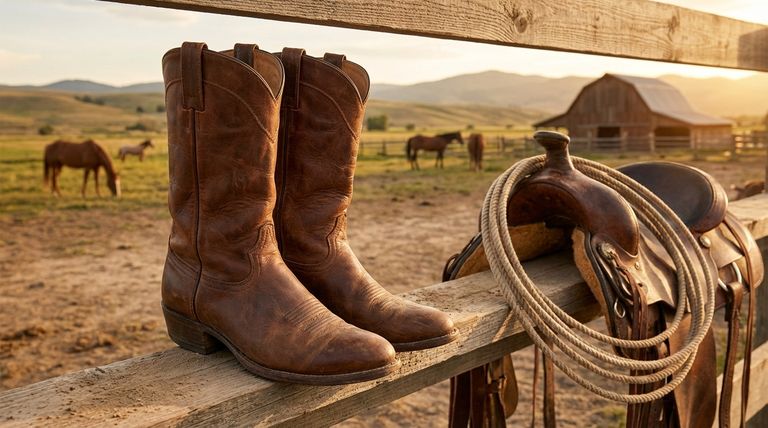
The Anatomy of a Cowboy Boot
To understand the different styles, you must first understand the core components that define them. Each part serves a practical function that has evolved into a stylistic choice.
The Shaft
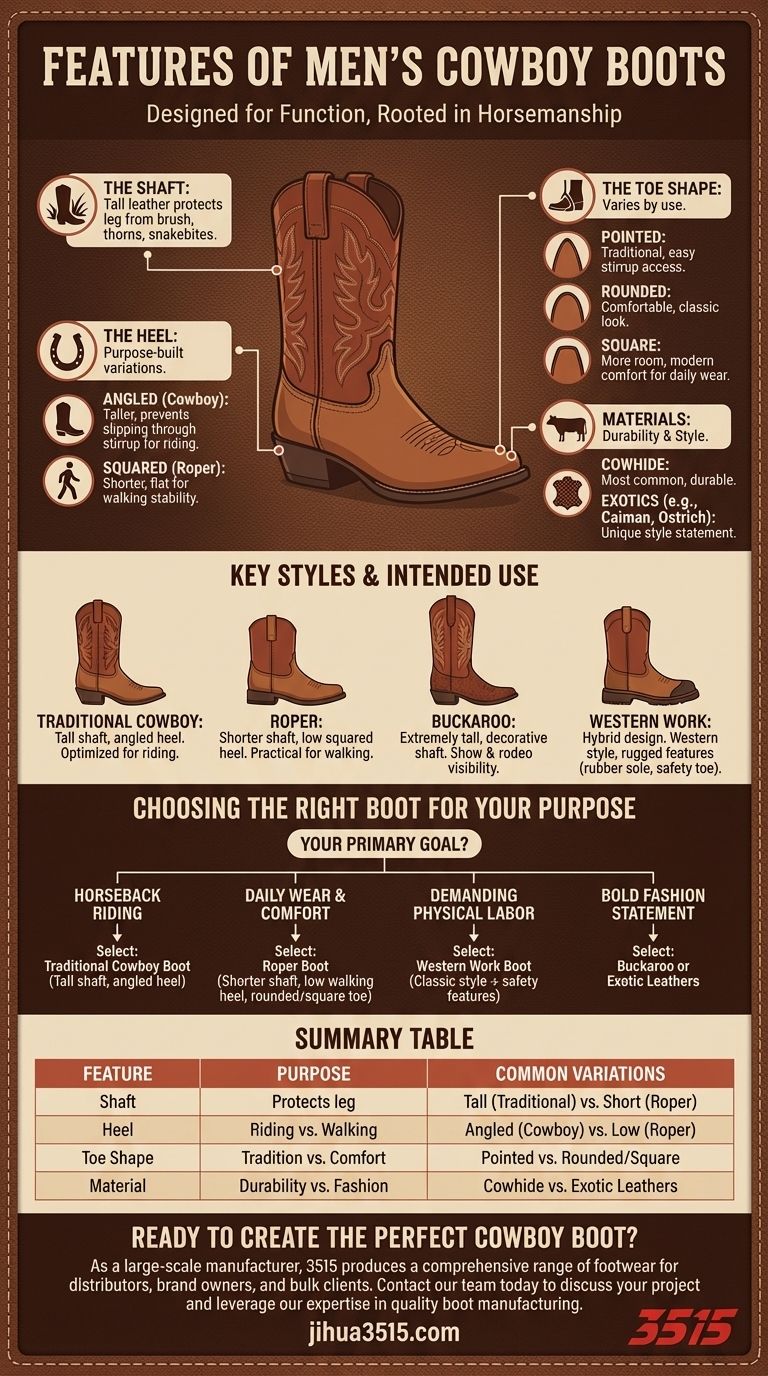
The shaft is the tall leather portion of the boot that covers the leg. Its primary, traditional purpose was to protect a rider's legs from brush, thorns, and snakebites.
The Heel
The boot's heel is one of its most critical distinguishing features. The two primary types are the angled "cowboy" heel, which is taller and designed to prevent a rider's foot from slipping through a stirrup, and the shorter, squared-off "roper" or walking heel, which provides more stability for work on the ground.
The Toe Shape
Historically, cowboy boots had a pointed toe to help a rider's foot find the stirrup easily. Today, toe shapes vary widely, from the traditional pointed toe to more comfortable rounded or square toes that offer more room and are popular for daily wear.
Materials and Construction
The vast majority of boots are made from cowhide leather due to its durability. However, exotic leathers from animals like caiman, ostrich, or snake are popular for creating more of a fashion statement and demonstrating unique style.
Key Styles of Men's Cowboy Boots
The combination of these anatomical features results in several distinct categories of cowboy boots, each suited for a different task.
The Traditional Cowboy Boot
This is the classic style, featuring a tall shaft (at least mid-calf) and a taller, angled heel. It's the original design optimized for horseback riding and has become a timeless fashion staple.
The Roper Boot
The roper style was developed for rodeo cowboys who needed to quickly dismount, run, and work on foot. It features a shorter shaft and a low, squared-off heel, making it much more practical and comfortable for walking.
The Buckaroo Boot
The buckaroo is an exaggerated version of the traditional boot, built for show and rodeo visibility. It features an extremely tall shaft, often reaching the knee, and is typically decorated with bold, stitched designs.
Western Work Boots
This is a hybrid category that blends the aesthetic of a cowboy boot with the rugged features of a modern work boot. They often have western styling but include features like rubber outsoles and safety toes for durability and protection.
Understanding Modern Variations and Trade-offs
While tradition defines the cowboy boot, modern adaptations have emerged to meet contemporary needs for comfort and accessibility.
The Role of Zippers
Zippers are not a traditional feature of cowboy boots. However, they are becoming more common as a practical modification, making it significantly easier to put on boots with a tall shaft, especially for those with wider feet or a high instep.
Style vs. Function
The primary trade-off in modern boots is between classic function and daily comfort. A traditional cowboy boot with a high, angled heel is excellent for riding but can be less comfortable for extended walking than a roper boot with its low, stable heel and wider toe box.
Choosing the Right Boot for Your Purpose
Your primary goal should dictate the features you prioritize in a cowboy boot.
- If your primary focus is horseback riding: Choose a traditional cowboy boot with a tall shaft and a high, angled heel to ensure safety and function in the stirrup.
- If your primary focus is daily wear and walking comfort: Opt for a roper style with its shorter shaft, lower walking heel, and a rounded or square toe.
- If your primary focus is demanding physical labor: Select a dedicated Western work boot that combines classic style with modern safety and durability features.
- If your primary focus is making a bold fashion statement: Consider a Buckaroo boot or a pair made from distinctive exotic leathers.
By understanding the purpose behind each feature, you can confidently select a boot that perfectly matches its intended use.
Summary Table:
| Feature | Purpose & Common Variations |
|---|---|
| Shaft | Protects the leg; tall (traditional) vs. short (roper). |
| Heel | Angled for riding (cowboy) vs. low for walking (roper). |
| Toe Shape | Pointed for tradition vs. rounded/square for comfort. |
| Material | Durable cowhide vs. exotic leathers for fashion. |
Ready to find or create the perfect cowboy boot? As a large-scale manufacturer, 3515 produces a comprehensive range of footwear for distributors, brand owners, and bulk clients. Whether you need traditional riding boots, comfortable ropers, durable work boots, or fashion-forward styles in exotic leathers, our production capabilities encompass all types of shoes and boots to meet your exact specifications. Contact our team today to discuss your project and leverage our expertise in quality boot manufacturing.
Visual Guide
Related Products
- Wholesale Leather Ankle Boots with Lug Soles for Custom Brand Manufacturing
- Custom Breathable Perforated Leather Derby Shoes for Wholesale & Brands
- Wholesale Leather Derby Dress Shoes Custom Manufacturer for Brands
- Classic Leather Derby Dress Shoes Wholesale & Custom Manufacturing
- Durable Leather Tactical Boots Wholesale & Custom Manufacturing for Brands
People Also Ask
- What is the difference between full-grain and top-grain leather? Premium Material Guide for Boot Manufacturers
- What are the key qualities of leather for work boots? Superior Durability, Breathability & Custom Fit
- What is the complete process for deep cleaning leather work boots? A Step-by-Step Guide to Preserve Your Investment
- What are the advantages of leather uppers in work boots? Unmatched Durability & Protection
- How should new leather work boots be broken in? A Guide to Comfort and Durability