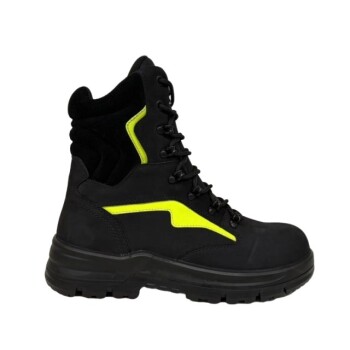
In short, composite toe boots offer four main advantages over steel toes: they are significantly lighter, provide better insulation against extreme temperatures, are non-conductive for superior electrical hazard protection, and won't set off metal detectors. This makes them ideal for professionals who prioritize comfort during long shifts or work in specific, sensitive environments.
The choice between composite and steel is not about which is universally "better," but which is precisely suited for your specific job hazards and daily demands. Composite toes leverage modern materials for comfort and specialized safety, while steel remains the traditional standard for raw impact resistance.
The Core Advantage: Lighter Weight and All-Day Comfort
A boot's weight has a direct impact on fatigue over a long workday. This is the most noticeable difference for most wearers and the primary driver for choosing composite materials.
How Material Science Reduces Fatigue
Composite safety toes are crafted from non-metal materials like Kevlar, carbon fiber, and specialized plastics. These advanced materials are significantly less dense than steel, resulting in a lighter overall boot.
While it may seem like a small difference, reducing the weight you lift with every step dramatically cuts down on cumulative leg and foot fatigue over an 8- or 12-hour shift.
The Impact on Productivity and Movement
A lighter, more comfortable boot allows you to stay focused on your work, not on your feet. Many users find the reduced weight and increased flexibility of composite materials allow for a more natural and less restrictive stride.
Superior Environmental Hazard Protection
Beyond weight, composite materials have inherent properties that make them far better suited for certain hazardous environments where metal is a liability.
Electrical Hazard (EH) Safety
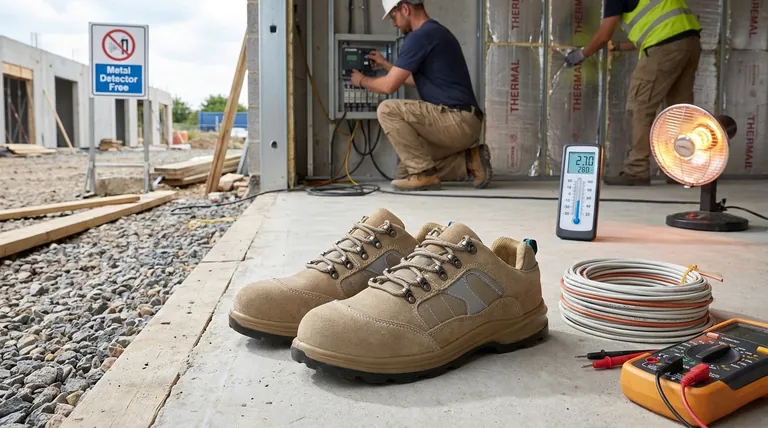
This is a critical, non-negotiable benefit for electricians and anyone working near live circuits. Steel is a conductor of electricity. Composite materials are non-conductive, which helps to insulate you from the ground and significantly reduces the risk of electric shock.
Extreme Temperature Insulation
Metal is an excellent thermal conductor, which is a major drawback in work boots. In cold weather, steel toes draw heat away from your feet, making them feel like ice blocks. In extreme heat, they can become uncomfortably warm.
Composite materials are poor thermal conductors, acting as an insulator. They help maintain a more stable and comfortable temperature inside your boot, regardless of the external conditions.
Navigating Secure and Specialized Work Environments
The non-metallic nature of composite boots provides a significant quality-of-life improvement for workers in specific industries.
Metal-Free Convenience
If your job requires you to pass through metal detectors frequently, such as in airports, secure government facilities, or high-security plants, composite toe boots are the clear choice. They allow you to pass through security checkpoints without the hassle of removing your footwear.
Non-Magnetic Properties
For professionals working around powerful magnets or sensitive electronic equipment, such as in medical imaging or certain manufacturing roles, non-magnetic footwear is essential. Steel toes can pose a safety risk in these environments, while composite toes are completely inert.
Understanding the Trade-offs
While composite toes offer many modern advantages, it's crucial to understand their limitations compared to the traditional steel toe.
Impact Resistance
Both composite and steel toe boots must meet the same ASTM safety standards for impact and compression. However, they behave differently under extreme force. Steel tends to bend under a force that exceeds its rating, while composite materials may crack or shatter. For environments with a high risk of extremely heavy falling objects, some professionals still prefer the brute-force durability of steel.
Bulk and Profile
To achieve the same level of ASTM-rated protection, a composite toe cap often needs to be slightly thicker and more bulky than its steel counterpart. This can sometimes affect the fit and overall profile of the boot, making it feel larger on the foot.
Making the Right Choice for Your Work
Selecting the correct safety toe is a matter of aligning the material's inherent properties with the primary risks and demands of your job.
- If your primary focus is all-day comfort and reducing fatigue: Composite toe is the clear winner due to its significantly lighter weight.
- If your primary focus is safety around live electricity: Composite toe is the only appropriate choice because it is non-conductive.
- If your primary focus is working in extreme cold or heat: Composite's superior insulation will provide a much greater level of comfort.
- If your primary focus is maximum protection from severe crushing impacts: Steel toe is often preferred for its ability to bend rather than shatter under forces that exceed safety standards.
Ultimately, choosing the right boot is about matching the technology to the task.
Summary Table:
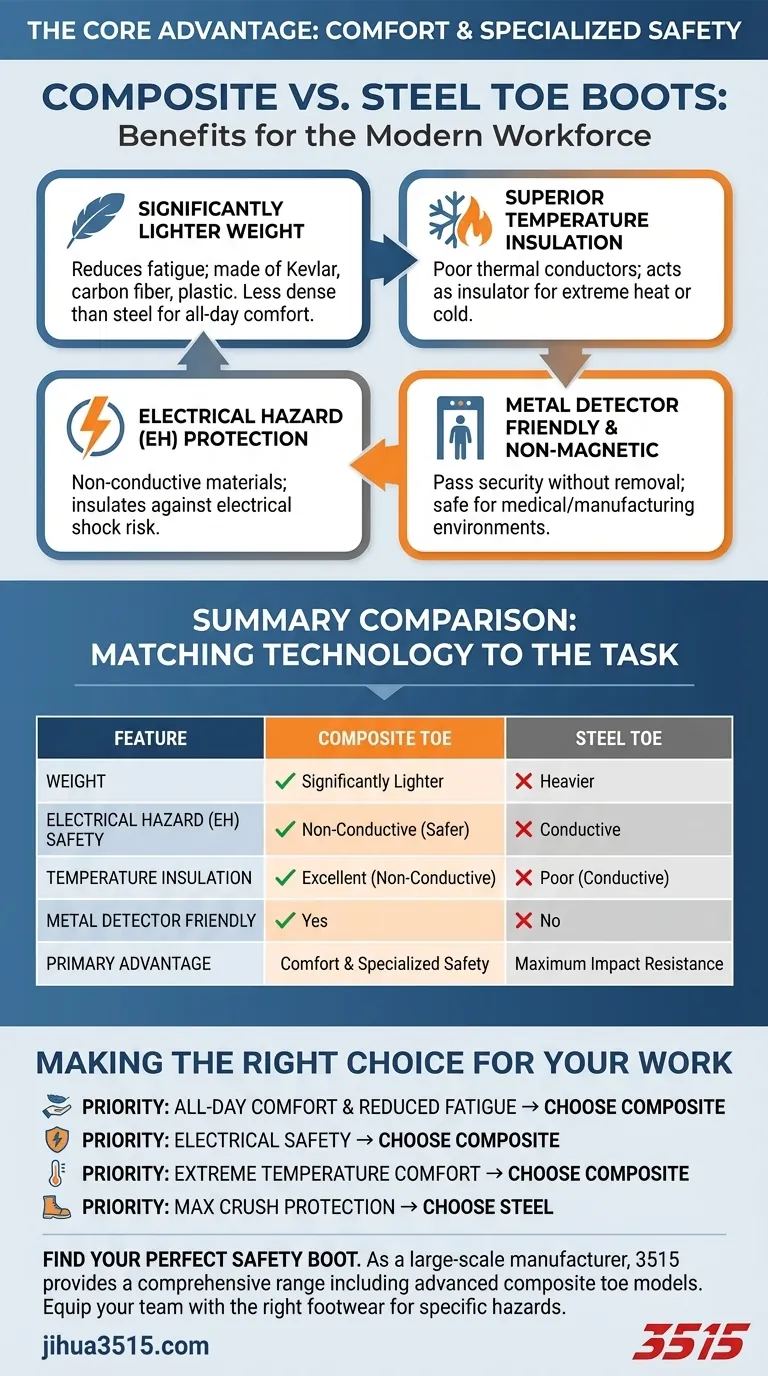
| Feature | Composite Toe | Steel Toe |
|---|---|---|
| Weight | Significantly Lighter | Heavier |
| Electrical Hazard (EH) Safety | Non-Conductive (Safer) | Conductive |
| Temperature Insulation | Excellent (Non-Conductive) | Poor (Conductive) |
| Metal Detector Friendly | Yes | No |
| Primary Advantage | Comfort & Specialized Safety | Maximum Impact Resistance |
Find Your Perfect Safety Boot with 3515
As a large-scale manufacturer, 3515 produces a comprehensive range of footwear for distributors, brand owners, and bulk clients. Our production capabilities encompass all types of safety boots, including advanced composite toe models designed for superior comfort and specialized protection.
Let us help you equip your team with the right safety footwear. We can provide the perfect boot for your specific job hazards and daily demands.
Contact our experts today to discuss your requirements and get a quote!
Visual Guide
Related Products
- Wholesale Durable Safety Boots Manufacturer Customizable Steel Toe Work Boots
- Safety Footwear Wholesale Manufacturer for Custom OEM/ODM Production
- Durable Leather Moc Toe Work Boots for Wholesale & Custom Manufacturing
- Durable Moc-Toe Wedge Work Boots | Wholesale Manufacturing for Brands
- Durable Moc Toe Wedge Sole Work Boots for Wholesale and Private Label
People Also Ask
- What are the pros and cons of steel toe work boots? A Guide to Maximum Protection vs. Comfort
- What are the different types of steel toe work boots? Choose the Right Boot for Your Job
- What is the history of steel toe work boots? From German Invention to Modern Safety Standard
- How much weight can steel toe work boots withstand? Unpacking the 3,372 lb. Safety Standard
- What are some common myths about steel toe work boots? Debunked for Modern Workers