
In the right professional setting, a well-made cowboy boot is far more than a style choice; it is a specialized tool designed for durability and protection. The industries that benefit most include ranching, farming, construction, landscaping, and the oil and gas sector, where the unique features of the boot align directly with the demands of the environment.
The true value of a cowboy boot in a work environment isn't about its look, but its functional design. Its laceless construction, protective shaft, and purpose-built heel offer a unique combination of safety and durability that traditional work boots can't always match.
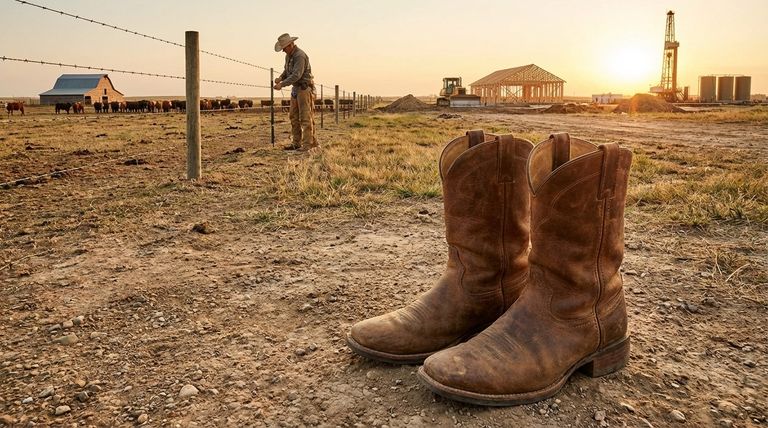
The Functional Anatomy of a Work Boot
Before listing industries, it's critical to understand why cowboy boots are effective. Their design evolved for rugged, demanding tasks, and each component serves a distinct purpose.
The Tall Shaft
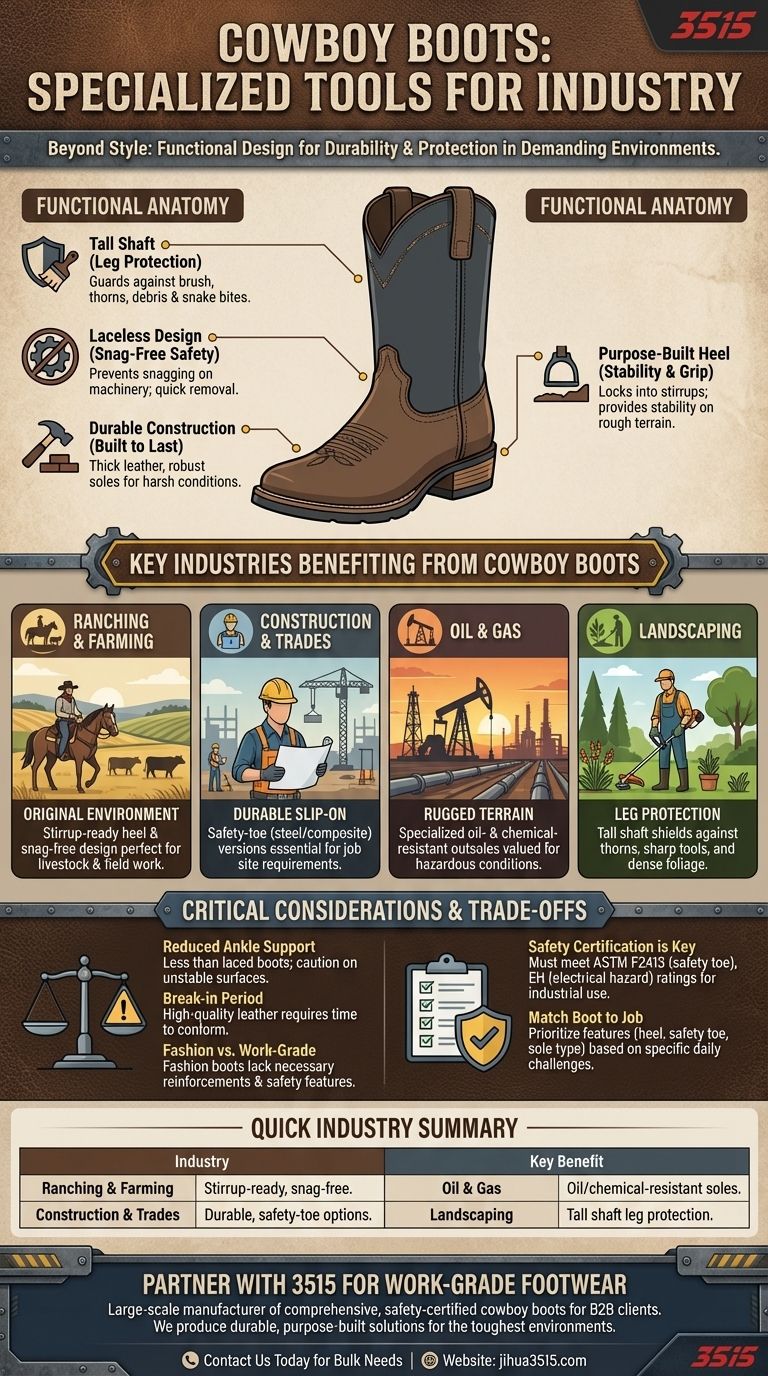
The high leather shaft is a primary protective feature. It guards the lower leg against brush, thorns, snake bites, and worksite debris in a way low-cut boots cannot.
The Purpose-Built Heel
The distinct, often angled heel is designed to lock into a saddle's stirrup, preventing the foot from slipping through—a crucial safety feature for ranchers and equestrians. On the ground, this heel provides stability on uneven terrain.
The Laceless Design
The absence of laces is a deliberate safety feature. It prevents the boot from getting snagged on machinery, branches, or fencing, which could cause a serious accident. This also allows the boot to be removed quickly if needed.
Durable Construction
Traditionally made with thick leather and robust soles, work-grade cowboy boots are built to withstand harsh conditions, from muddy fields to abrasive construction sites. Many modern work versions include oil- and slip-resistant outsoles.
Key Industries Where Cowboy Boots Excel
The boot's design makes it a practical choice for specific professional environments that value durability and protection.
Ranching and Farming
This is the original and most natural environment for the cowboy boot. All its features—stirrup-ready heel, protective shaft, and snag-free design—are perfectly suited for working with livestock and equipment in the field.
Construction and Skilled Trades
For many workers in construction, plumbing, or electrical trades, a cowboy boot offers a durable slip-on alternative to a traditional laced boot. Safety-toe versions (steel or composite) are essential to meet job site requirements.
Oil and Gas Industry
Workers in the energy sector often face rugged terrain and hazardous conditions. The boot's durability and protective qualities are highly valued. Specialized outsoles that resist oil and chemicals are a key feature for this industry.
Landscaping and Groundskeeping
Similar to farming, landscaping involves exposure to thorns, sharp tools, and pests. The tall, thick leather shaft provides excellent protection for the lower leg while working in dense foliage or operating machinery like line trimmers.
Understanding the Trade-offs
Despite their benefits, cowboy boots are not the right tool for every job. Objectivity requires acknowledging their limitations.
Reduced Ankle Support
The laceless, slip-on design inherently offers less ankle support than a tightly laced boot. This can be a disadvantage for work that involves climbing or requires constant lateral movement on highly unstable surfaces.
The Break-in Period
High-quality leather boots often require a significant break-in period to conform to the wearer's foot. This initial discomfort can be a drawback for some.
Not All Boots Are Work Boots
There is a vast difference between a fashion cowboy boot and a work-grade cowboy boot. Fashion boots lack the reinforced construction, safety toes, and durable soles needed for a demanding job site and will fail quickly.
Safety Certification is Key
For industrial applications, the boot must have the proper safety certifications. Always check for ratings like ASTM F2413 for safety toes and EH for electrical hazard protection to ensure compliance and personal safety.
Making the Right Choice for Your Work
Selecting the right footwear depends entirely on the specific demands of your job.
- If your primary focus is ranching or equestrian work: The traditional cowboy boot design with a pronounced heel for stirrup safety is your most reliable choice.
- If your primary focus is construction or heavy industry: Prioritize boots with certified steel or composite safety toes and oil- and slip-resistant soles.
- If your primary focus is landscaping or field work: Look for a comfortable sole designed for all-day wear on uneven ground and durable, water-resistant leather.
Ultimately, choosing the right boot is about matching its specific functional strengths to the challenges you face every day.
Summary Table:
| Industry | Key Benefit of Cowboy Boots |
|---|---|
| Ranching & Farming | Stirrup-ready heel, snag-free design for livestock work. |
| Construction & Trades | Durable, safety-toe options; laceless design prevents snagging. |
| Oil & Gas | Rugged construction with oil- and chemical-resistant soles. |
| Landscaping | Tall shaft protects legs from thorns, debris, and pests. |
Ready to equip your workforce with durable, purpose-built footwear?
As a large-scale manufacturer, 3515 produces a comprehensive range of work-grade cowboy boots for distributors, brand owners, and bulk clients. Our production capabilities encompass all types of safety-certified boots designed for the toughest environments, including steel-toe and specialized outsoles.
We can help you provide your team or customers with the right footwear for the job. Contact us today to discuss your specific needs and discover how 3515 can be your reliable manufacturing partner.
Visual Guide
Related Products
- Wholesale High-Traction Camo Boots - Custom Manufacturer for Brands
- High-Traction Suede Tactical Boots Wholesale & Custom Manufacturing
- Wholesale Lightweight Tactical Boots Custom Manufacturer for Desert & Combat Use
- Durable Leather Tactical Boots Wholesale & Custom Manufacturing for Brands
- Wholesale Durable Mid-Cut Tactical Boots for Custom & Private Label Brands
People Also Ask
- What are the key features of the new line of camo boots? Built for Extreme Cold & Rugged Terrain
- Are camo boots necessary for hunting success? Prioritize Performance Over Pattern
- How does the Rank Score Test identify the primary causes of premature failure in tactical and work boots? Key Insights
- What is the technical logic behind using closed-eye testing for tactical boots? Unlocking Peak Footwear Stability
- What shoes to wear for a security job? Durable, Protective Footwear for Long Shifts



















