I've got a clear mission: to explain what snow boots are for in a way that truly empowers the reader. My main goal is to go beyond a simple definition and help them understand if snow boots are the right tool for their specific needs.
First, I need to break down the user's implicit questions. They're not just asking "what are snow boots?" They're also asking "do I need snow boots, or will something else work?" This means I must dive into the design features and why they matter in different situations.
The core strategy is to provide a very direct answer to their initial surface need, but then expand to the deeper questions. The article needs to be objective, authoritative, but also empathetic and easy to read. I'll make sure it's radically scannable with clear headings, short paragraphs, and a key takeaway box.
I've reviewed the references, and it's clear that snow boots are all about keeping feet warm, dry, and stable in challenging conditions. The key features are all interconnected: waterproofing, insulation, and deep treads. This combination differentiates snow boots from other types of footwear. I need to keep in mind their design choices include trade-offs, making the boots heavier and less breathable.
The article's structure is going to follow a logical progression:
- Opening Hook: Directly define snow boots as a specialized tool for handling snow and ice.
- Core Takeaway Box: Summarize the key idea: snow boots are an engineered system.
- Main Body: Deep dive into the main functions:
- Absolute Moisture Defense by discussing waterproofing.
- Active Thermal Regulation explaining insulation.
- Uncompromising Traction that is only offered in good soles
- Trade-Offs: The weight of the boots and less breathability
- Concluding Section: Actionable advice as bullet points.
This approach ensures I'm answering the surface question immediately while simultaneously addressing the deeper, more strategic question: is a snow boot the right choice for me? And if not, what else should they consider? I will end with an empowering thought to help the user make the right choice. At their core, snow boots are a highly specialized tool. They are engineered specifically to protect your feet in harsh winter environments characterized by deep snow, slush, and ice. Their design focuses on three critical functions: providing thermal insulation to keep you warm, complete waterproofing to keep you dry, and aggressive traction to keep you stable.
The key distinction of a snow boot is that it is an integrated system. While other boots may be warm or water-resistant, a snow boot combines robust insulation, impenetrable waterproofing, and deep-lugged soles to conquer the unique, simultaneous challenges of cold, wetness, and slippery surfaces.
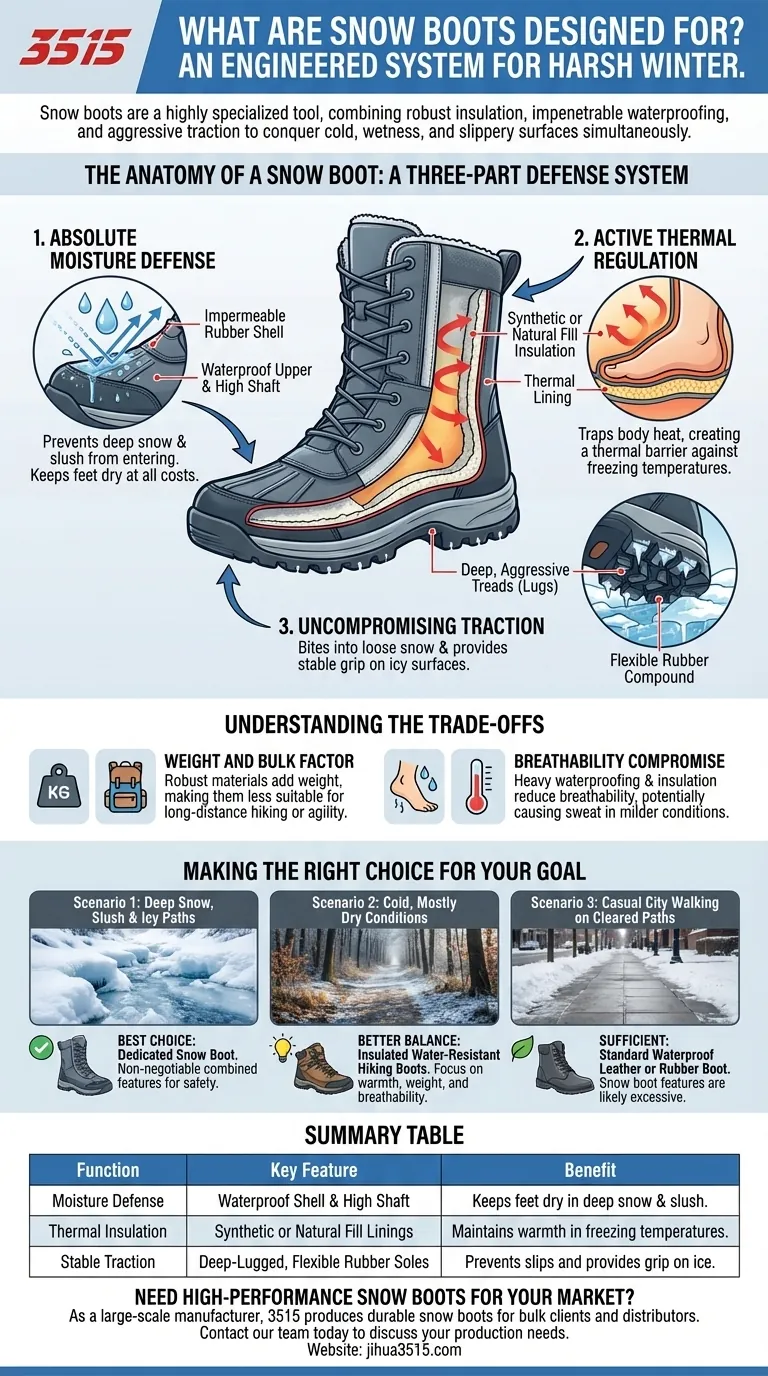
The Anatomy of a Snow Boot: A Three-Part Defense System
To understand what a snow boot is for, you must understand its core components. Each feature is a direct solution to a specific problem posed by winter weather.
Principle 1: Absolute Moisture Defense
The first failure point in winter is getting wet, as moisture rapidly pulls heat away from your body. Snow boots are built to prevent this at all costs.
They typically feature a lower shell made of impermeable rubber and an upper made of waterproof materials like treated leather, nylon, or specialized textiles.
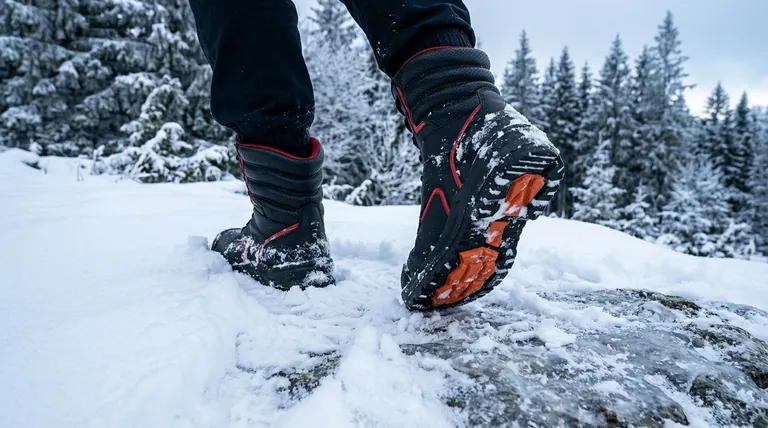
The boot’s high shaft serves a simple but critical purpose: it acts as a barrier, preventing deep snow from falling into the top of the boot while you walk.
Principle 2: Active Thermal Regulation
Keeping your feet warm in freezing temperatures is the second design priority. This is achieved through dedicated insulation.
Snow boot insulation works by trapping a layer of air, which is then warmed by your body heat. This creates a thermal barrier against the outside cold.
Linings can range from natural materials like shearling to advanced synthetic fills, all designed to provide warmth without excessive bulk.
Principle 3: Uncompromising Traction
Snow and ice create dangerously slick and unstable ground. A snow boot's outsole is engineered specifically to overcome this.
The soles are made of a rubber compound that remains flexible in freezing temperatures, preventing it from becoming hard and slick.
They feature deep, aggressive treads (lugs) designed to bite into loose snow and provide a stable grip on uneven, icy surfaces.
Understanding the Trade-offs
The specialized nature of snow boots means they are not the ideal choice for every situation. Their design involves deliberate compromises.
The Weight and Bulk Factor
The robust materials required for total waterproofing, thick insulation, and aggressive soles add significant weight and bulk.
This makes snow boots less suitable for long-distance hiking on clear paths or for everyday wear where agility is a priority.
The Breathability Compromise
Heavy waterproofing and insulation layers inherently reduce a boot's breathability.
In milder conditions or during intense physical activity, this can cause your feet to sweat. This moisture can then make your feet feel cold when you become stationary.
Making the Right Choice for Your Goal
Ultimately, a snow boot is the right tool for a specific job. Use your primary challenge to guide your decision.
- If your primary focus is navigating deep snow, slush, and icy paths: A dedicated snow boot is the correct and safest choice; its combined features are non-negotiable.
- If your primary focus is cold, but mostly dry, conditions: A pair of insulated, water-resistant hiking boots may provide a better balance of warmth, weight, and breathability.
- If your primary focus is casual city walking on cleared sidewalks: The intense features of a snow boot are likely excessive; a standard waterproof leather or rubber boot will suffice.
Selecting the right footwear is about accurately matching the tool to the specific environmental challenge you face.
Summary Table:
| Function | Key Feature | Benefit |
|---|---|---|
| Moisture Defense | Waterproof Shell & High Shaft | Keeps feet dry in deep snow and slush. |
| Thermal Insulation | Synthetic or Natural Fill Linings | Maintains warmth in freezing temperatures. |
| Stable Traction | Deep-Lugged, Flexible Rubber Soles | Prevents slips and provides grip on ice. |
Need High-Performance Snow Boots for Your Market?
As a large-scale manufacturer, 3515 produces a comprehensive range of durable and reliable snow boots designed for harsh winter conditions. We provide bulk clients, distributors, and brand owners with footwear that combines proven waterproofing, effective insulation, and superior traction. Let us help you equip your customers with the right boots for the job.
Contact our team today to discuss your production needs and get a quote.
Visual Guide
Related Products
- Premium Insulated Safety Boots and Shoes for Wholesale & Bulk Orders
- Durable Waterproof Rain Boots | Custom Manufacturer for Wholesale & Brands
- Factory Direct Wholesale Rain Boots Durable Waterproof & Fully Customizable
- Wholesale Waterproof Tactical Boots Custom Suede & High-Traction Soles
- Wholesale Lightweight Tactical Boots Custom Manufacturer for Desert & Combat Use
People Also Ask
- What are the recommended insulation ratings for mild winter conditions? A Guide for Active & Stationary Workers
- How does insulation thickness correlate with temperature ranges? A Guide to Choosing the Right Warmth
- What insulation level is needed for severe cold and stationary work? 1200g or Higher is Essential
- What safety advantages do insulated boots offer beyond warmth? Dielectric Protection & Superior Grip
- How does fleece lining contribute to the warmth of insulated boots? Trapping Air for Superior Cold Protection