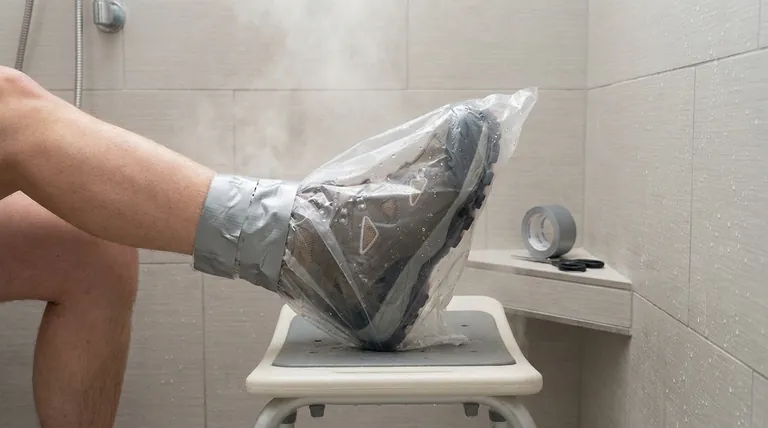
To protect a medical boot from getting wet while showering, the most common and immediate method is to completely cover it with a large plastic trash bag. You must then use waterproof tape to create a secure seal between the top of the bag and your skin, preventing any water from leaking inside.
The core challenge is creating a truly waterproof barrier to protect both the boot and your underlying skin. While a simple plastic bag offers a quick fix, understanding the proper sealing technique and considering dedicated waterproof covers are key to preventing moisture-related complications during recovery.
The Challenge: Why Keeping Your Boot Dry is Critical
Showering with a medical boot or cast is more than just an inconvenience; it's a matter of health and safety. Moisture trapped inside can lead to serious issues that may delay your healing.
The Risk of Moisture Damage
Most medical boots are constructed with materials that are not designed to be saturated with water. Getting one wet can damage its structural integrity, degrade padding, and create a breeding ground for bacteria and mildew.
Protecting Your Skin
Even more importantly, moisture trapped against your skin for extended periods can lead to irritation, rashes, or potentially serious infections, especially if you have any incisions or wounds under the boot.
Confirming Your Boot's Status
Before attempting any method, your first step is to clarify with your doctor whether your boot is removable for showering. This is the most critical piece of information you need. Never remove a device unless explicitly told you can.
A Step-by-Step Guide to the DIY Solution
If your boot must stay on, the plastic bag method is a widely used and effective short-term solution. Precision is key to its success.
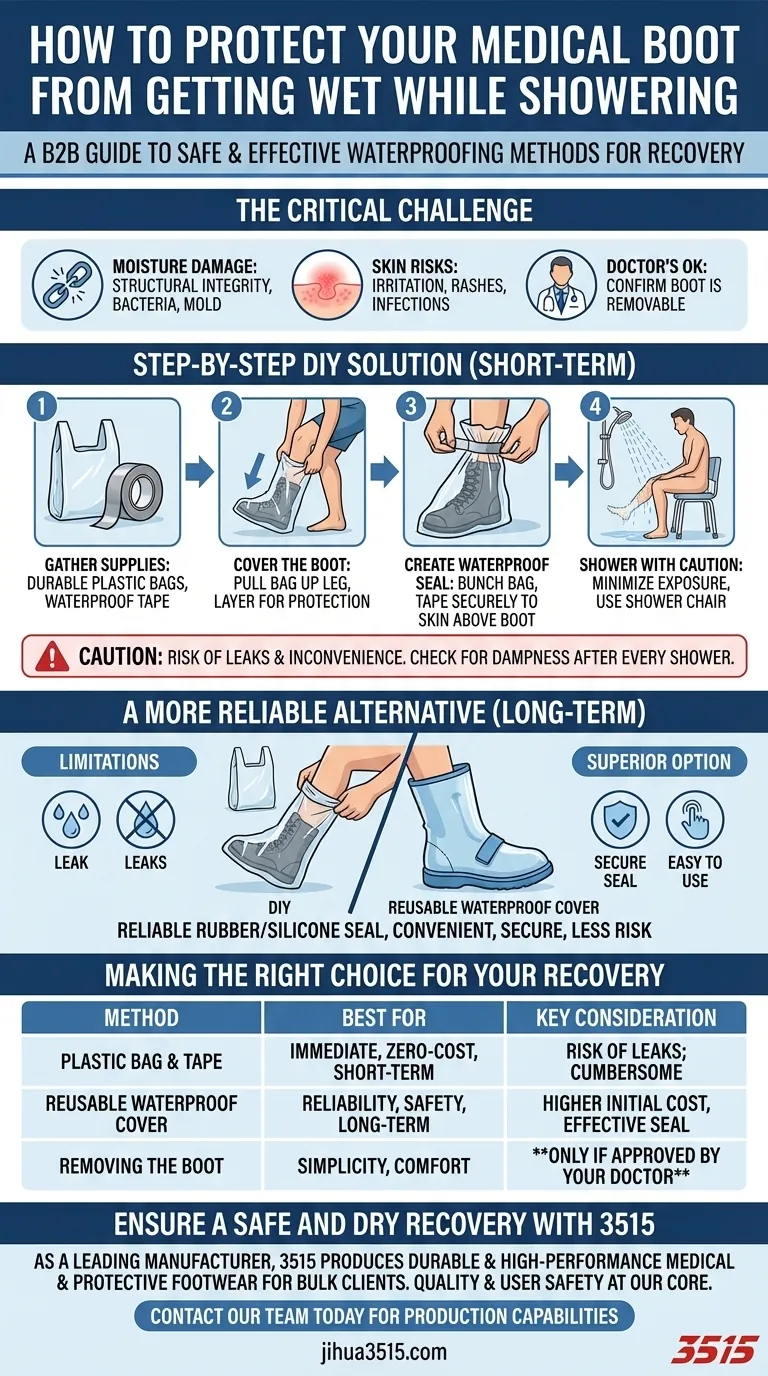
Step 1: Gather Your Supplies
You will need two items: a large, durable plastic bag (a kitchen or trash bag without any holes) and strong waterproof tape, such as duct tape or medical tape that holds well when wet.
Step 2: Cover the Boot
Sit down in a safe, dry place. Carefully pull the plastic bag over your entire foot and boot, extending it as far up your leg as possible. For extra protection, consider using two bags, one layered over the other.
Step 3: Create the Waterproof Seal
This is the most important step. Bunch the top of the bag tightly against your leg, above the boot. Wrap the waterproof tape around the bag and directly onto your skin to form a complete seal. The seal should be snug enough to block water but not so tight that it cuts off circulation.
Step 4: Shower with Caution
Even with the bag, try to minimize direct water exposure. Consider using a shower chair or stool to keep your booted leg out of the main water stream. After showering, dry the outside of the bag completely before carefully cutting the tape and removing it.
Understanding the Trade-offs and Alternatives
While effective, the DIY bag method has limitations that are important to acknowledge. Being aware of them can help you decide if it's the right long-term strategy for you.
The Risk of Leaks
A homemade seal is not foolproof. If the tape loosens or the bag has a small, unnoticed tear, water can get in. Always inspect the inside of the bag and your boot for any dampness after showering.
The Inconvenience Factor
Preparing the bag and tape for every shower can be cumbersome and time-consuming, especially when you are managing an injury.
A More Reliable Alternative
For anyone needing to keep a boot or cast dry for more than a few days, investing in a reusable, purpose-built waterproof cast cover is a superior option. These products are designed with a reliable rubber or silicone seal that is far more effective and easier to use than tape.
Making the Right Choice for Your Recovery
Your approach should match your situation, priorities, and the duration of your recovery.
- If your primary focus is an immediate, zero-cost solution: The plastic trash bag and waterproof tape method is your best option for short-term use.
- If your primary focus is reliability, safety, and convenience: Investing in a reusable waterproof cast or boot cover will provide a much more secure and stress-free experience.
- If your boot is removable (with your doctor's approval): The simplest method is to remove it, shower carefully on a non-slip surface, and then dry your leg and foot completely before putting it back on.
With the right preparation, you can confidently manage your personal hygiene without compromising your healing process.
Summary Table:
| Method | Best For | Key Consideration |
|---|---|---|
| Plastic Bag & Tape | Immediate, zero-cost, short-term use | Risk of leaks; can be cumbersome |
| Reusable Waterproof Cover | Reliability, safety, long-term use | Higher initial cost but more effective seal |
| Removing the Boot | Simplicity and comfort | Only if approved by your doctor |
Ensure a Safe and Dry Recovery with 3515
As a leading large-scale manufacturer, 3515 produces a comprehensive range of durable and high-performance footwear, including specialized medical and protective boots for distributors, brand owners, and bulk clients. Our expertise in manufacturing ensures products built with quality and user safety in mind.
If you are a business looking to provide reliable footwear solutions for customers in recovery, contact our team today to discuss our production capabilities and how we can support your product line.
Visual Guide
Related Products
- Premium Wholesale Waterproof Safety Boots High Performance Protection for Industrial Markets
- High Performance Fire-Retardant Waterproof Safety Boots
- Premium Flame-Retardant Waterproof Safety Boots and Shoes
- Premium Waterproof High-Cut Industrial Safety Boots for Wholesale and Bulk Orders
- Wholesale Waterproof Tactical Boots Custom Suede & High-Traction Soles
People Also Ask
- What weather and chemical protections do premium boots offer? Your Complete Guide to Safety & Performance
- Why are waterproof safety boots recommended for certain work environments? Essential Protection for Wet & Hazardous Jobs
- What are the primary protective functions of industrial safety boots in oil palm plantations? Master Rough Terrain Safety
- Why are oil-resistant and anti-slip properties critical for industrial safety boots? Expert Outsole Engineering Guide
- What are the best types of shoes for different gardening conditions? Find Your Perfect Match.