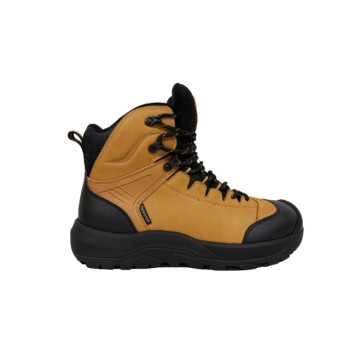
At its core, a sturdy outsole is the single most critical feature for snow boot performance, providing the essential traction and durability needed to navigate hazardous winter terrain safely. Without it, even the warmest and most waterproof boot is unreliable and potentially dangerous.
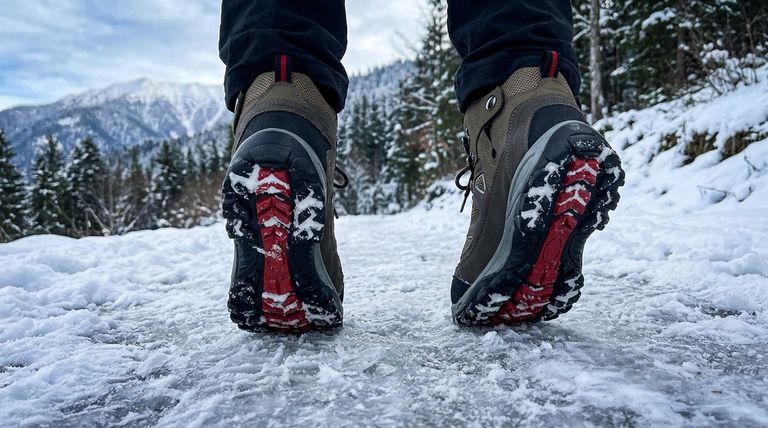
The outsole is your only point of contact with snow and ice. A sturdy, well-designed one provides the grip necessary for stable footing, transforming the boot from simple footwear into a crucial piece of safety equipment.
The Foundation of Winter Safety: Deconstructing the Outsole
A truly effective snow boot outsole is more than just a thick piece of rubber. It's an engineered system where material, pattern, and structure work together to keep you upright and moving forward.
The Role of Material Composition
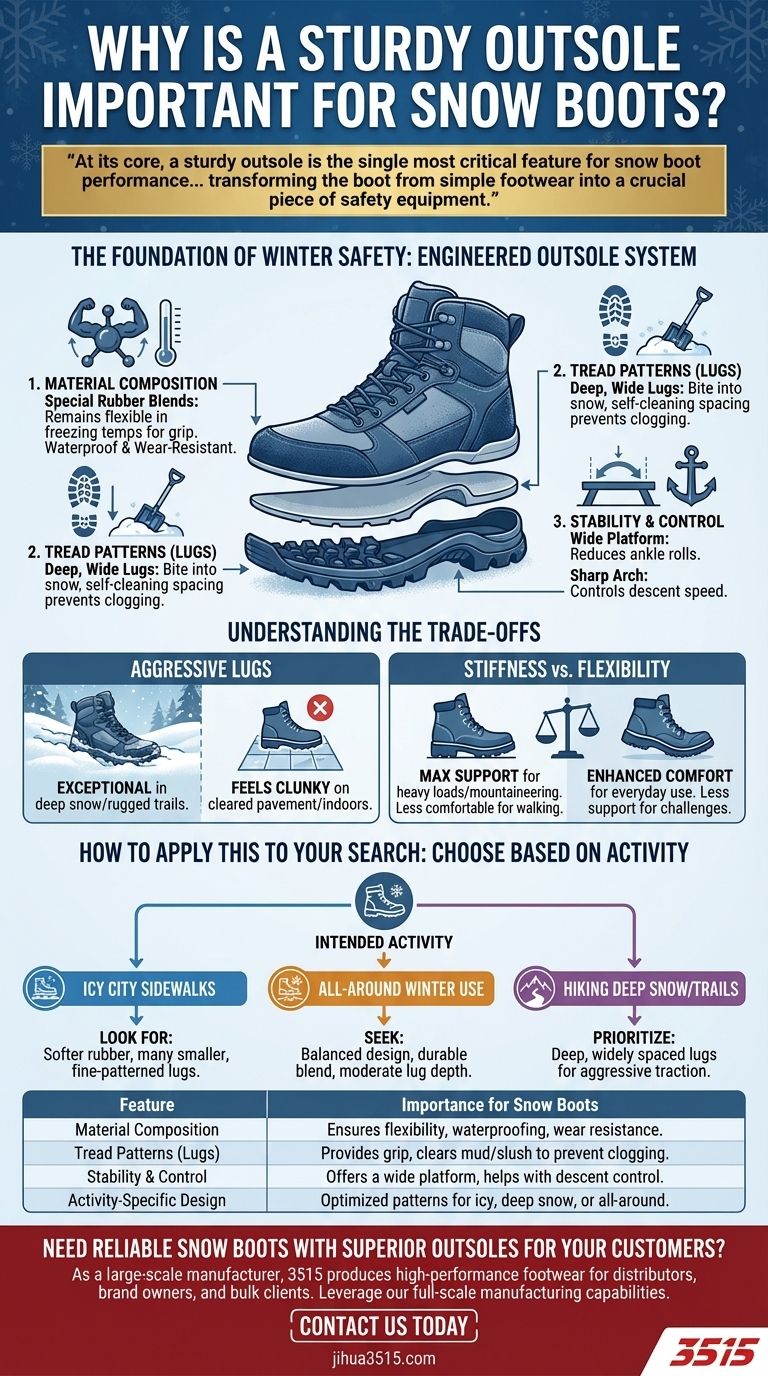
The type of rubber used is fundamental. Specific rubber blends are formulated to remain flexible even in freezing temperatures, preventing the material from becoming hard and slick.
This ensures the outsole can conform to uneven, icy surfaces, maximizing contact and grip. The material must also be completely waterproof and wear-resistant to handle abrasive ice and salted pavement.
Why Tread Patterns Are Critical
The design of the tread, or lugs, dictates how the boot interacts with the ground. Deep treads and wide lug patterns are a hallmark of a quality snow boot outsole.
These features bite into soft or packed snow for a secure grip. The wide spacing between the lugs also allows mud and slush to clear out, preventing the sole from becoming clogged and losing its traction.
The Impact on Stability and Control
A sturdy outsole provides a wide, stable platform that reduces ankle rolls. For more demanding activities like hiking with a heavy pack, a high, sharp arch can help control your speed during descents by digging into the snow.
Understanding the Trade-offs
No single outsole design is perfect for every condition. Understanding the inherent compromises is key to selecting the right boot.
Aggressive Lugs vs. Cleared Surfaces
Boots with extremely deep, aggressive lugs are exceptional in deep snow and on rugged trails. However, they can feel clunky and unstable when walking on cleared pavement or indoor floors.
Stiffness vs. Flexibility
A very stiff, rigid outsole provides maximum support and protection, which is ideal for mountaineering or carrying heavy loads. This stiffness, however, can make casual walking feel less comfortable and natural.
A more flexible sole enhances comfort for everyday use but offers less support for challenging terrain.
How to Apply This to Your Search
Your intended activity should be the primary factor guiding your choice.
- If your primary focus is walking on icy city sidewalks: Look for an outsole made of a softer rubber compound with many smaller, fine-patterned lugs to maximize surface area contact on ice.
- If your primary focus is hiking in deep snow or on trails: Prioritize an outsole with deep, widely spaced lugs for aggressive traction and the ability to shed snow and mud effectively.
- If your primary focus is all-around winter use: Seek a balanced design featuring a durable rubber blend and moderate lug depth to provide reliable performance across various conditions.
Ultimately, evaluating the outsole is the first step toward finding a boot that delivers true winter safety and performance.
Summary Table:
| Feature | Importance for Snow Boots |
|---|---|
| Material Composition | Ensures flexibility in cold weather, waterproofing, and wear resistance. |
| Tread Patterns (Lugs) | Provides grip by biting into snow and clearing mud/slush to prevent clogging. |
| Stability & Control | Offers a wide platform for balance and helps with control on descents. |
| Activity-Specific Design | Different patterns are optimized for icy sidewalks, deep snow, or all-around use. |
Need reliable snow boots with superior outsoles for your customers?
As a large-scale manufacturer, 3515 produces a comprehensive range of high-performance footwear for distributors, brand owners, and bulk clients. Our expertise in engineering durable, activity-specific outsoles ensures the winter safety and satisfaction of your end-users.
Contact us today to discuss your snow boot production needs and leverage our full-scale manufacturing capabilities.
Visual Guide
Related Products
- Premium Insulated Safety Boots and Shoes for Wholesale & Bulk Orders
- Durable Waterproof Rain Boots | Custom Manufacturer for Wholesale & Brands
- Factory Direct Wholesale Rain Boots Durable Waterproof & Fully Customizable
- Wholesale Waterproof Tactical Boots Custom Suede & High-Traction Soles
- Wholesale Lightweight Tactical Boots Custom Manufacturer for Desert & Combat Use
People Also Ask
- What are the recommended insulation ratings for mild winter conditions? A Guide for Active & Stationary Workers
- How does insulation thickness correlate with temperature ranges? A Guide to Choosing the Right Warmth
- What insulation level is needed for severe cold and stationary work? 1200g or Higher is Essential
- What safety advantages do insulated boots offer beyond warmth? Dielectric Protection & Superior Grip
- How does fleece lining contribute to the warmth of insulated boots? Trapping Air for Superior Cold Protection