
To get the best performance on a powder day, your boots must excel in four key areas: insulation, height, waterproofing, and traction. The ideal boot creates a complete barrier, keeping deep snow out and warmth in, while providing a secure grip on the unpredictable surfaces hidden beneath the powder.
The perfect powder day boot is more than just warm; it's a specialized system designed to keep your feet completely dry and stable in deep, unconsolidated snow, ensuring comfort and safety throughout the day.
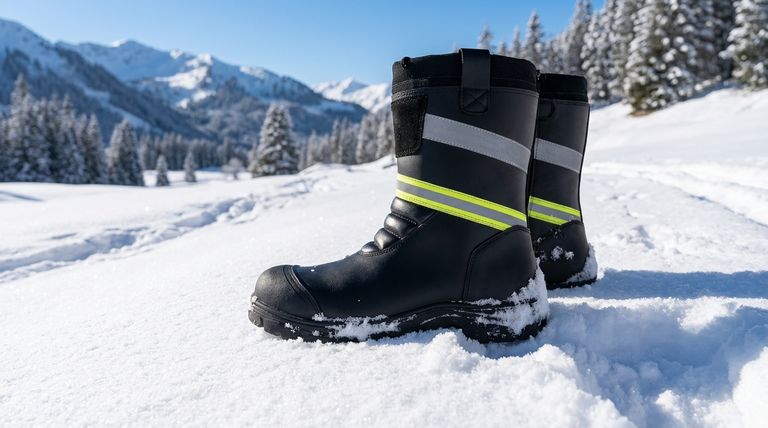
Deconstructing the Ideal Powder Boot
The best boots for deep snow aren't just enhanced versions of regular winter boots. They integrate specific features that work together to combat the unique challenges of powder.
Insulation: Your First Line of Defense
Insulation is critical, especially in the dry, cold conditions that often produce the best powder. It traps your body heat to keep your feet warm.
Look for boots with thick insulation, sometimes described with multiple heat-trapping layers underfoot. This prevents cold from seeping in from the ground.
Boot Height: Keeping the Powder Out
A higher collar is non-negotiable for powder days. It acts as the primary defense against snow entering the top of your boot.
For extremely deep snow or more demanding activities, below-the-knee lace-up boots offer the maximum level of protection. A snug fit around the calf or the use of gaiters can further enhance this seal.
Outsole and Grip: Securing Your Footing
Deep powder can hide ice and other slippery surfaces. An aggressive outsole is essential for reliable traction.
Features to look for include deep tread patterns and lugged rubber outsoles, similar to winter tires. This "all-weather grip" is designed to dig into both soft snow and hard ice.
Waterproofing: The Non-Negotiable Barrier
Your boots must be fully waterproof. Wet feet lose heat exponentially faster than dry feet, making waterproofing essential for both comfort and safety.
Many high-performance boots also offer breathability, which allows sweat vapor to escape. This is a key feature for preventing your feet from getting damp from the inside during high-exertion activities.
Beyond the Basics: Fit and Flexibility
While the core features are crucial, the right fit and level of flexibility determine how the boot performs in action.
The Importance of a Snug Fit
A boot that fits snugly around the foot and ankle prevents your foot from moving around inside, which can cause blisters and instability.
It also helps create a better seal at the top of the boot, further preventing snow from getting inside.
Sizing for Your System
Always consider your socks when sizing boots. You should size up slightly to accommodate thicker winter socks without cramping your toes.
Proper space allows for a layer of warm air to circulate, which is a key component of insulation.
The Role of Flexibility
The ideal level of flexibility depends on your activity. For skiing or snowshoeing, a more flexible sole allows for a natural range of motion.
For activities requiring more stability, such as winter hiking or work, a boot with greater torsional rigidity and ankle support is more appropriate.
Understanding the Trade-offs: Warmth vs. Agility
Choosing a boot for powder days involves balancing competing priorities. There is no single boot that is perfect for every person or every activity.
Maximum Insulation vs. Weight
Boots designed for extreme cold with heavy insulation are often bulky and heavy. This is excellent for low-activity situations but can feel cumbersome during activities like hiking or snowshoeing.
Lighter insulated options provide more agility and are better for active use, but may not be sufficient for standing around in sub-zero temperatures.
Height vs. Mobility
Taller, below-the-knee boots offer unmatched protection in deep snow. However, they can restrict ankle movement more than a mid-calf boot.
Evaluate how much mobility your chosen activity requires against the depth of the snow you anticipate encountering.
Making the Right Choice for Your Goal
Select your boot based on your most common powder day activity.
- If your primary focus is active pursuits like snowshoeing or hiking: Prioritize a balance of good insulation, a flexible sole, and a secure, high collar over maximum warmth.
- If your primary focus is extreme cold with less movement (e.g., snowmobiling, ice fishing): Opt for maximum insulation in a tall, rugged, and fully waterproof design where weight is less of a concern.
- If your primary focus is general winter work or play: A versatile, winterized boot with a solid rubber outsole, good insulation, and a collar that sits well above the ankle will serve you well.
Ultimately, the right boot empowers you to confidently take on the best days of winter.
Summary Table:
| Key Feature | Why It Matters for Powder Days |
|---|---|
| Insulation | Traps body heat to keep feet warm in cold, dry conditions. |
| Boot Height | High collars prevent deep snow from entering the boot. |
| Waterproofing | Keeps feet dry; wet feet lose heat rapidly and cause discomfort. |
| Traction | Aggressive outsoles provide grip on hidden ice and slippery surfaces. |
| Fit & Flexibility | A snug fit prevents blisters; flexibility matches your activity level. |
Ready to equip your customers with the perfect powder day boot?
As a large-scale manufacturer, 3515 produces a comprehensive range of high-performance footwear for distributors, brand owners, and bulk clients. Our production capabilities encompass all types of insulated, waterproof, and rugged boots designed to excel in deep snow conditions.
We can help you source or create the ideal boot for your target market, ensuring quality, durability, and performance. Contact our team today to discuss your specific needs and get a quote.
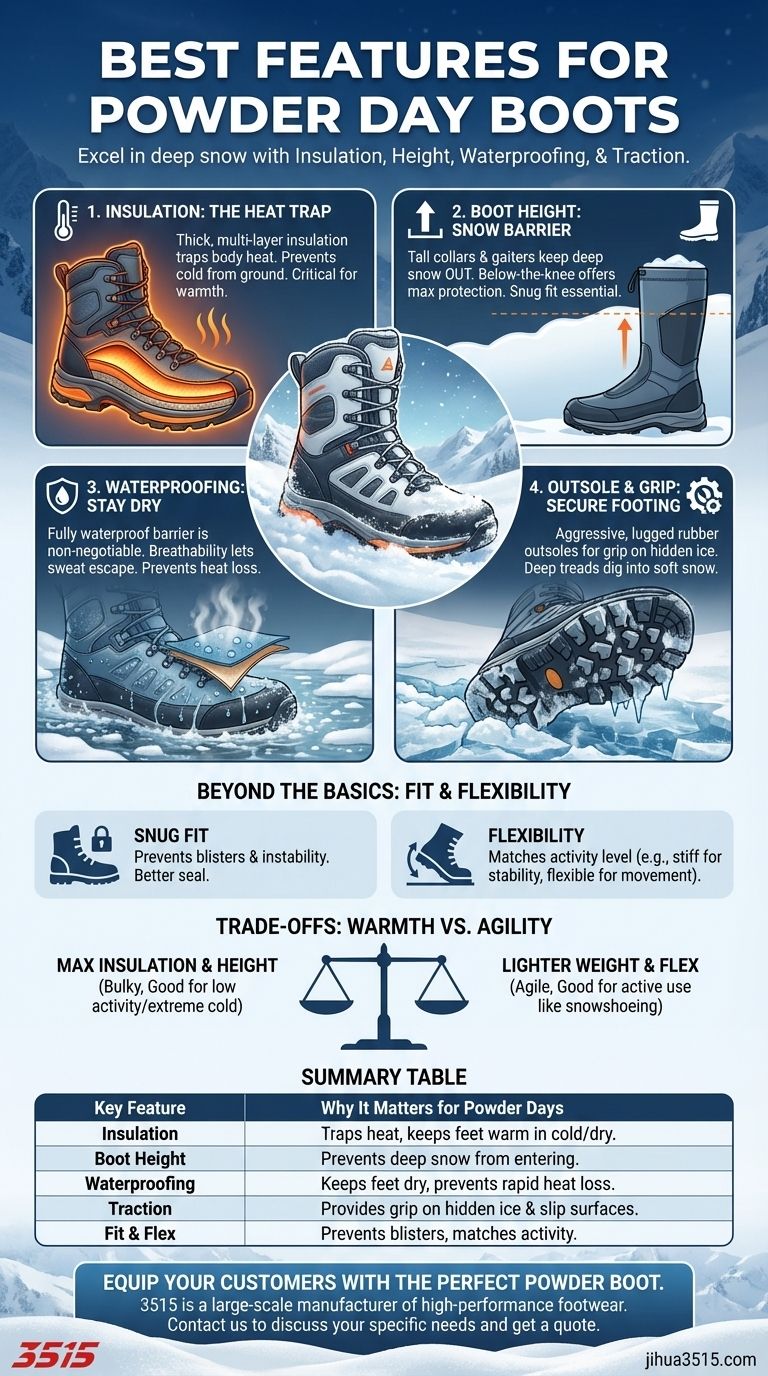
Visual Guide
Related Products
- Durable Waterproof Rain Boots | Custom Manufacturer for Wholesale & Brands
- Factory Direct Wholesale Rain Boots Durable Waterproof & Fully Customizable
- Premium Oil Wax Leather Safety Boots for Bulk Purchase
- Wholesale Lightweight Tactical Boots Custom Manufacturer for Desert & Combat Use
- Premium Wholesale Waterproof Safety Boots High Performance Protection for Industrial Markets
People Also Ask
- What are the main materials for waterproof rain boots? Choose the Right Material for Durability & Comfort
- What is the overall recommendation for choosing rain boot materials? A Guide to Rubber vs. PVC
- How does boot height affect waterproofing? Choose the Right Height for Ultimate Protection
- Why are rain boots more flexible and comfortable than snow boots? The Key Differences Explained
- What are the best types of shoes for different gardening conditions? Find Your Perfect Match.


















