
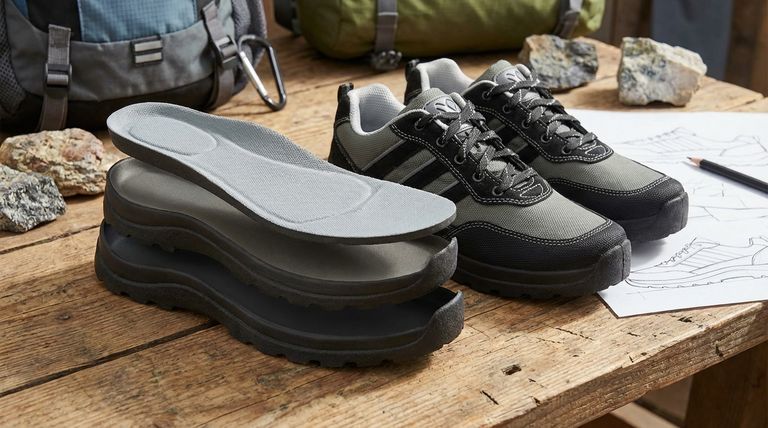
A walking boot's sole unit is comprised of three primary layers: the outsole for grip, the midsole for stability and cushioning, and the insole for immediate underfoot comfort. Together, these components dictate the boot's performance, feel, and suitability for different types of terrain.
The sole isn't a single piece but a sophisticated system. The outsole provides grip, the midsole dictates the boot's stiffness and shock absorption, and the insole offers personalized comfort. Understanding how they interact is the key to choosing the right footwear.
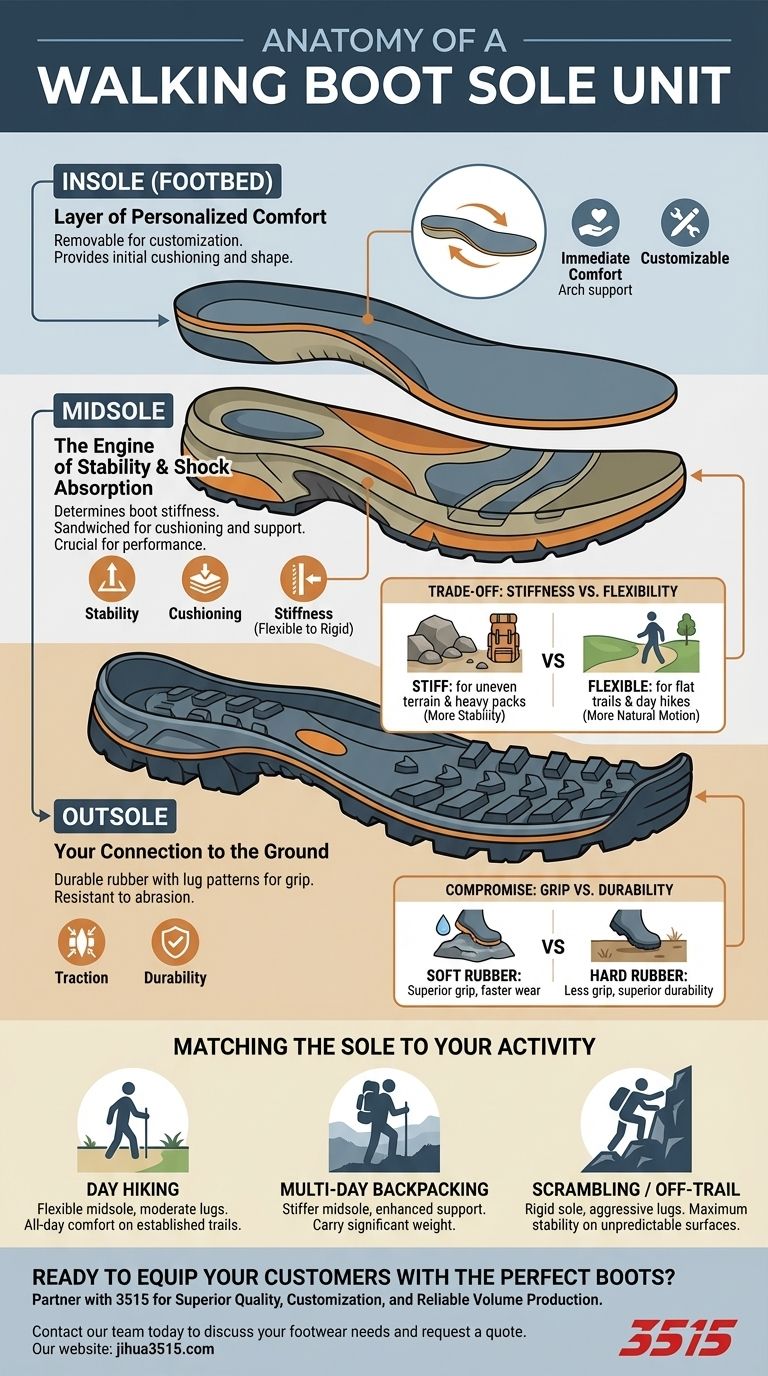
The Anatomy of a Boot Sole: A Three-Layer System
A boot's sole unit is engineered from the ground up to manage the forces between your foot and the trail. Each of the three distinct layers serves a critical and separate function.
The Outsole: Your Connection to the Ground
The outsole is the durable rubber layer that makes direct contact with the terrain. Its primary job is to provide traction.
This is achieved through a pattern of lugs, which are the deep, cleat-like indentations in the rubber. The depth and spacing of these lugs determine how well the boot grips on surfaces like mud, gravel, or rock.
Outsoles are also designed for high abrasion resistance to withstand rough surfaces and ensure the boot has a long lifespan.
The Midsole: The Engine of Stability and Shock Absorption
Sandwiched between the outsole and your foot, the midsole is arguably the most important component for performance and comfort. It provides cushioning to absorb impact and, crucially, determines the boot's stiffness.
A stiffer midsole offers greater stability on uneven or rocky ground, protecting your foot from sharp objects and reducing fatigue on long treks with a heavy pack.
A more flexible midsole allows for a more natural walking motion, which is often more comfortable for day hikes on well-maintained trails. Some designs use dual-density materials, combining firmer sections for support with softer sections for cushioning.
The Insole (Footbed): The Layer of Personalized Comfort
The insole, also known as the footbed, is the removable layer of foam that sits directly inside the boot. Its main purpose is to provide an initial layer of cushioning and shape.
Because it is removable, the insole allows for easy customization. Many hikers replace the manufacturer's stock insole with an aftermarket one that offers better arch support or specialized cushioning for their specific foot shape.
Understanding the Trade-offs: Stiffness vs. Flexibility
The most significant decision you'll make regarding a sole unit is the balance between stiffness and flexibility, a characteristic dictated almost entirely by the midsole.
Why Choose a Stiff Midsole?
A stiff sole provides a stable platform. This is critical when navigating rocky, uneven terrain, as it prevents your foot from bending over every rock and root, reducing foot fatigue.
Stiffer boots also provide the necessary support for carrying a heavy backpack, distributing the weight more effectively and increasing your stability.
When is a Flexible Midsole Better?
For walking on flat, predictable trails, a flexible midsole is far more comfortable. It allows your foot to move and flex more naturally, requiring less energy with each step.
These boots generally feel less restrictive and require a shorter break-in period, making them ideal for casual day hikes and trail walking.
The Outsole Compromise: Grip vs. Durability
The rubber compounds used in outsoles also present a trade-off. Softer rubber compounds offer superior grip, especially on wet rock, but tend to wear down faster.
Conversely, harder rubber compounds are extremely durable and last longer but may offer less traction on slippery surfaces. The manufacturer's choice of compound reflects the boot's intended use.
Matching the Sole to Your Activity
To make an informed decision, align the boot's sole characteristics with your primary outdoor activity.
- If your primary focus is day hiking on established trails: Choose a boot with a flexible midsole for all-day comfort and an outsole with moderately deep lugs for reliable traction.
- If your primary focus is multi-day backpacking with a heavy pack: Prioritize a stiffer midsole to provide the stability and support needed to carry significant weight over varied terrain.
- If your primary focus is scrambling or off-trail mountaineering: You need a very rigid sole with deep, aggressive lugs for maximum stability on unpredictable and challenging surfaces.
By understanding these three components, you can confidently select a boot that functions as a reliable tool for your specific adventure.
Summary Table:
| Component | Primary Function | Key Characteristic |
|---|---|---|
| Outsole | Traction & Durability | Lug pattern & rubber compound |
| Midsole | Stability & Cushioning | Stiffness (Flexible to Rigid) |
| Insole | Immediate Comfort | Removable & customizable |
Ready to equip your customers with the perfect boots?
As a large-scale manufacturer, 3515 produces a comprehensive range of footwear for distributors, brand owners, and bulk clients. Our production capabilities encompass all types of shoes and boots, including high-performance walking boots engineered with the precise sole unit components detailed above.
Partner with us to offer:
- Superior Quality: Boots built with durable outsoles, supportive midsoles, and comfortable insoles.
- Customization: Options for different stiffness levels, lug patterns, and footbed designs.
- Reliable Volume Production: Consistent quality and on-time delivery for your business.
Contact our team today to discuss your footwear needs and request a quote.
Visual Guide
Related Products
- Durable Moc Toe Wedge Sole Work Boots for Wholesale and Private Label
- Durable Rubber Sole Outdoor Shoes Wholesale & Custom Manufacturing
- Premium Grain Leather Safety Boots for Bulk Supply
- Wholesale Leather Work Boots with Customizable Wedge Sole for Brands
- Wholesale Leather Ankle Boots with Lug Soles for Custom Brand Manufacturing
People Also Ask
- What are the advantages of wedge sole work boots? Unmatched Comfort on Concrete Floors
- What are the characteristics of wedge sole work boots? Ultimate Comfort for Hard Floors
- What types of jobs are wedge sole work boots suitable for? Ideal for Ironworkers, Roofers & Factory Staff
- What are the benefits of wedge soles in moc toe boots? Superior Comfort for Hard Surfaces
- How do wedge sole work boots prevent slips and falls? Maximize Grip on Concrete & Hard Floors















