
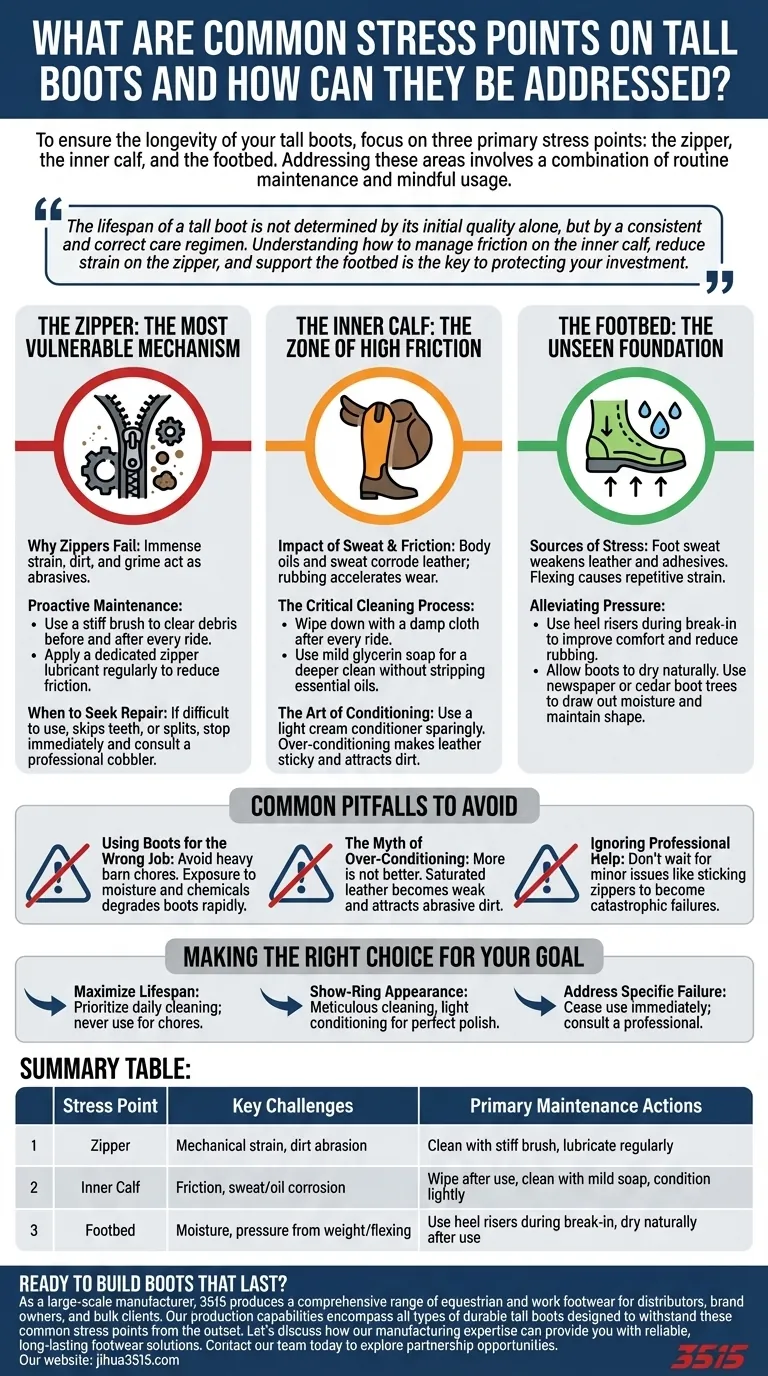
To ensure the longevity of your tall boots, you must focus on three primary stress points: the zipper, the inner calf, and the footbed. Addressing these areas involves a combination of routine maintenance, such as cleaning and lubrication, and mindful usage, like avoiding heavy barn chores and using aids like heel lifts to alleviate pressure during the break-in period.
The lifespan of a tall boot is not determined by its initial quality alone, but by a consistent and correct care regimen. Understanding how to manage friction on the inner calf, reduce strain on the zipper, and support the footbed is the key to protecting your investment.
The Zipper: The Most Vulnerable Mechanism
A boot's zipper is its most common point of failure due to the constant mechanical stress and exposure to dirt and grime.
Why Zippers Fail
Zippers are subjected to immense strain, especially on ill-fitting boots or during the break-in period. Dust, sand, and arena footing can easily work their way into the teeth, acting like an abrasive and preventing a smooth closure.
Proactive Maintenance
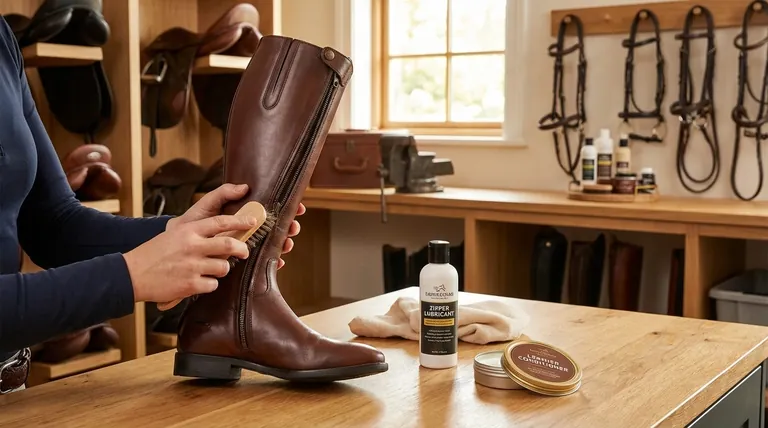
The most effective strategy is preventative. Use a stiff brush to clear any debris from the zipper teeth before and after every ride.
Applying a dedicated zipper lubricant regularly keeps the mechanism running smoothly and reduces friction, which is a primary cause of breakage.
When to Seek Repair
If a zipper becomes difficult to use, skips teeth, or splits open, stop using it immediately to avoid further damage. A professional cobbler or shoe repair shop can often replace a zipper, which is far more cost-effective than replacing the entire boot.
The Inner Calf: The Zone of High Friction
The inner calf of your boot endures constant friction against the saddle, as well as exposure to your horse's sweat and oils.
Impact of Sweat and Friction
Body oils and sweat are corrosive to leather, slowly breaking down its fibers and integrity. This, combined with the rubbing motion of riding, causes this area to wear out faster than any other part of the boot.
The Critical Cleaning Process
After every ride, wipe down the inner calf with a damp cloth to remove sweat and grime. For a deeper clean, use a small amount of mild glycerin soap, which cleanses without stripping the leather's essential oils.
The Art of Conditioning
Conditioning this area is a delicate balance. Use a light cream conditioner sparingly, as over-conditioning can make the leather sticky, attracting more dirt and actually accelerating wear. The goal is to keep the leather supple, not saturated.
The Footbed: The Unseen Foundation
The footbed bears your entire weight and absorbs the impact of walking and posting. This constant pressure can lead to cracking, collapse, or separation.
Sources of Stress
Moisture from foot sweat is a primary enemy, weakening the leather and adhesives used in the footbed's construction. Additionally, the flexing motion of the ankle and foot puts repetitive strain on this area.
Alleviating Pressure
During the break-in period, heel risers can significantly improve comfort by lifting your heel, which helps the boot shaft drop and settle without causing painful rubbing behind the knee or excessive pressure on the instep.
Always allow your boots to dry naturally after use. Stuffing them with newspaper or using cedar boot trees can help draw out moisture and maintain their shape.
Common Pitfalls to Avoid
Proper care is as much about what you do as what you don't do. Avoiding common mistakes is crucial for extending the life of your boots.
Using Boots for the Wrong Job
Tall riding boots are specialized equipment. Wearing them for heavy barn chores like mucking stalls or bathing horses exposes them to moisture and harsh chemicals that will rapidly degrade the leather and stitching.
The Myth of Over-Conditioning
More is not better when it comes to conditioner. Saturated leather becomes weak, stretches improperly, and acts as a magnet for dust and dirt, creating an abrasive paste that grinds away at the boot's surface with every movement.
Ignoring Professional Help
Do not wait for a small problem to become a catastrophic failure. If a zipper starts to stick or a seam begins to fray, take your boots to a professional repair shop immediately. Early intervention can save you from a much more expensive replacement.
Making the Right Choice for Your Goal
Your maintenance strategy should align with how you use and value your boots.
- If your primary focus is maximizing lifespan: Prioritize daily cleaning of zippers and inner calves, and never use your boots for non-riding chores.
- If your primary focus is show-ring appearance: Focus on meticulous cleaning and light, even conditioning, ensuring a perfect polish without creating a sticky, dirt-attracting surface.
- If your primary focus is addressing a specific failure: Cease using the boots immediately and consult a professional cobbler to prevent minor damage from becoming irreparable.
Ultimately, treating your tall boots as the fine-tuned athletic equipment they are is the most effective way to ensure they perform for years to come.
Summary Table:
| Stress Point | Key Challenges | Primary Maintenance Actions |
|---|---|---|
| Zipper | Mechanical strain, dirt abrasion | Clean with stiff brush, lubricate regularly |
| Inner Calf | Friction, sweat/oil corrosion | Wipe after use, clean with mild soap, condition lightly |
| Footbed | Moisture, pressure from weight/flexing | Use heel risers during break-in, dry naturally after use |
Ready to build boots that last?
As a large-scale manufacturer, 3515 produces a comprehensive range of equestrian and work footwear for distributors, brand owners, and bulk clients. Our production capabilities encompass all types of durable tall boots designed to withstand these common stress points from the outset.
Let's discuss how our manufacturing expertise can provide you with reliable, long-lasting footwear solutions. Contact our team today to explore partnership opportunities.
Visual Guide
Related Products
- Durable Leather High-Ankle Tactical Boots for Wholesale & Custom Manufacturing
- Durable High-Ankle Tactical Boots Wholesale Manufacturer for Custom & Bulk Orders
- Durable High-Ankle Tactical Boots for Wholesale & Custom Manufacturing
- Factory-Direct Wholesale Canvas Boots with High-Traction Rubber Soles
- High-Traction Suede Tactical Boots Wholesale & Custom Manufacturing
People Also Ask
- How do military uniforms and tactical boots impact the prediction of thermal risk? Essential Safety Insights
- How does the material of tactical boots affect their performance? Choose the Right Material for Your Mission
- Why is sequential analysis utilized to evaluate tactical boots? Master Dynamic Boot Development and Ergonomic Performance
- How do tactical boots differ from regular boots? Performance, Durability & Design Explained
- What are the primary differences between tactical boots and combat boots? Choose the Right Boot for Your Mission














