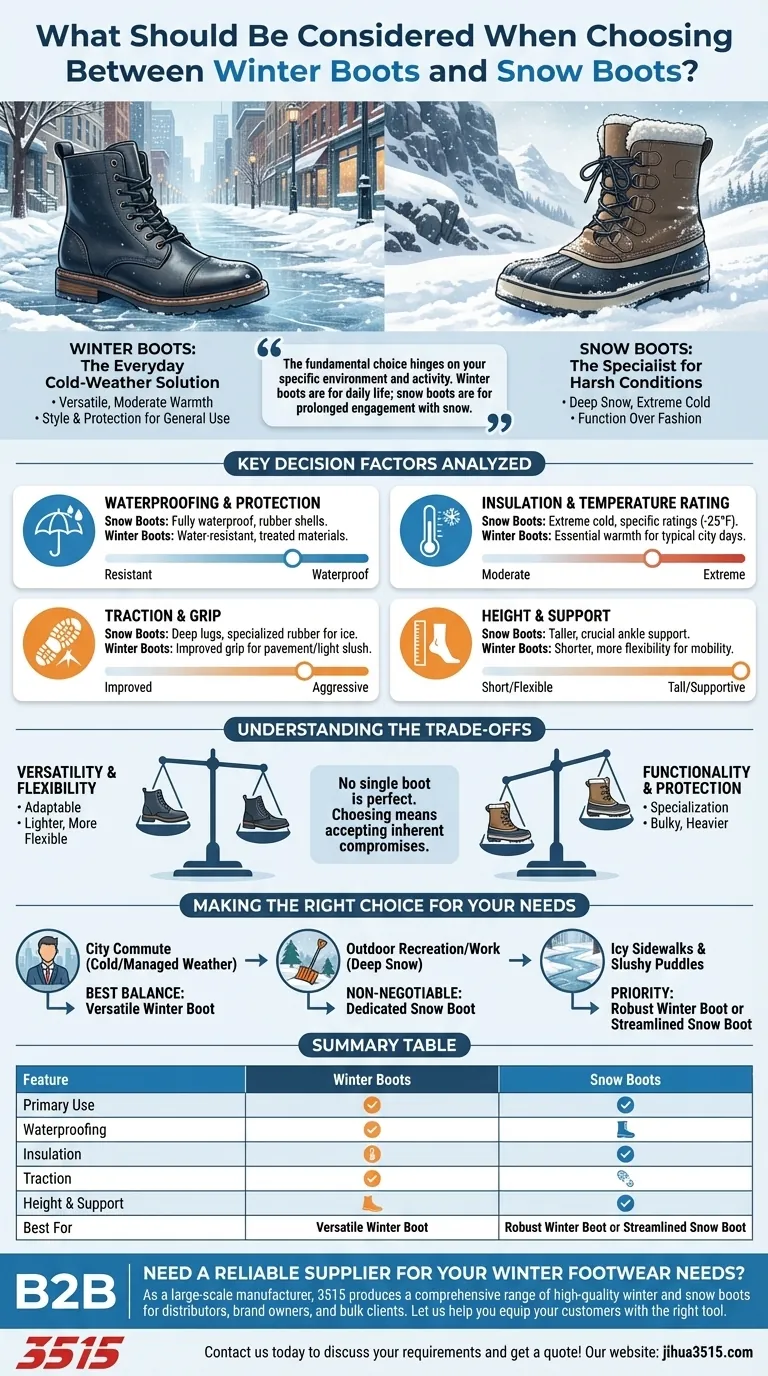
The fundamental choice between winter boots and snow boots hinges on your specific environment and activity. Winter boots are versatile, balancing style with moderate warmth and protection for general cold-weather use, while snow boots are specialized equipment designed for deep snow, extreme cold, and wet conditions.
The decision is not about which boot is superior, but which is the appropriate tool for the task. Winter boots are for daily life in the cold; snow boots are for direct, prolonged engagement with snow and ice.
Defining the Core Purpose
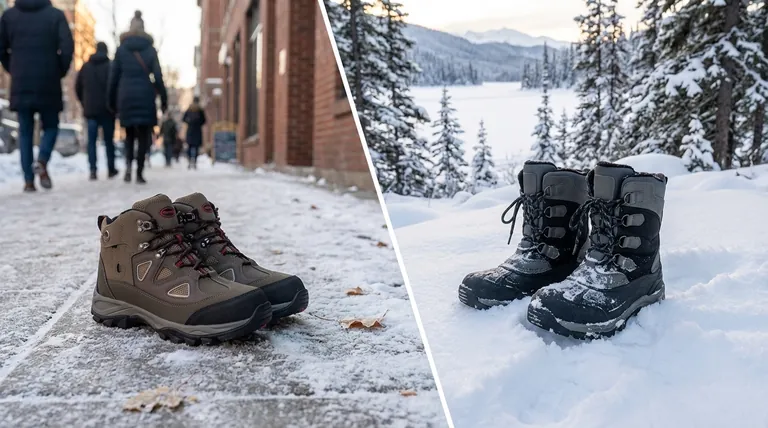
To make the right choice, you must first understand the distinct design philosophy behind each type of boot. They solve different problems.
Winter Boots: The Everyday Cold-Weather Solution
Winter boots are best understood as an enhancement of your daily footwear, adapted for cold temperatures. Their primary focus is versatility.
They are designed to handle common winter scenarios like walking on cold, cleared sidewalks, navigating light slush, and keeping your feet warm during a commute. They often prioritize style, allowing them to be worn in casual or even business-casual settings.
Snow Boots: The Specialist for Harsh Conditions
Snow boots are purpose-built for one thing: conquering snow. Their design is driven entirely by function, not fashion.
They feature robust waterproofing, taller shafts to keep deep snow out, and aggressive tread for gripping packed snow and ice. They are the correct choice for activities like shoveling heavy snow, winter hiking, or any extended time in harsh, snowy environments.
Key Decision Factors Analyzed
Your personal needs will map directly to these key functional differences. Assess your typical winter day against these factors.
Waterproofing and Protection
Snow boots are almost always fully waterproof, often using a rubber shell around the foot and sealed seams. This guarantees your feet stay dry in deep snow or slush.
Winter boots, on the other hand, range from water-resistant to waterproof. Many use treated leather, which can handle light moisture but may not suffice in heavy, wet conditions.
Insulation and Temperature Rating
Both boot types offer insulation, but snow boots are generally built for more extreme cold. They often come with a specific temperature rating (e.g., rated to -25°F / -32°C).
A winter boot provides essential warmth for typical cold city days but may lack the heavy-duty insulation needed for prolonged exposure to frigid temperatures.
Traction and Grip
The outsole is a critical differentiator. Snow boots have deep, aggressive lugs made from specialized rubber compounds designed to bite into snow and maintain grip on ice.
Winter boots have an improved grip over standard shoes, but the tread is typically less pronounced and optimized for walking on cold pavement or light slush rather than treacherous, icy terrain.
Height and Support
Snow boots are built higher to prevent snow from getting inside and to provide crucial ankle support when walking on uneven, snow-covered ground.
Winter boots are generally shorter, offering more flexibility and mobility for everyday activities. This lower profile is more comfortable for all-day wear on flat surfaces but offers less protection.
Understanding the Trade-offs
Choosing one type of boot means accepting the inherent compromises in its design. There is no single boot that is perfect for every situation.
Functionality vs. Versatility
The primary trade-off is specialization versus adaptability. A snow boot offers superior protection in severe weather but is often too bulky, heavy, and warm for indoor wear or mild winter days.
A winter boot is far more versatile. You can wear it on your commute, in the office, and out for the evening, but it will fail you in a deep snowdrift or on a sheet of ice.
Weight and Flexibility
Snow boots are heavier and more rigid due to their robust construction, thick insulation, and protective shells. This can make them feel cumbersome for simple walking.
Winter boots are significantly lighter and more flexible, providing a much more comfortable experience for long periods of wear on even ground.
Making the Right Choice for Your Needs
Base your decision on the most demanding conditions you regularly face, not the most extreme conditions you might encounter once a year.
- If your primary focus is commuting in a city with cold but managed weather: A versatile winter boot offers the best balance of warmth, style, and moderate protection.
- If your primary focus is outdoor recreation or work in deep snow: A dedicated snow boot is non-negotiable for its superior waterproofing, tall design, and aggressive traction.
- If you regularly face icy sidewalks and deep, slushy puddles: Prioritize a boot with excellent grip and guaranteed waterproof construction, which could be a robust winter boot or a more streamlined snow boot.
Choosing the right boot means honestly assessing your environment and activity, ensuring your footwear is a precise tool for your winter reality.
Summary Table:
| Feature | Winter Boots | Snow Boots |
|---|---|---|
| Primary Use | Daily cold-weather wear, commuting | Deep snow, extreme cold, outdoor work/recreation |
| Waterproofing | Water-resistant to waterproof | Fully waterproof, often with rubber shells |
| Insulation | Moderate warmth for typical cold days | Heavy-duty, often with extreme temperature ratings |
| Traction | Improved grip for pavement/light slush | Aggressive tread for snow and ice |
| Height & Support | Shorter, flexible for mobility | Taller, provides ankle support in uneven terrain |
| Best For | Versatility, style, all-day comfort on even ground | Superior protection in harsh, snowy conditions |
Need a reliable supplier for your winter footwear needs?
As a large-scale manufacturer, 3515 produces a comprehensive range of high-quality winter and snow boots for distributors, brand owners, and bulk clients. Whether you need versatile styles for everyday wear or specialized boots for extreme conditions, our production capabilities cover all types of footwear. Let us help you equip your customers with the right tool for their winter reality.
Contact us today to discuss your requirements and get a quote!
Visual Guide
Related Products
- Premium Insulated Safety Boots and Shoes for Wholesale & Bulk Orders
- Factory Direct Wholesale Rain Boots Durable Waterproof & Fully Customizable
- Durable Waterproof Rain Boots | Custom Manufacturer for Wholesale & Brands
- Wholesale Waterproof Tactical Boots Custom Suede & High-Traction Soles
- High Performance Fire-Retardant Waterproof Safety Boots
People Also Ask
- What are the recommended insulation ratings for mild winter conditions? A Guide for Active & Stationary Workers
- How does insulation thickness correlate with temperature ranges? A Guide to Choosing the Right Warmth
- What insulation level is needed for severe cold and stationary work? 1200g or Higher is Essential
- What safety advantages do insulated boots offer beyond warmth? Dielectric Protection & Superior Grip
- How does fleece lining contribute to the warmth of insulated boots? Trapping Air for Superior Cold Protection