
The ideal fit for a Wellington boot is a precise balance. Your boots should feel secure around your calf, but they should absolutely not be tight. A proper fit prevents the boot from slopping around your leg while ensuring you have enough room for comfort, circulation, and tucking in trousers.
The goal is not tightness, but security. A well-fitting Wellington boot is anchored by a snug fit at the heel and ankle, while the calf area should be just close enough to prevent excessive movement without ever feeling restrictive.
The Hallmarks of a Perfect Wellington Fit
Achieving the right fit is less about a single measurement and more about understanding how the different parts of the boot work together to support your foot and leg.
The "One-Finger" Calf Rule
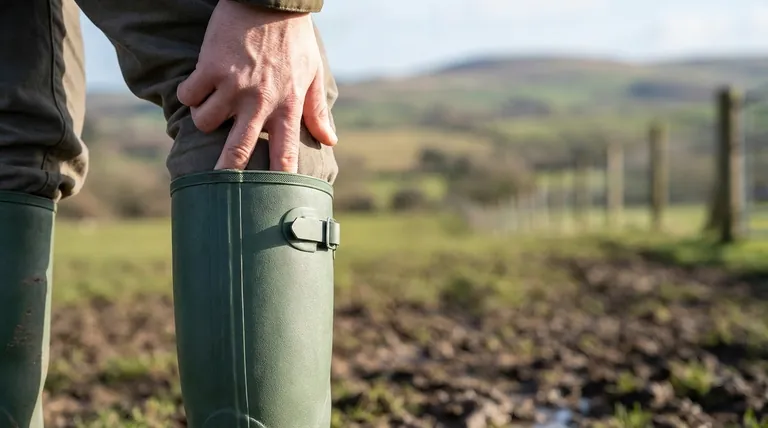
A simple and effective test for calf fit is to see if you can comfortably slide one finger between the boot and your calf.
If you can't fit a finger in, the boot is too tight and will likely restrict circulation. If you can fit more than two fingers, it's probably too loose and will lead to chafing.
Why Too Tight is a Problem
A boot that is too tight around the calf can cause significant discomfort, restrict blood flow, and make the boots extremely difficult to put on and take off. This pressure only worsens during active use.
The Risk of a Loose Fit
Conversely, a boot that is too loose around the calf will lack stability. This allows your leg to move around excessively inside, causing friction, blisters, and a lack of support on uneven ground.
How Boot Design Influences Calf Fit
Not all Wellingtons are created equal. The boot's construction, height, and materials play a critical role in how it fits your specific leg shape.
The Role of Boot Height
Knee-high boots offer the most protection but can be challenging for those with wider calves, as they cover the widest part of the leg.
Mid-calf styles offer more flexibility and are often a better choice if you consistently find taller boots to be too restrictive.
The Power of Adjustable Gussets
The single most important feature for customizing calf fit is an adjustable gusset. This is a waterproof, expandable section on the side of the boot with a strap and buckle.
This feature allows you to perfectly tailor the fit to your calf size, whether you have wider calves or need extra room for thick winter trousers.
Understanding Material Limitations
Wellington boots are typically made of rubber, such as Chamolux rubber, which has minimal stretch. Unlike leather, you cannot expect the boot itself to "break in" or stretch over time.
While linings made of neoprene, leather, or wool may conform slightly to your leg shape with extended wear, the fundamental rubber shell will not change.
Understanding the Trade-offs
Choosing the right boot means balancing competing priorities and understanding the limitations of the materials.
The Myth of "Breaking In"
Do not buy a Wellington boot that feels too tight, hoping it will stretch. The fit you feel in the store is essentially the fit you will have for the life of the boot. Deliberately trying to stretch the rubber can cause damage and compromise its waterproof integrity.
The Impact of Linings
A boot's lining can subtly alter the fit. Thicker linings like neoprene will feel snugger initially but may pack down over time, creating a little more room. Thinner jersey linings will remain true to size and offer a consistent fit from day one.
Function Over Fashion
While style is a factor, the primary purpose of a Wellington boot is function. A slightly less fashionable boot that fits perfectly will always be a better investment than a stylish one that causes discomfort or fails to provide adequate support.
Finding the Right Fit for Your Needs
Use your primary activity as the final guide to selecting the perfect boot.
- If you have wider calves: Prioritize boots with an adjustable side gusset or consider a more forgiving mid-calf style.
- If your primary use is heavy work or hiking: Focus on a snug fit around the heel and ankle for stability, ensuring the calf is secure but not tight.
- If your primary focus is casual wear and dog walking: A slightly roomier calf fit is acceptable, as long as your foot is not slipping inside the boot.
Ultimately, a well-fitting Wellington boot supports your activity without you ever having to think about it.
Summary Table:
| Fit Scenario | Ideal Feel | Key Indicator |
|---|---|---|
| Too Tight | Restrictive, difficult to remove | Cannot fit one finger between boot and calf |
| Perfect Fit | Secure, comfortable, stable | Can comfortably slide one finger in |
| Too Loose | Sloppy, causes friction/blisters | Can fit two or more fingers in |
Need Wellington Boots That Fit Perfectly?
As a large-scale manufacturer, 3515 produces a comprehensive range of high-performance footwear for distributors, brand owners, and bulk clients. Our production capabilities encompass all types of durable boots, including Wellington styles with adjustable gussets and various linings to ensure a perfect, comfortable fit for any calf size and activity.
Let us help you equip your customers with the ideal boot. Contact our team today to discuss your specific requirements and discover how we can support your business with reliable, high-quality footwear solutions.
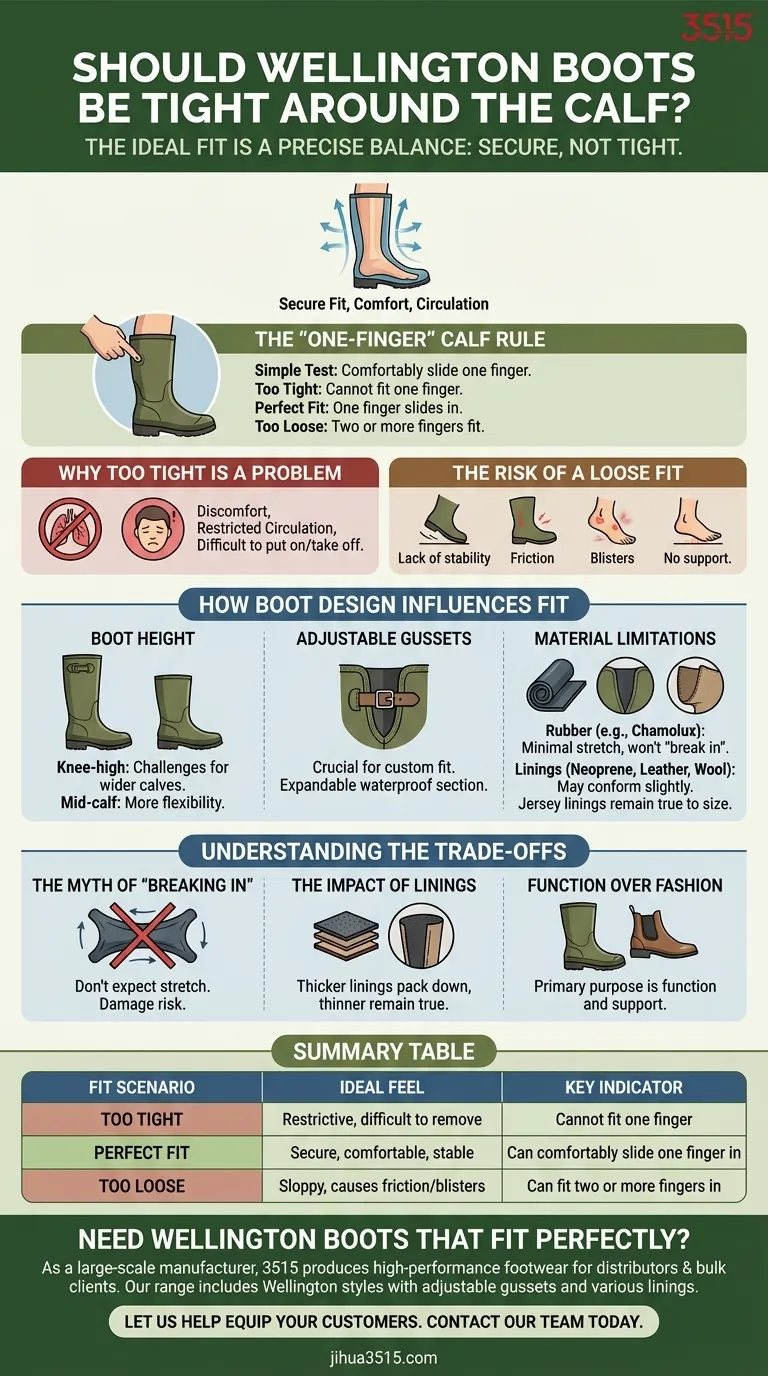
Visual Guide
Related Products
- Durable Waterproof Rain Boots | Custom Manufacturer for Wholesale & Brands
- Durable Goodyear Welt Leather Work Boots for Wholesale & Private Label
- Wholesale Durable Leather Work Boots | 8-Inch Goodyear Welt Manufacturer
- High-Traction Suede Tactical Boots Wholesale & Custom Manufacturing
- Premium Wholesale Tactical Style Safety Shoes Boots with Quick Lacing
People Also Ask
- What are the main materials for waterproof rain boots? Choose the Right Material for Durability & Comfort
- What is the overall recommendation for choosing rain boot materials? A Guide to Rubber vs. PVC
- How does boot height affect waterproofing? Choose the Right Height for Ultimate Protection
- Why are rain boots more flexible and comfortable than snow boots? The Key Differences Explained
- What are the best types of shoes for different gardening conditions? Find Your Perfect Match.



















