
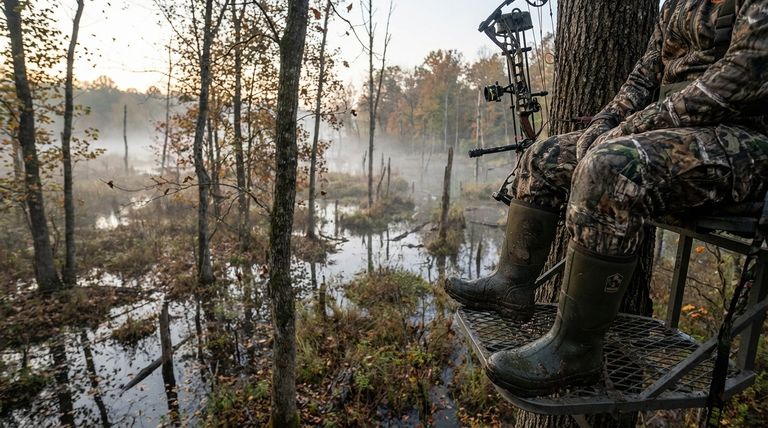
In the right conditions, rubber boots are an indispensable tool for the serious hunter. They are the best choice for stationary hunting in wet, cold, or scent-sensitive environments. This is particularly true when your walk to a treestand or blind is less than a mile, especially in farm country or near water sources where staying dry and scent-free is paramount.
The primary value of rubber boots lies in their unparalleled waterproofing and scent containment. They are a specialized tool for remaining dry and undetected in stationary scenarios, not for covering long distances or navigating aggressive terrain.
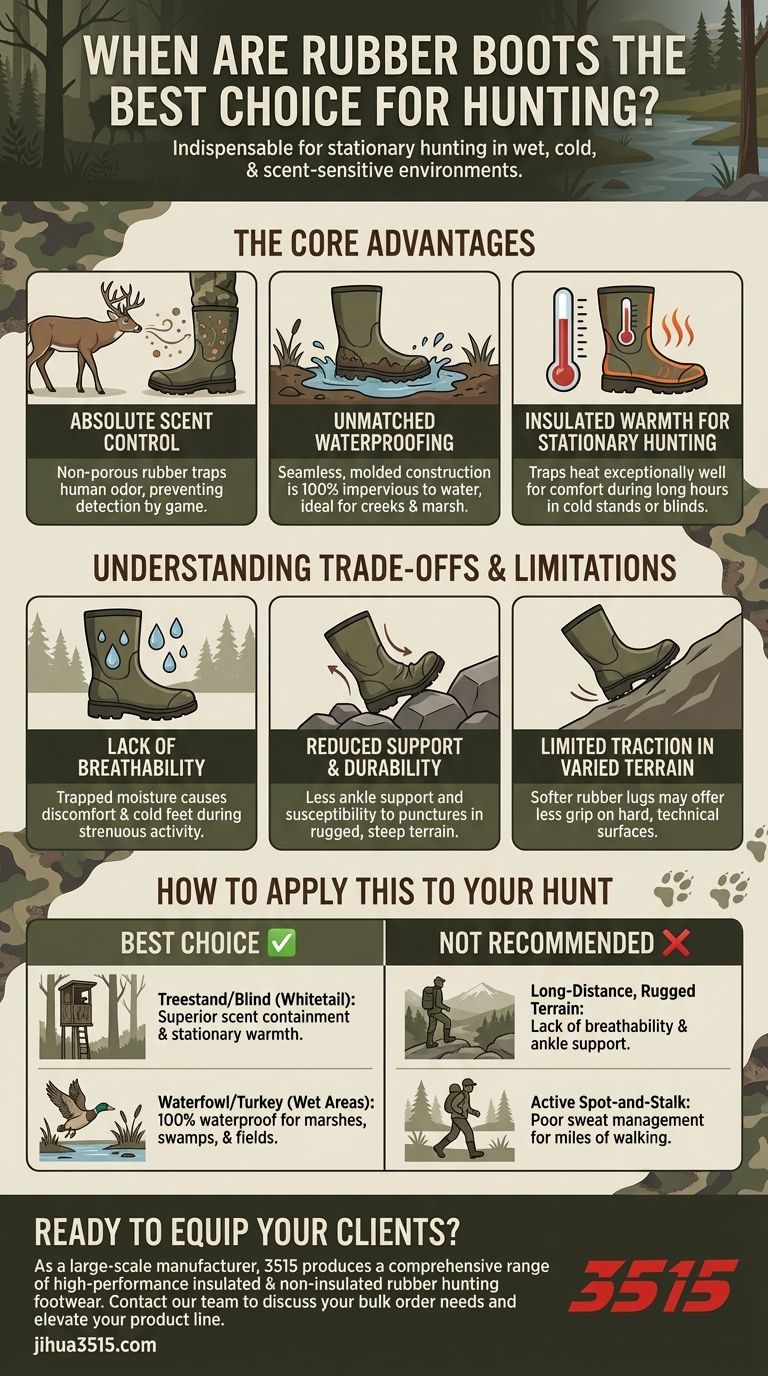
The Core Advantages of Rubber Boots
The specific construction of rubber boots gives them unique advantages that other materials like leather or synthetics cannot match. Understanding these strengths is key to knowing when to use them.
Absolute Scent Control
Rubber is a non-porous material. This means it does not absorb or retain human odor, effectively trapping your scent inside the boot. For animals with an acute sense of smell, like whitetail deer, this level of scent containment can be the deciding factor between a successful hunt and being detected.
Unmatched Waterproofing
Because of their seamless, molded construction, rubber boots are 100% waterproof. They are not merely water-resistant; they are impervious to water. This makes them the definitive choice for crossing creeks, sitting in flooded timber, or navigating marshy and muddy terrain.
Insulated Warmth for Stationary Hunting
Many rubber hunting boots come with significant insulation. Because the material is not breathable, it traps heat exceptionally well. This is a major advantage when you are sitting still for hours in a cold treestand or blind, as it helps maintain warmth when your body is not generating it through activity.
Understanding the Trade-offs and Limitations
No piece of gear is perfect for every situation. The very properties that make rubber boots excel in some scenarios become their primary weaknesses in others.
Lack of Breathability
The non-porous nature that makes rubber boots waterproof and scent-proof also means they are not breathable. During strenuous activity or long walks, your feet will sweat, and that moisture has nowhere to go. Trapped sweat can lead to discomfort, blisters, and ironically, cold feet once you stop moving. This is the main reason they are recommended for walks under a mile.
Reduced Support and Durability
Compared to high-quality leather or synthetic hunting boots, rubber boots typically offer less ankle support and rigidity. Their construction is not ideal for navigating steep, rocky, or uneven terrain where ankle rolls are a risk. Furthermore, while tough, rubber can be more susceptible to punctures from sharp rocks and thorns than a rugged leather boot.
Limited Traction in Varied Terrain
While the outsoles on many rubber boots are excellent in mud and muck, they may not provide the same reliable grip as the deep, technical lugs found on boots designed for mountain or backcountry hunting. The softer rubber compounds can wear faster and offer less traction on hard, angled surfaces.
How to Apply This to Your Hunt
Making the right choice comes down to honestly assessing your primary hunting style and environment.
- If your primary focus is whitetail hunting from a treestand or blind: Rubber boots offer the best combination of scent control, waterproofing, and stationary warmth for this approach.
- If your primary focus is active, spot-and-stalk hunting in rugged terrain: A traditional leather or synthetic hunting boot provides the superior support, breathability, and all-terrain traction needed for covering miles.
- If your primary focus is hunting waterfowl, turkey, or game in consistently wet environments: Rubber boots are the definitive choice for staying dry and comfortable in marshes, swamps, and dewy fields.
Ultimately, choosing the right footwear is about correctly matching the tool to the specific demands of your hunt.
Summary Table:
| Scenario | Best Choice? | Key Reason |
|---|---|---|
| Treestand/Blind Hunting (Whitetail) | ✅ Yes | Superior scent containment & stationary warmth |
| Waterfowl/Turkey in Wet Areas | ✅ Yes | 100% waterproof for marshes & swamps |
| Long-Distance, Rugged Terrain | ❌ No | Lack of breathability & ankle support |
| Active Spot-and-Stalk | ❌ No | Poor for sweat management & miles of walking |
Ready to equip your hunting clients with the perfect rubber boots?
As a large-scale manufacturer, 3515 produces a comprehensive range of high-performance hunting footwear for distributors, brand owners, and bulk clients. Our production capabilities encompass all types of insulated and non-insulated rubber boots designed for durability, comfort, and ultimate stealth.
We can help you source the right footwear to meet the specific demands of your customers' hunting styles. Contact our team today to discuss your bulk order needs and elevate your product line.
Visual Guide
Related Products
- Factory Direct Wholesale Rain Boots Durable Waterproof & Fully Customizable
- Durable Rubber Sole Outdoor Shoes Wholesale & Custom Manufacturing
- Wholesale Durable Camouflage Canvas Shoes with High-Traction Cleated Rubber Sole
- Wholesale Durable Leather Work Boots | 8-Inch Goodyear Welt Manufacturer
- Durable Goodyear Welt Leather Work Boots for Wholesale & Private Label
People Also Ask
- What are the characteristics of rain boots? A Guide to Waterproof Footwear for Every Need
- What factors should be considered when choosing rain boots? Find the Perfect Boot for Your Needs
- What are the main differences between rain boots and snow boots? Choose the Right Boot for Your Climate
- How should one decide between PVC and rubber for rain boots? A Guide to Choosing the Right Material
- Why are rain boots more flexible and comfortable than snow boots? The Key Differences Explained
















