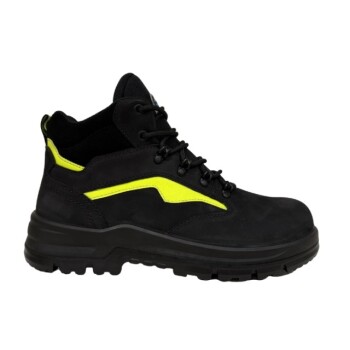
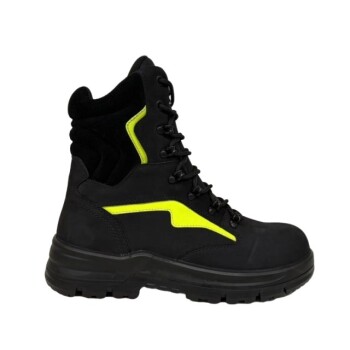
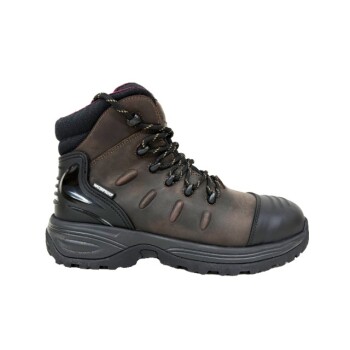
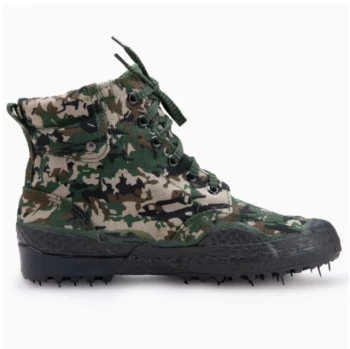
For rainy weather, the most recommended alternatives to traditional wellies are supportive, waterproof footwear options like walking boots, winter boots, and snow boots. Additionally, accessories like gaiters can be used to make existing supportive shoes waterproof, and choosing wellies made from rubber instead of plastic is a better option if wellies are necessary.
The core issue with traditional wellies isn't their ability to keep feet dry, but their lack of ankle support and potential for skin irritation. The best alternatives solve this by combining waterproofing with the structured fit of a proper boot.
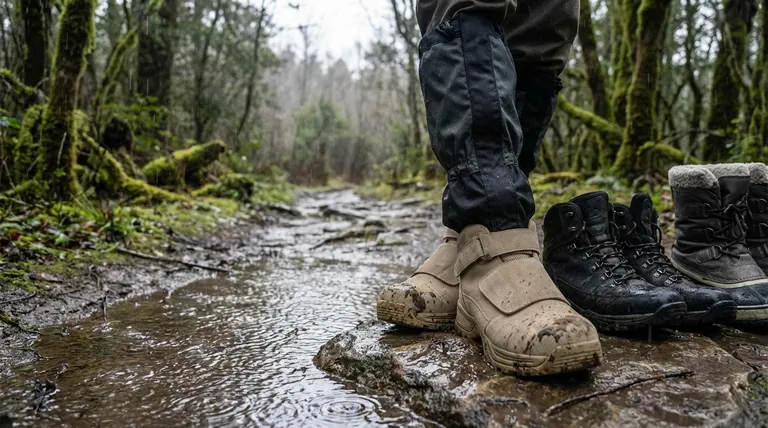
Why Look Beyond Traditional Wellies?
While iconic for puddle-jumping, the loose-fitting design of many wellies presents challenges that lead many to seek alternatives for better foot health and stability.
The Ankle Support Deficit
Standard wellies offer minimal to no ankle support due to their wide, slip-on construction. This lack of structure can be a concern, especially for developing feet or on uneven terrain.
Some parents attempt to mitigate this by using elasticated compression bandages on ankles and limiting wear time, highlighting the known support issue.
The Problem with Materials
Many cheap wellies are made from plastic, which is not breathable and can lead to skin breakdown or irritation.
In contrast, wellies made from natural rubber, such as those from the brand Seasalt, are noted as a better option as they are less likely to cause these skin issues.
A Breakdown of Effective Alternatives
The best alternatives provide the waterproofing of a welly with the structural integrity of a well-fitting boot.
Waterproof Walking & Winter Boots
This is the most frequently suggested category. Waterproof walking boots offer a sturdy, supportive structure designed for activity.
Options include strapped walking boots for younger children and lace-up versions for a secure fit. Fur-lined waterproof winter boots were also mentioned as a warm and supportive choice.
Lace-Up Snow Boots
Snow boots function as an excellent hybrid solution. They are inherently waterproof and warm, but critically, they typically feature a lace-up design.
This lacing provides the adjustable ankle support that wellies lack, making them a far more stable option for active use in wet conditions.
Gaiters
Gaiters, like those from the brand Raindrops, are not footwear themselves but a waterproof covering.
They are worn over existing supportive shoes, such as sneakers or walking boots, to protect the lower legs and prevent water from getting in from the top. This allows you to use already well-fitting, supportive footwear in the rain.
Understanding the Trade-offs
Choosing the right footwear involves balancing convenience with function.
Convenience vs. Support
Wellies are undeniably easy to slip on and off, which is a major advantage.
However, more supportive alternatives like lace-up or strapped boots require more effort to put on but provide superior stability and a safer fit for the foot and ankle.
Cost and Versatility
A good pair of waterproof walking or snow boots may cost more than basic wellies.
Despite the higher initial cost, these boots are far more versatile, suitable for hiking, cold weather, and general wear, offering better long-term value.
Making the Right Choice for Your Needs
Your ideal choice depends on your specific priority for wet-weather footwear.
- If your primary focus is maximum support and foot health: Choose a pair of well-fitting, waterproof walking or snow boots with laces or straps.
- If your primary focus is versatility: Use gaiters over existing supportive footwear to make them waterproof as needed.
- If your primary focus is convenience for very short-term wear: Wellies can work, but opt for natural rubber and limit the time they are worn.
Ultimately, the goal is to select footwear that actively supports the foot, rather than just passively protecting it from water.
Summary Table:
| Alternative | Key Feature | Best For |
|---|---|---|
| Waterproof Walking Boots | Sturdy, lace-up/strapped support | Maximum ankle support & active use |
| Snow Boots | Waterproof, warm, lace-up design | Cold, wet conditions & stability |
| Gaiters | Waterproof cover for existing shoes | Versatility & short-term waterproofing |
| Rubber Wellies (vs. plastic) | Breathable, natural material | Convenience with reduced skin irritation |
Need reliable, supportive footwear for wet conditions? As a large-scale manufacturer, 3515 produces a comprehensive range of waterproof boots, walking shoes, and all-weather footwear for distributors, brand owners, and bulk clients. Our production capabilities ensure durable, well-fitting options that prioritize foot health—perfect for replacing traditional wellies. Contact us today to discuss your needs!
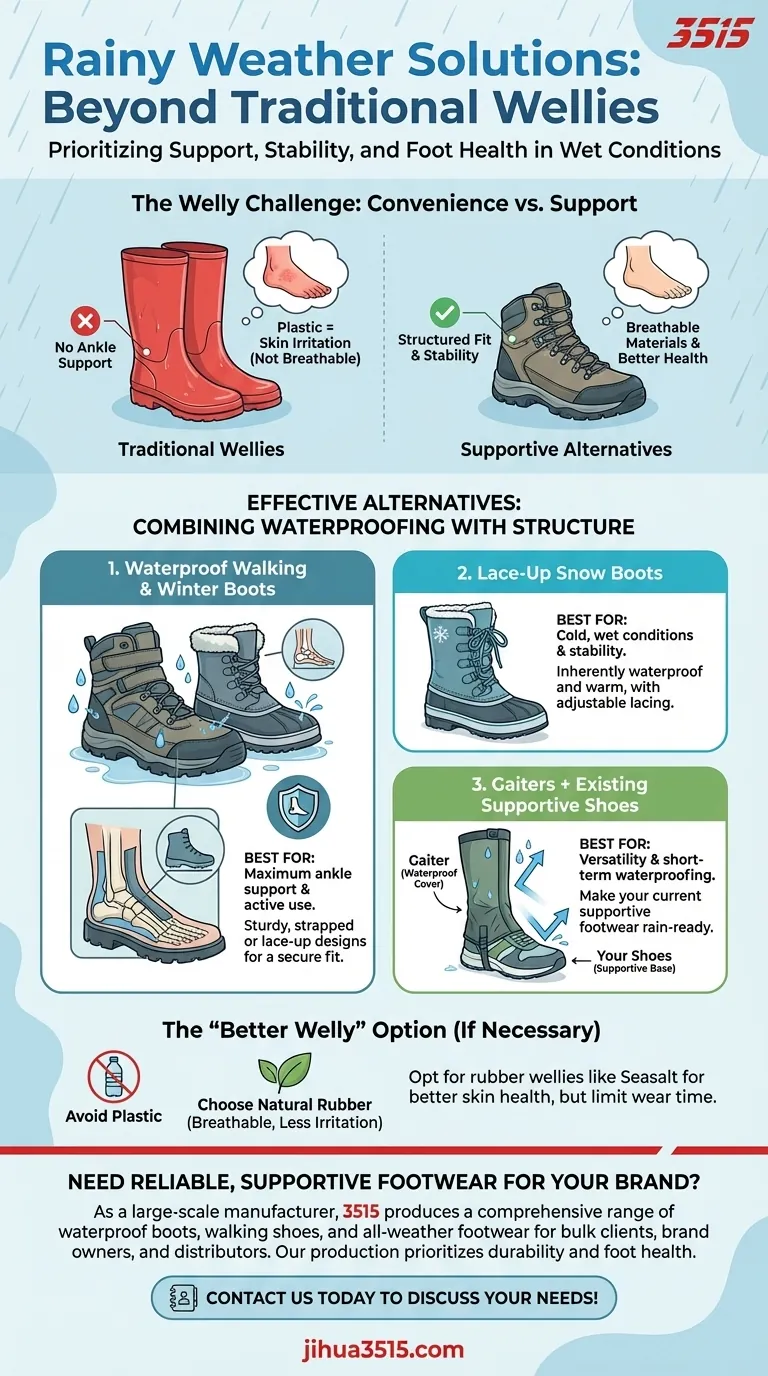
Visual Guide
Related Products
- Wholesale Premium Waterproof Nubuck Safety Shoes Boots
- Premium Waterproof Nubuck Safety Boots for Wholesale
- Premium Wholesale Waterproof Safety Boots High Performance Protection for Industrial Markets
- High Performance Fire-Retardant Waterproof Safety Boots
- Durable Waterproof Rain Boots | Custom Manufacturer for Wholesale & Brands
People Also Ask
- Why are waterproof safety boots recommended for certain work environments? Essential Protection for Wet & Hazardous Jobs
- What materials are commonly used in waterproof boots? The Complete Guide to Durable, Breathable Protection
- What are the drawbacks of waterproof boots? The Breathability vs. Protection Trade-Off
- What is the advantage of one-piece construction in waterproof boots? Unbeatable Seamless Protection
- What is the difference between waterproof, water-resistant, and water-repellent boots? Choose the Right Protection for Your Feet