
To care for Wellington boots, you must regularly clean them with water, allow them to air dry completely away from direct heat sources, condition the rubber with a silicone-based spray, and store them in a cool, dark, and ventilated area. This simple routine prevents the natural rubber from drying out, cracking, and losing its protective qualities.
The core principle of Wellington boot care is treating the rubber like skin: it needs to be cleaned gently, kept moisturized, and protected from environmental extremes like direct sunlight and high heat to prevent premature aging and cracking.
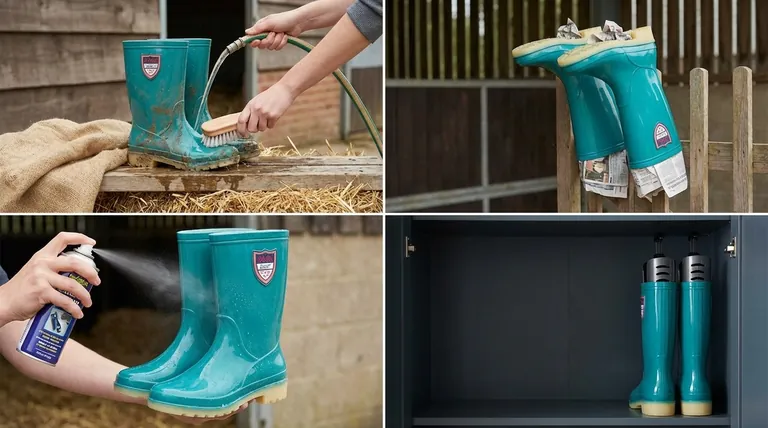
The Core Principles of Wellington Boot Care
Wellington boots are typically made from natural rubber, a durable but sensitive material. Unlike synthetic materials or leather, rubber's primary enemies are UV light, extreme temperatures, and ozone, all of which cause it to become brittle over time. Proper care mitigates this natural degradation process.
Step 1: Cleaning After Every Use
Dirt and mud can contain contaminants that degrade rubber. A consistent cleaning routine is the first line of defense.
Use only cool water and a soft brush or cloth to gently remove all dirt and debris.
Pay special attention to the seams and the tread on the sole, where mud can accumulate.
Crucially, avoid detergents and harsh soaps, as their chemical agents can strip the natural protective oils from the rubber, accelerating the drying process.
Step 2: Proper Drying Technique
How you dry your boots is just as important as how you clean them. Improper drying is a common cause of cracking.
Never place boots near a direct heat source like a radiator, fireplace, or in direct sunlight. This intense heat will "bake" the rubber, making it brittle.
Allow them to air dry naturally in a well-ventilated space at room temperature. Stuffing them with newspaper can help absorb internal moisture and speed up the process.
Step 3: Conditioning the Rubber
Conditioning is the most critical step for long-term durability. It replenishes the moisture and protective barrier of the rubber.
Once the boots are completely dry, apply a silicone-based spray or rubber conditioner. This nourishes the material, restores its natural shine, and adds a protective layer against the elements.
Spray evenly from a distance and wipe away any excess with a clean, dry cloth. This step is the best way to prevent the fine cracks that often appear around the ankle and foot flex points.
Step 4: Correct Storage
Long-term storage conditions can make or break a pair of boots. Improper storage exposes them to the very elements that degrade rubber.
Store your boots in a cool, dry, and dark place, such as a closet or a dedicated boot bag. This protects them from UV light and temperature fluctuations.
Keep them upright to prevent creasing or folding in the shaft, which can create weak points in the rubber over time. Using a boot stand or inserting a shaper can help maintain their form.
Understanding the Trade-offs and Common Mistakes
Effective boot care is about avoiding common pitfalls that shorten the lifespan of the rubber. Many well-intentioned actions can inadvertently cause damage.
The Mistake of Using Heat to Dry
The most common mistake is attempting to speed up the drying process with heat. While it seems efficient, placing wet boots by a radiator is the fastest way to weaken the rubber and cause it to crack. Patience and air-drying are non-negotiable.
Neglecting the Zippers
For boots with zippers, the mechanism is a potential failure point. Dirt and grit can wear down the teeth and cause the zipper to jam or break.
Regularly clean the zipper track with a small brush. If a zipper feels stiff, do not force it. Instead, clean it thoroughly and apply a light lubricant like wax or a specialized zipper lube to ensure it runs smoothly.
Forgetting to Condition
Skipping the conditioning step is like washing your hands without ever using lotion. Over time, the rubber will inevitably dry out. Regular conditioning keeps the material supple and resilient, significantly extending the boots' usable life.
How to Apply This to Your Boots
Your specific routine can be adapted based on how you use your boots, but the core principles remain the same.
- If your primary focus is daily use (e.g., for farming or dog walking): Clean them after each use and aim to condition them at least once a month to counteract the constant exposure.
- If your primary focus is occasional use (e.g., for festivals or seasonal gardening): Ensure they are thoroughly cleaned, dried, and conditioned before storing them for any extended period.
- If your boots have zippers or other hardware: Make cleaning and lubricating the zipper a mandatory part of your cleaning routine to prevent it from failing before the boot does.
Ultimately, consistent care is the key to ensuring your Wellington boots remain a reliable and long-lasting piece of gear.
Summary Table:
| Care Step | Key Action | What to Avoid |
|---|---|---|
| Cleaning | Use cool water and a soft brush. | Harsh soaps and detergents. |
| Drying | Air dry naturally, stuff with newspaper. | Direct heat sources like radiators. |
| Conditioning | Apply a silicone-based spray. | Skipping this step. |
| Storage | Store in a cool, dark, ventilated area. | Sunlight, heat, and folding the shaft. |
Need a reliable source for durable Wellington boots? As a large-scale manufacturer, 3515 produces a comprehensive range of high-quality footwear for distributors, brand owners, and bulk clients. Our expertise ensures your boots are built to last from the start. Contact us today to discuss your needs and discover how we can support your business with superior footwear solutions.
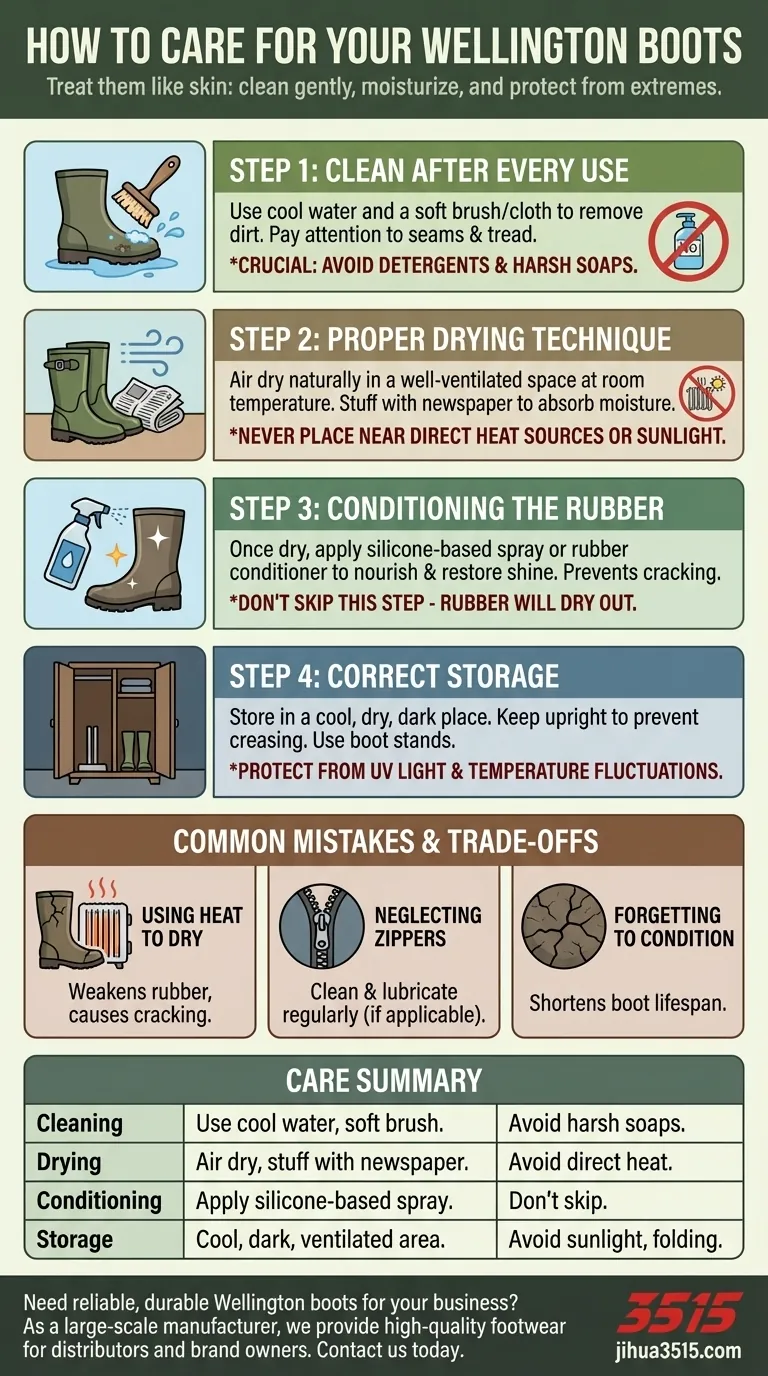
Visual Guide
Related Products
- Durable Waterproof Rain Boots | Custom Manufacturer for Wholesale & Brands
- Durable Goodyear Welt Leather Work Boots for Wholesale & Private Label
- Wholesale Durable Leather Work Boots | 8-Inch Goodyear Welt Manufacturer
- High-Traction Suede Tactical Boots Wholesale & Custom Manufacturing
- Premium Wholesale Tactical Style Safety Shoes Boots with Quick Lacing
People Also Ask
- What are the main materials for waterproof rain boots? Choose the Right Material for Durability & Comfort
- What is the overall recommendation for choosing rain boot materials? A Guide to Rubber vs. PVC
- How does boot height affect waterproofing? Choose the Right Height for Ultimate Protection
- Why are rain boots more flexible and comfortable than snow boots? The Key Differences Explained
- What are the best types of shoes for different gardening conditions? Find Your Perfect Match.



















