
After a thorough soak, the key to effectively scrubbing rubber boots is to use a soft brush and mild soap, focusing your attention on the details where dirt becomes trapped. This methodical approach removes remaining grime without damaging the boot's material.
The goal of scrubbing isn't just to remove visible mud, but to perform preventative maintenance. By meticulously cleaning hard-to-reach areas, you prevent the grime and moisture that can degrade seams and cause permanent stains.
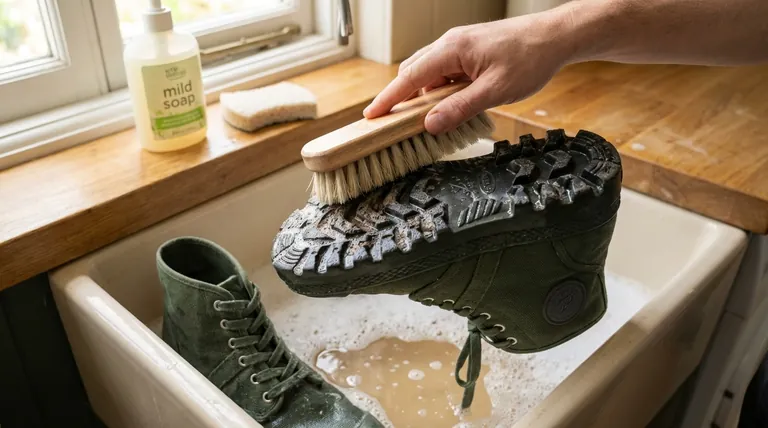
The Essential Scrubbing Method
A proper scrub requires the right tools and a focus on the most vulnerable parts of your boots. The soaking phase has done the heavy lifting; this stage is about precision.
Choose the Right Tools
The most critical choice is your brush. A soft-bristled brush, like a dish brush or an old toothbrush, is ideal. It has enough stiffness to dislodge mud but is gentle enough to avoid scratching or scuffing the rubber.
For a cleaning agent, a mild soap is all you need. Simple dish soap mixed with warm water works perfectly, cutting through grime without using harsh chemicals that could dry out and damage the rubber over time.
Execute a Methodical Scrub
Begin by applying your soapy water and scrubbing the main surfaces of the boot to remove any loosened, residual mud.
Once the large surfaces are clean, shift your focus. Pay special attention to the seams, gussets, and around any eyelets or buckles. These are the areas where mud gets compacted and can cause the most long-term damage if left alone. Use a smaller brush, like a toothbrush, for these tight spots.
Addressing Stains and Damage
Cleaning is also the best time to inspect your boots for potential issues. Acting quickly can mean the difference between a simple spot treatment and permanent damage.
The Importance of Quick Action
During your scrub, look for any discoloration or potential stains from grease, oil, or other materials.
You must treat these stains immediately. The longer a foreign substance sits on the rubber, the higher the likelihood it will bond with the material and become permanent.
Common Pitfalls to Avoid
Aggressive cleaning can cause more harm than the dirt itself. Understanding what not to do is as important as knowing the correct method.
Abrasive Brushes and Cleaners
Never use steel wool, scouring pads, or stiff-bristled brushes. These will create micro-scratches on the surface of the rubber, which dulls the finish and makes the boots more susceptible to collecting dirt in the future.
Likewise, avoid harsh chemical cleaners, solvents, or bleach. These can strip the protective coatings from the rubber, causing it to become brittle and prone to cracking.
Making the Right Choice for Your Goal
Your scrubbing technique can be adapted based on your immediate need, whether it's a quick clean-up or a deep, restorative cleaning.
- If your primary focus is a quick, functional clean: Perform a general scrub with a soft brush and soap, ensuring all visible mud is gone.
- If your primary focus is long-term boot care and preservation: Meticulously scrub all seams and hardware, and immediately spot-treat any potential stains you discover.
This detailed approach ensures your boots are not just clean, but properly maintained for their next use.
Summary Table:
| Step | Key Action | Purpose |
|---|---|---|
| 1 | Use a soft-bristled brush (e.g., dish brush, toothbrush) | To dislodge mud without scratching the rubber. |
| 2 | Apply mild soap (e.g., dish soap) with warm water | To cut through grime without harsh chemicals. |
| 3 | Focus on seams, gussets, and eyelets | To remove compacted dirt and prevent long-term damage. |
| 4 | Spot-treat stains immediately | To prevent permanent discoloration. |
| 5 | Avoid abrasive tools and harsh cleaners | To protect the rubber from scratches and brittleness. |
Need durable, easy-to-clean rubber boots for your business? As a large-scale manufacturer, 3515 produces a comprehensive range of high-quality footwear for distributors, brand owners, and bulk clients. Our boots are designed for easy maintenance and long-term performance. Contact us today to discuss your specific needs and benefit from our extensive production capabilities!
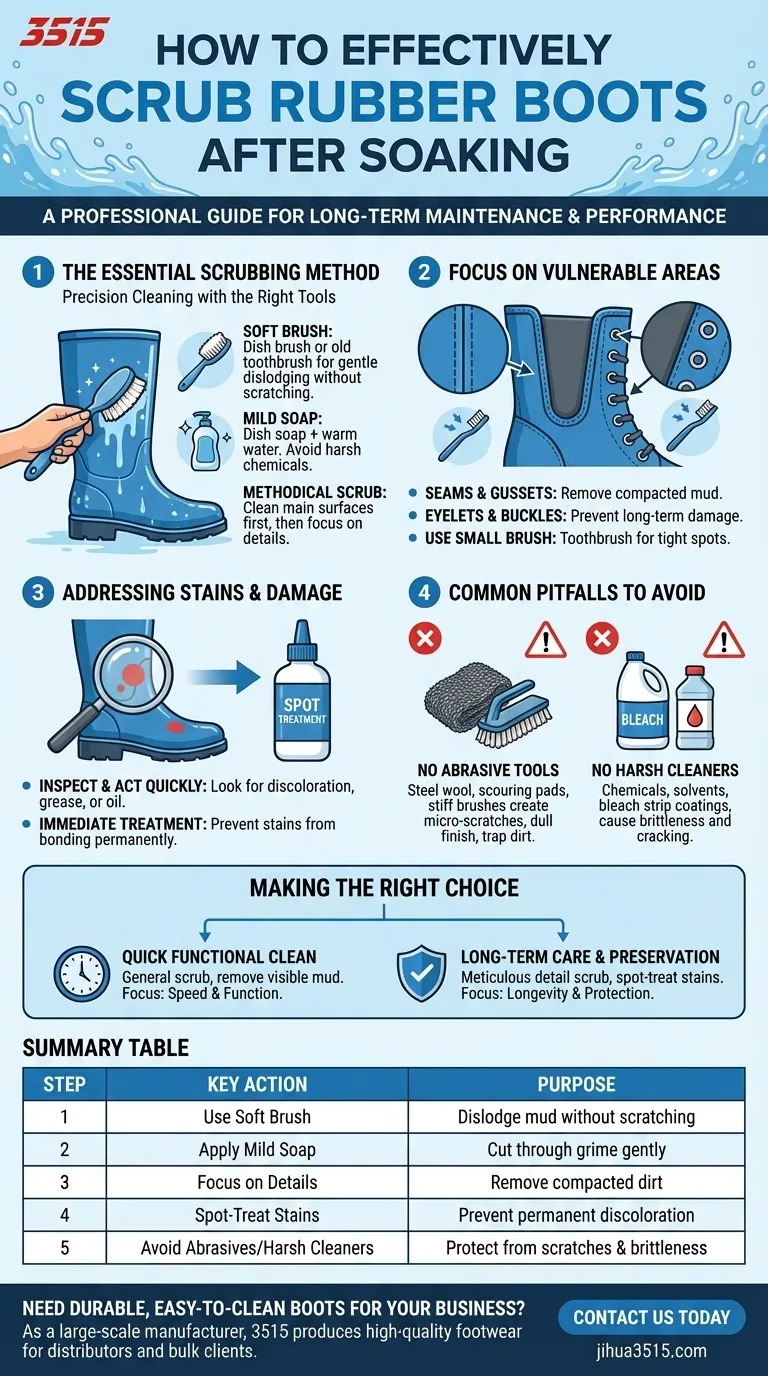
Visual Guide
Related Products
- Factory Direct Wholesale Rain Boots Durable Waterproof & Fully Customizable
- Durable Rubber Sole Outdoor Shoes Wholesale & Custom Manufacturing
- Wholesale Durable Camouflage Canvas Shoes with High-Traction Cleated Rubber Sole
- Wholesale Durable Leather Work Boots | 8-Inch Goodyear Welt Manufacturer
- Durable Goodyear Welt Leather Work Boots for Wholesale & Private Label
People Also Ask
- What are the characteristics of rain boots? A Guide to Waterproof Footwear for Every Need
- What factors should be considered when choosing rain boots? Find the Perfect Boot for Your Needs
- What are the main differences between rain boots and snow boots? Choose the Right Boot for Your Climate
- How should one decide between PVC and rubber for rain boots? A Guide to Choosing the Right Material
- Why are rain boots more flexible and comfortable than snow boots? The Key Differences Explained















