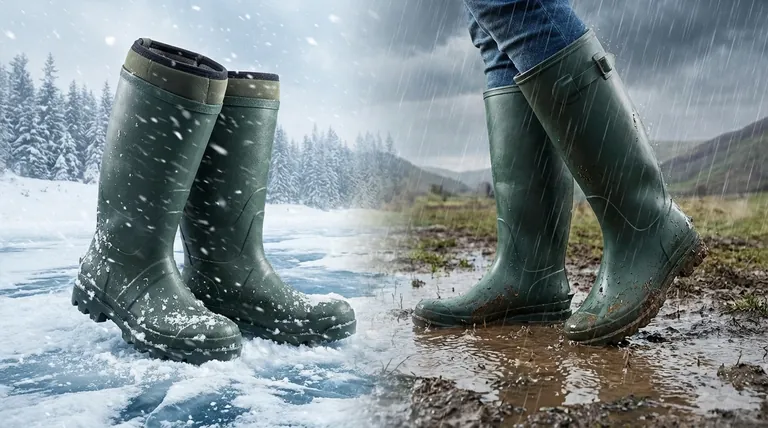
Beyond basic waterproof protection, men's wellies are engineered with specific features to handle distinct weather conditions. For cold and snow, key features include insulated linings like neoprene for warmth and deep-lugged, sturdy outsoles for superior grip on icy surfaces. For general wet conditions, the focus is on durable, seamless waterproof construction.
The crucial difference between a simple rain boot and a true all-weather welly lies in specialized features. Understanding insulation, sole design, and material construction is the key to choosing footwear that performs correctly in your specific environment.
The Foundation: The Waterproof Barrier
Every wellington boot begins with one primary function: keeping your feet dry. However, the quality and method of achieving this vary and form the base upon which other features are built.
The Role of Natural Rubber
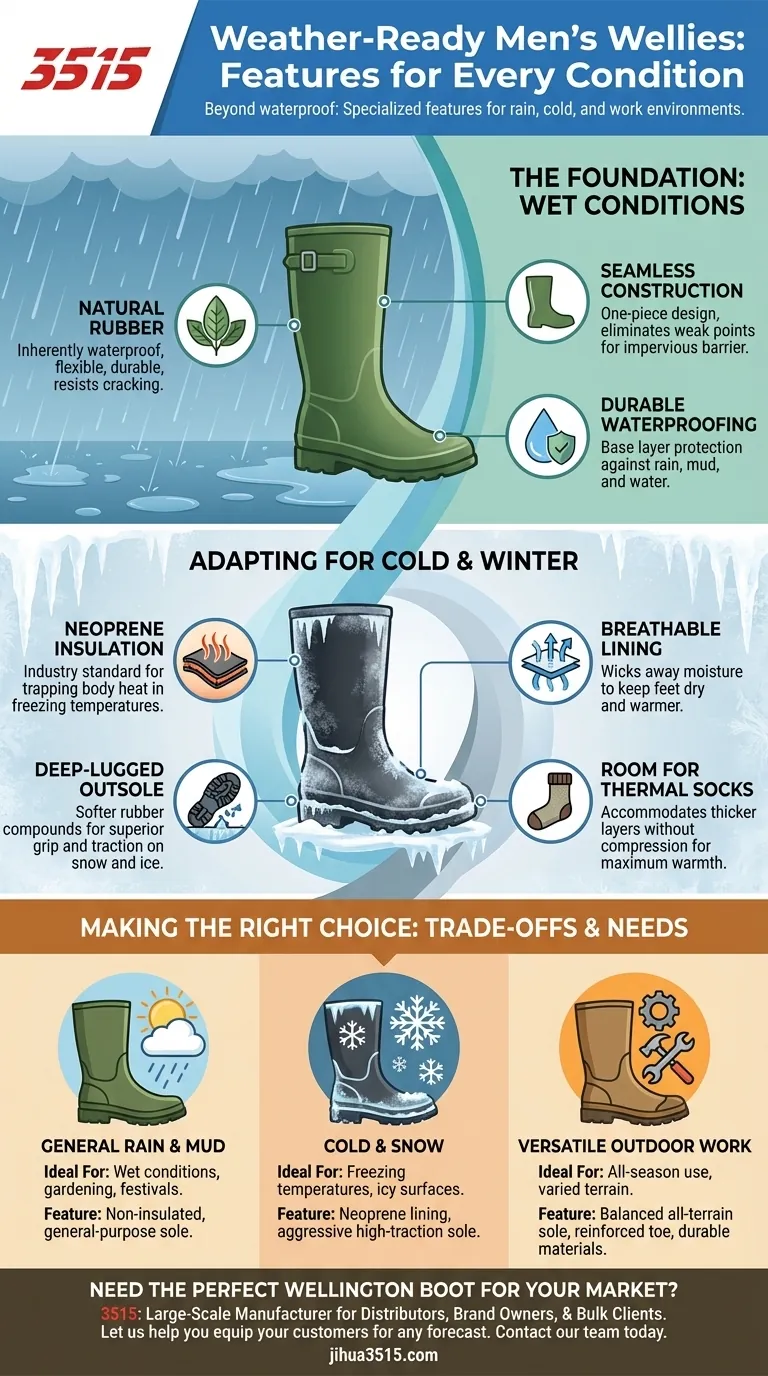
Most high-quality wellies are made from natural rubber. This material is inherently waterproof, flexible, and more durable than cheaper synthetic alternatives, resisting cracks and splits over time.
Seamless Construction
The boot's main shaft and foot are typically formed as a single piece. This seamless design eliminates the weak points found in stitched footwear, providing a completely impervious barrier against rain, puddles, and mud.
Adapting for Cold and Winter Conditions
While all wellies are waterproof, not all are suitable for cold weather. Specialized winter wellies incorporate features designed specifically to retain warmth and ensure safety in snow and ice.
The Critical Role of Insulation
The single most important feature for cold weather is an insulated lining. Neoprene is the industry standard, offering excellent thermal properties that trap body heat, keeping your feet warm even in freezing temperatures.
Grip and Traction on Icy Surfaces
Standard welly soles can become stiff and slippery in the cold. Winter models feature aggressive, deep-lugged outsoles made from softer rubber compounds that remain flexible. This design provides critical traction to prevent slips on snow and ice.
Breathable Linings for Dry Warmth
Counterintuitively, a boot that is too airtight can make your feet colder. Moisture from sweat can get trapped, cool down, and chill your feet. Some advanced wellies include breathable linings that wick this moisture away, keeping your feet dry and therefore warmer.
Room for Thermal Socks
A proper winter welly is designed with slightly more volume. This accommodates the thicker thermal socks needed for extreme cold without compressing them, which would reduce their insulating ability.
Understanding the Trade-offs
Choosing the right welly involves balancing competing features. A boot that excels in one condition may be unsuitable for another.
Insulation vs. All-Season Use
A heavily insulated neoprene-lined boot is ideal for winter but will be uncomfortably warm during a mild, rainy spring day. A non-insulated boot is more versatile for three-season use but offers no protection from the cold.
Aggressive Soles vs. Hard Surfaces
A deep, aggressive tread is perfect for mud and snow but can feel clunky and wear down faster on pavement or concrete. A less aggressive sole is more comfortable for general walking but offers less grip in challenging terrain.
Durability vs. Weight
Features like reinforced toes and thicker rubber add significant durability and protection. However, they also add weight, which can lead to fatigue over long periods of wear.
Making the Right Choice for Your Needs
Selecting the correct welly depends entirely on the primary conditions you will face.
- If your primary focus is general rain and mud: A standard, non-insulated natural rubber boot with a general-purpose sole is sufficient and versatile.
- If your primary focus is cold, snow, and ice: Prioritize a boot with a neoprene lining for insulation and an aggressive, high-traction outsole.
- If your primary focus is versatile outdoor work: Look for a durable model with a reinforced toe and a balanced, all-terrain sole.
Understanding these key features ensures your choice provides the right protection and comfort for any weather you face.
Summary Table:
| Weather Condition | Key Features | Ideal For |
|---|---|---|
| Cold & Snow | Neoprene insulation, deep-lugged outsole, room for thermal socks | Freezing temperatures, icy surfaces, winter activities |
| General Rain & Mud | Seamless natural rubber construction, durable waterproof design | Wet conditions, gardening, festivals, light outdoor work |
| Versatile Outdoor Work | Balanced all-terrain sole, reinforced toe, durable materials | All-season use, varied terrain, demanding environments |
Need the Perfect Wellington Boot for Your Market?
As a large-scale manufacturer, 3515 produces a comprehensive range of durable, weather-specific footwear for distributors, brand owners, and bulk clients. Our production capabilities encompass all types of men's wellies, from insulated winter boots to versatile all-season models, ensuring your customers get the right protection and comfort.
Let us help you equip your customers for any forecast.
Contact our team today to discuss your specific needs and explore our manufacturing solutions.
Visual Guide
Related Products
- Durable Waterproof Rain Boots | Custom Manufacturer for Wholesale & Brands
- Wholesale Leather Ankle Boots with Lug Soles for Custom Brand Manufacturing
- Durable Leather Tactical Boots Wholesale & Custom Manufacturing for Brands
- Wholesale Leather Derby Dress Shoes Custom Manufacturer for Brands
- Custom Breathable Perforated Leather Derby Shoes for Wholesale & Brands
People Also Ask
- What are the main materials for waterproof rain boots? Choose the Right Material for Durability & Comfort
- What is the overall recommendation for choosing rain boot materials? A Guide to Rubber vs. PVC
- How does boot height affect waterproofing? Choose the Right Height for Ultimate Protection
- Why are rain boots more flexible and comfortable than snow boots? The Key Differences Explained
- What are the best types of shoes for different gardening conditions? Find Your Perfect Match.