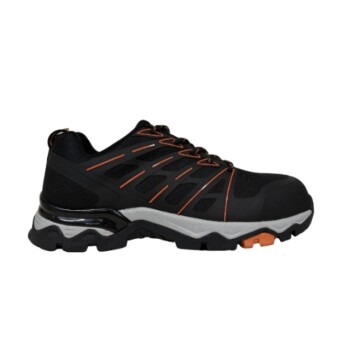
Optimization of professional functional footwear depends on counteracting the specific biomechanical compensations the body makes when carrying heavy loads. Research confirms that designs must prioritize reinforced torsional stiffness in the midsole, enhanced heel cushioning, and an expanded outsole contact area to support the user's widened stance and extended double-support phase.
Load-bearing gait research reveals that the body naturally seeks stability by widening steps and increasing ground contact time; footwear must accommodate this by offering a rigid, broad platform that manages shifting centers of gravity.
Adapting Design to Biomechanical Changes
Research into load-bearing gait highlights a clear physiological response: as the load increases, the user increases their step width to maintain balance. This shift fundamentally changes the structural requirements of the shoe.
Reinforcing Torsional Stiffness
Because the body adopts a wider stance under load, the foot is subjected to increased lateral forces. To counteract this, the midsole must possess reinforced torsional stiffness.
This rigidity prevents the shoe from twisting excessively during the gait cycle. It ensures the platform remains stable even when the user’s stride is forced into a wider, compensatory pattern.
Enhancing Heel Cushioning
Heavy loads significantly increase the impact force generated with every step. The research indicates a need for enhanced cushioning specifically in the heel area.
This targeted absorption is critical for mitigating the shock transmitted through the kinetic chain. It protects the wearer from fatigue and joint stress caused by the combination of added weight and the extended double-support phase of walking.
Stability and Surface Interaction
Beyond internal structure, the interaction between the boot and the ground is the primary factor in maintaining dynamic balance.
Maximizing Outsole Contact Area
As the center of gravity shifts under a heavy pack, the user’s gait becomes less predictable. A larger outsole contact area provides a broader base of support.
This expansion helps the user maintain equilibrium during the "double-support" phase, where both feet are on the ground. A wider outsole effectively anchors the user, compensating for the destabilizing effect of the external load.
Optimizing for Terrain Variance
While asphalt is a standard baseline, functional footwear is often used on irregular, soft surfaces like grass. These surfaces increase the duration of the gait cycle and alter the swing phase.
Manufacturers must utilize terrain-specific data to tune outsole grip and midsole shock absorption. The goal is to reduce physical fatigue by adapting the shoe’s reaction to the specific angular velocities encountered on complex terrain.
Understanding the Trade-offs
Optimizing for maximum stability under load presents specific design challenges that must be carefully balanced against agility and sensory feedback.
The Proprioception Challenge
While a stiff, thick sole provides excellent load support, it can dampen proprioception—the user's ability to feel the ground.
Dynamic stability platform testing captures the "Time in Balance" (TIB) to evaluate this interaction. If a boot is too rigid or disconnected from the surface, it may negatively impact the user's natural ability to react to sudden slips or trips.
Weight vs. Durability
Adding reinforced midsoles and wider outsoles inevitably increases the physical weight of the footwear.
Designers must balance the need for structural support against the fatigue caused by lifting a heavier boot thousands of times a day. Materials must be selected that offer high rigidity without adding excessive mass.
Making the Right Choice for Your Goal
To select or design the optimal footwear, you must align the technical specifications with the primary operational environment.
- If your primary focus is heavy load-bearing on flat surfaces: Prioritize a wider outsole contact area and maximum torsional stiffness to support the extended double-support phase of the gait.
- If your primary focus is agility on complex, soft terrain: Focus on terrain-specific outsole grip patterns and shock absorption that accommodates irregular gait cycles and angular velocity changes.
True optimization occurs when the footwear's mechanical structure acts as a seamless extension of the body's natural stability mechanisms.
Summary Table:
| Optimization Area | Key Benefit/Reason |
|---|---|
| Reinforced Torsional Stiffness | Prevents excessive twisting, maintains stability under wider stances |
| Enhanced Heel Cushioning | Mitigates impact forces, reduces fatigue and joint stress from heavy loads |
| Maximized Outsole Contact Area | Provides a broader base of support, maintains equilibrium during the double-support phase |
| Terrain-Specific Optimization | Reduces physical fatigue by adapting to angular velocities on complex terrain |
Elevate your product offerings with professional functional footwear expertly optimized for stability and performance under load. As a large-scale manufacturer serving distributors and brand owners, 3515 offers comprehensive production capabilities for all footwear types, anchored by our flagship Safety Shoes series. Our extensive portfolio covers work and tactical boots, outdoor shoes, training shoes, sneakers, and Dress & Formal shoes to meet diverse bulk requirements. Partner with us to deliver superior footwear that meets the rigorous demands of your customers. Contact us today to discuss your manufacturing needs!
References
- Paulina Tomal, Lechosław B. Dworak. Influence of School Backpack Load as a Variable Affecting Gait Kinematics among Seven-Year-Old Children. DOI: 10.3390/ijerph19073843
This article is also based on technical information from 3515 Knowledge Base .
Related Products
- Premium Suede Sport Safety Shoes for Wholesale & Bulk Orders
- Premium Lightweight Safety Shoes for Wholesale & Bulk Orders
- Wholesale Anti-Smash & Puncture-Proof Safety Shoes Custom Manufacturing for Brands
- Premium KPU Injection Athletic Style Safety Shoes
- Premium Safety Shoes with Rotating Buckle Safety Sneakers
People Also Ask
- What industries have specific OSHA footwear requirements? Ensure Compliance & Protect Your Workforce
- What are the primary functions of professional safety shoes? Maximize Safety in Water Supply Confined Spaces
- What role do specialized safety shoes play in preventing falls? Engineering Stability in Industrial Environments
- Why are customized foot sensors or professional safety shoes incorporated into biomechanical testing? Precision Insights
- How do complex outsole tread designs in safety shoes work with coated floors? Master Slip Resistance Engineering