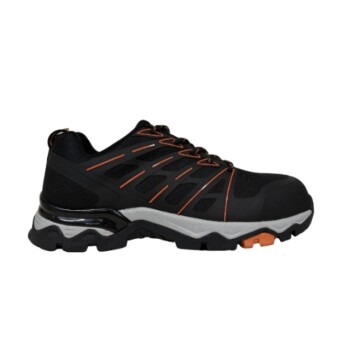
Integrating embedded sensors into safety or outdoor footwear transforms standard shoes into precise, non-invasive diagnostic tools. By embedding electronics within a structurally stable chassis, these systems allow for continuous biomechanical monitoring without altering natural movement patterns. This integration protects delicate components and ensures the sensor’s measurement axis remains consistent, even when the wearer traverses uneven terrain or slopes.
The structural rigidity of safety and outdoor footwear provides a stable platform for sensors, enabling the capture of ecologically valid biomechanical data outside the laboratory while protecting precision electronics from environmental stress.
The Structural Advantage of Robust Footwear
Ensuring Measurement Stability
The primary challenge in wearable monitoring is maintaining data accuracy during dynamic movement. Safety and outdoor shoes possess inherent structural stability that softer footwear lacks.
This rigidity ensures that the sensor maintains a constant measurement axis. Even on complex terrains like slopes or uneven roads, the shoe acts as a solid anchor, preventing the sensor from shifting relative to the foot.
Protecting Precision Components
Long-term monitoring requires sensors to survive harsh environments. The robust design of safety shoes creates a protective housing for sensitive electronics.
This allows for the integration of precision components that might otherwise be damaged by impact or moisture. Consequently, the user can engage in daily activities without worrying about equipment failure, ensuring uninterrupted data collection.
Achieving Ecological Validity
Laboratory gait analysis is accurate but artificial. By moving sensors into the wearer's daily footwear, researchers achieve ecological validity.
This means the data reflects how the body actually moves in the real world, rather than how it moves on a treadmill or in a controlled studio.
Expanding the Scope of Data Collection
Capturing Ground Reaction Forces (GRF)
The feet are the primary contact points generating interaction forces between the body and the ground. Professional safety shoes equipped with force sensors or plantar pressure systems can capture these Ground Reaction Forces (GRF).
This data is critical for occupational health. By analyzing GRF, systems can predict joint kinematics and estimate lumbar stress, providing scientific validation for safety protocols in manual handling processes.
Cardiovascular and Physiological Monitoring
Smart footwear is evolving beyond simple step counting. By integrating ballistocardiogram (BCG) and seismocardiogram (SCG) sensors, shoes can capture subtle vibrations from the body.
These sensors monitor deep physiological parameters, including stroke volume and cardiac output. This capability allows for the early detection of high-risk circulatory conditions in high-intensity trainees or patients with hypertension.
A Mobile Alternative to the Lab
Integrated pressure sensor systems effectively serve as a wearable mobile platform. They offer a low-cost solution that can replace the need for large-scale, expensive laboratory motion capture equipment for many applications.
Understanding the Trade-offs
Integration Complexity
While beneficial, embedding sensors requires balancing shoe ergonomics with electronic volume. The shoe must remain comfortable and shock-absorbent while housing rigid electronic components.
Data Interpretation Challenges
Moving from the lab to the "wild" introduces environmental noise. While the shoe's stability mitigates this, the data collected on uneven terrain is inherently more complex to analyze than data collected on a flat laboratory floor.
Making the Right Choice for Your Goal
To maximize the value of embedded sensor technology, align the footwear type with your specific monitoring objective:
- If your primary focus is Occupational Safety: Prioritize shoes with force sensors to monitor GRF and estimate lumbar stress during manual handling tasks.
- If your primary focus is Clinical Gait Assessment: Choose outdoor-rated footwear that ensures axis stability to gather valid data across uneven, real-world terrains.
- If your primary focus is Cardiovascular Health: Look for smart footwear integrating BCG and SCG sensors to monitor cardiac load and circulatory risks during high-intensity activity.
True biomechanical insight comes not just from the sensor, but from the stability of the platform it rides on.
Summary Table:
| Feature | Benefit for Biomechanical Monitoring |
|---|---|
| Structural Rigidity | Maintains constant measurement axis on uneven terrain. |
| Robust Housing | Protects sensitive electronics from impact and environmental stress. |
| Force Sensors | Captures Ground Reaction Forces (GRF) to estimate lumbar stress. |
| BCG/SCG Sensors | Monitors cardiac output and stroke volume during activity. |
| Ecological Validity | Collects authentic movement data outside of laboratory settings. |
Elevate Your Product Line with Smart Footwear Solutions
As a large-scale manufacturer serving distributors and brand owners, 3515 offers comprehensive production capabilities for all footwear types, anchored by our flagship Safety Shoes series. Whether you are looking to integrate advanced biomechanical sensors into industrial work boots or develop high-performance tactical and outdoor gear, we provide the manufacturing expertise to bring your vision to life.
Our extensive portfolio covers work and tactical boots, outdoor shoes, training shoes, and sneakers, as well as Dress & Formal shoes to meet diverse bulk requirements. Partner with us to deliver precision-engineered footwear that combines safety with cutting-edge technology.
Ready to innovate? Contact us today to discuss your bulk manufacturing needs!
References
- Johannes Pohl, Chris Awai Easthope. Accuracy of gait and posture classification using movement sensors in individuals with mobility impairment after stroke. DOI: 10.3389/fphys.2022.933987
This article is also based on technical information from 3515 Knowledge Base .
Related Products
- Premium KPU Injection Athletic Style Safety Shoes
- Advanced KPU Athletic Safety Shoe with Steel Toe Cap Anti-Slip Rotary Lacing System
- Premium KPU Athletic Safety Shoes for Wholesale
- Premium Safety Shoes with Rotating Buckle Safety Sneakers
- Wholesale Anti-Smash & Puncture-Proof Safety Shoes Custom Manufacturing for Brands
People Also Ask
- How do athletic-style safety shoes balance flexibility and safety? Perfect Agility for Active Professionals
- What is a recommended alternative to using hairspray for slip resistance? Ditch Unreliable Hacks for Real Safety
- What workplace hazards indicate the need for safety shoes? Identify risks to protect your workforce.
- Why should ergonomics and comfort be prioritized when selecting safety shoes? Boost Compliance & Worker Health
- What role does blockchain play in footwear supply chain transparency? Enhance Safety Shoe Traceability and Verification