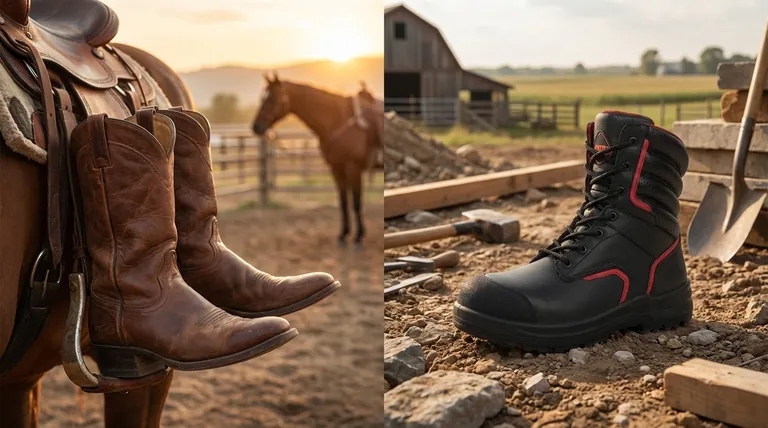
The fundamental choice between cowboy boots and Western work boots comes down to a single question: will you be spending more time in the saddle or on your feet? Traditional cowboy boots are specialized tools designed for horseback riding, while Western work boots are built for safety, traction, and comfort while walking and working on the ground.
The core distinction is one of purpose. A traditional cowboy boot is designed for the specific task of riding a horse, prioritizing features that interact with a stirrup. A Western work boot adapts that style for the practical demands of on-foot labor, prioritizing stability, traction, and protection.
Design Dictates Function: An Anatomical Breakdown
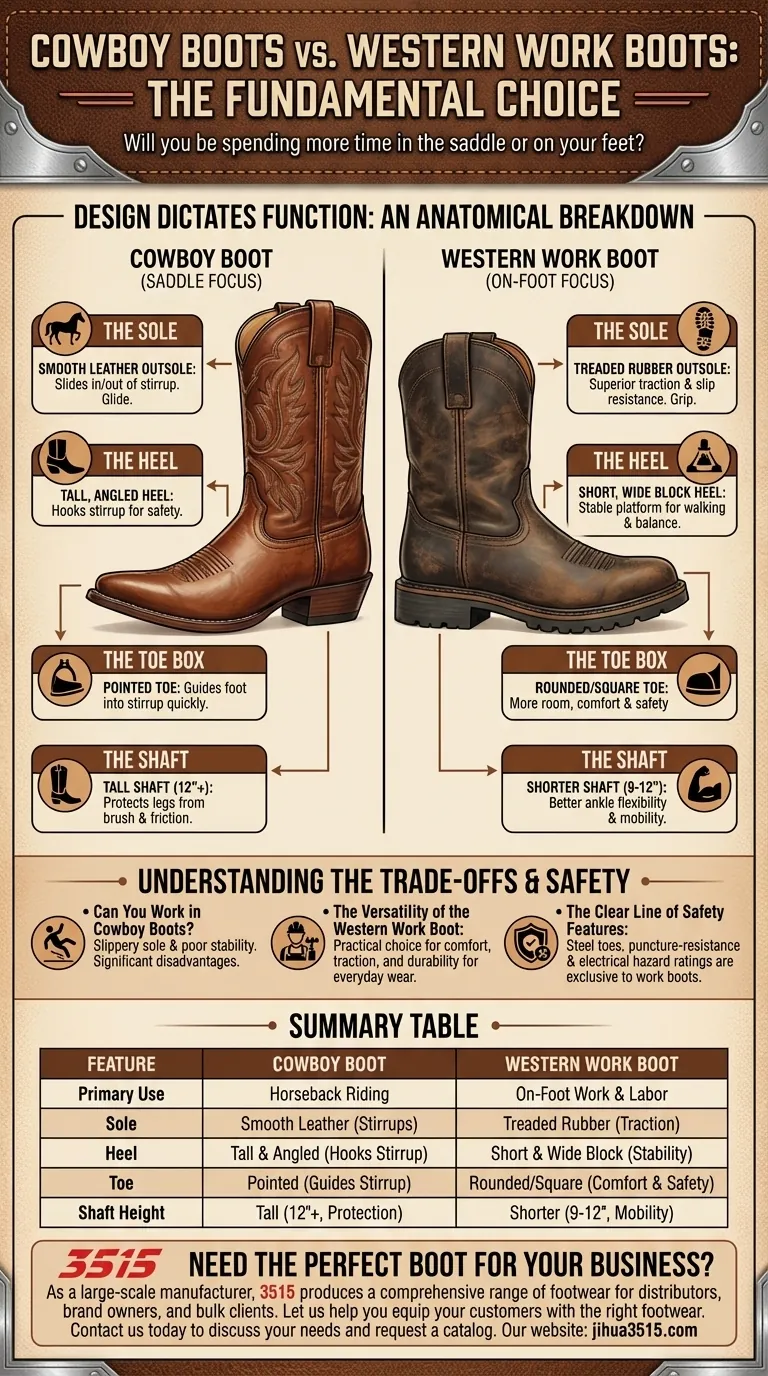
The visual similarities between these boots can be misleading. Every design difference, from the sole to the shaft, serves a distinct functional purpose that directly impacts performance and comfort.
The Sole: Grip vs. Glide
A traditional cowboy boot features a smooth leather outsole. This design is intentional, allowing the rider's foot to slide easily in and out of the stirrup without catching.
In contrast, a Western work boot has a treaded rubber outsole. This material provides superior traction and slip resistance on a variety of surfaces, from concrete and mud to wet floors, making it essential for workplace safety.
The Heel: Stirrups vs. Stability
The tall, angled heel on a cowboy boot is designed to hook onto the back of a stirrup, preventing the rider's foot from slipping all the way through, which is a major safety risk.
A work boot features a shorter, wider block heel (often called a "roper" heel). This low, broad base provides a much more stable platform for walking, standing for long periods, and maintaining balance on uneven ground.
The Toe Box: Convention vs. Comfort
The classic pointed toe of a cowboy boot serves a simple purpose: it helps the rider guide their foot into the stirrup quickly and efficiently.
Western work boots use a rounded or square toe box. This wider shape provides more room for your toes to spread out, which is critical for all-day comfort when walking or standing. It also accommodates safety features like steel toes.
The Shaft: Rider Protection vs. Worker Mobility
Cowboy boots have a tall shaft, typically 12 inches or more, that reaches mid-calf. This protects the rider's legs from brush, snakebites, and the friction of the saddle.
Work boots generally have a shorter shaft, ranging from 9 to 12 inches. This provides adequate protection while allowing for greater ankle flexibility, making it easier to crouch, climb, and walk.
Understanding the Trade-offs
Choosing one style over the other involves accepting a clear set of functional compromises. Being aware of these limitations is key to avoiding a purchase you'll regret.
Can You Work in Cowboy Boots?
While many people do, it comes with significant disadvantages. The smooth leather sole is a slip hazard on most work surfaces, especially when wet. The angled heel offers poor stability for walking, and the pointed toe can become uncomfortable after hours on your feet.
The Versatility of the Western Work Boot
For those who are not regularly on horseback, the Western work boot is the far more practical choice. It delivers the Western aesthetic while providing the comfort, traction, and durability needed for everyday wear and a wide range of jobs.
The Clear Line of Safety Features
If your work environment requires specific safety standards, the choice is made for you. Features like steel toes, puncture-resistant plates, and electrical hazard ratings are found exclusively in work boots, not traditional cowboy boots.
Making the Right Choice for Your Needs
Your primary activity should be the deciding factor. Match the boot's intended function to your daily reality.
- If your primary focus is horseback riding: Choose a traditional cowboy boot for its specialized features that enhance safety and performance in the stirrup.
- If your primary focus is manual labor, ranch work, or industrial jobs: Choose a Western work boot for its superior traction, on-foot stability, and available safety features.
- If your primary focus is everyday style with maximum versatility and comfort: Choose a Western work boot, as its design is far better suited for walking and all-day wear.
Ultimately, selecting the right boot means honestly assessing your needs and choosing the tool designed for the job.
Summary Table:
| Feature | Cowboy Boot | Western Work Boot |
|---|---|---|
| Primary Use | Horseback Riding | On-Foot Work & Labor |
| Sole | Smooth Leather (for stirrups) | Treaded Rubber (for traction) |
| Heel | Tall & Angled (hooks stirrup) | Short & Wide Block (for stability) |
| Toe | Pointed (guides into stirrup) | Rounded/Square (for comfort & safety) |
| Shaft Height | Tall (12"+, leg protection) | Shorter (9-12", mobility) |
Need the Perfect Boot for Your Business?
As a large-scale manufacturer, 3515 produces a comprehensive range of footwear for distributors, brand owners, and bulk clients. Whether you need authentic cowboy boots for equestrian markets or durable Western work boots with advanced safety features, our production capabilities encompass all types of shoes and boots.
Let us help you equip your customers with the right footwear.
Contact us today to discuss your specific needs and request a catalog.
Visual Guide
Related Products
- Durable Leather Work Boots for Wholesale & Custom OEM Manufacturing
- Durable Leather Work Boots for Wholesale & Custom Manufacturing
- Durable Leather Work Boots Wholesale Manufacturer & Custom Factory
- Durable Goodyear Welt Leather Work Boots for Wholesale & Private Label
- Wholesale Leather Work Boots with Customizable Wedge Sole for Brands
People Also Ask
- What is the difference between full-grain and top-grain leather? Premium Material Guide for Boot Manufacturers
- What are the key benefits of high-quality work boots? Unlock Safety, Comfort & Long-Term Value
- What features distinguish work boots from other types of cowboy boots? A Guide to Safety vs. Riding Performance
- Why perform macrofoam swab sampling on work boots? Ensure Site Safety & Prevent Hazardous Cross-Contamination
- What should you do when your work boots no longer serve their purpose? Don't Gamble with Your Safety