
Prioritizing boot materials begins with your environment, not the material itself. The choice between leather, synthetics, or a hybrid design is a direct consequence of your specific needs for protection, durability, and comfort. You must first define the demands of your daily tasks and workplace to determine which material characteristics are non-negotiable.
The most effective way to choose a boot is not to search for the "best" material, but to conduct a personal needs assessment. By ranking the importance of durability, protection, and all-day comfort based on your specific use case, the right material choice becomes clear.
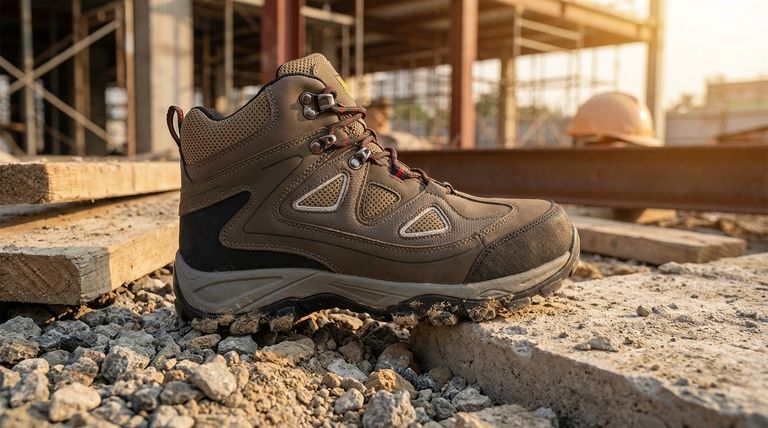
The Three Core Pillars of Boot Selection
Your decision-making process should be built on a clear hierarchy. For any demanding environment, this hierarchy begins with safety and ends with personal comfort.
Protection: Your First Priority
The primary function of a serious boot is to prevent injury. Your work environment dictates the baseline level of protection you need.
Consider non-negotiable hazards first. This includes the need for safety toes (steel, composite), puncture-resistant soles, or electrical hazard (EH) ratings. Weather and terrain dictate the need for waterproofing and slip-resistant outsoles.
Durability: The Demand of Your Tasks
Once safety requirements are met, assess the level of abrasion and stress your boots will endure. The material of the boot's upper is the key factor here.
A highly abrasive environment, like a construction site or metalworking shop, demands a material that resists cuts and scrapes. A less physically demanding role may allow for a lighter, less robust material.
Comfort & Usability: The Reality of All-Day Wear
Finally, consider the factors that impact long-term wearability. This includes the boot's weight, breathability, and flexibility.
Long hours spent on your feet make weight a critical factor in reducing fatigue. Similarly, working in hot conditions makes breathability essential for preventing discomfort and blisters.
A Practical Guide to Common Materials
With your priorities established, you can now evaluate how each material aligns with your needs.
Full-Grain Leather: The Standard for Durability
Leather is the traditional choice for work and heavy-duty boots for a reason. It offers exceptional durability, abrasion resistance, and a high degree of protection.
However, leather is typically heavier, less breathable, and requires a significant break-in period to become comfortable. Its main advantage is longevity, as high-quality leather boots can often be resoled and repaired.
Synthetic Materials (Nylon, Polyester): The Choice for Agility
Synthetics are prized for being lightweight, flexible, and breathable right out of the box. They require virtually no break-in period and are excellent for roles that involve a lot of walking or working in warm climates.
The primary weakness of synthetics is their lower resistance to abrasion and cuts compared to leather. They are also more difficult to repair, often requiring full replacement when damaged.
Hybrid Construction: The Balanced Approach
Many modern boots use a hybrid design, combining the best of both worlds. These boots often feature a leather "chassis" in high-wear areas for durability, with synthetic panels on the sides or tongue to improve breathability and reduce weight.
This approach offers a compromise for users who need a blend of toughness and agile comfort for varied tasks and environments.
Understanding the Trade-offs
No single material is perfect. Choosing a boot is always an exercise in balancing competing characteristics.
Durability vs. Weight
There is a direct correlation between a boot's toughness and its weight. A thick, full-grain leather boot will outlast a lightweight nylon one but will contribute more to end-of-day fatigue. You must decide which is more critical for your work efficiency.
Protection vs. Breathability
Enhanced protective features, especially waterproofing, inherently reduce a boot's ability to breathe. A fully waterproof membrane will keep water out, but it will also trap sweat and heat inside, which can be a significant issue in warm, dry climates.
Initial Cost vs. Longevity
Synthetic boots often have a lower upfront cost. However, a more expensive, high-quality leather boot that can be resoled multiple times may offer a lower total cost of ownership over several years.
Making the Right Choice for Your Goal
Filter your options through your pre-defined priorities to find the ideal boot.
- If your primary focus is maximum durability and protection in a harsh environment: Full-grain leather construction is the most reliable choice.
- If your primary focus is lightweight comfort and breathability for long hours on your feet: Prioritize boots with significant synthetic components in the upper.
- If your primary focus is a versatile balance for varied conditions: A hybrid boot combining a leather structure with synthetic panels offers the most effective compromise.
By clearly defining your needs first, you transform the material choice from a guess into a logical conclusion.
Summary Table:
| Priority | Key Consideration | Ideal Material Match |
|---|---|---|
| 1. Protection | Safety toes, puncture resistance, waterproofing | Full-grain leather, EH-rated materials |
| 2. Durability | Abrasion resistance, long-term wear | Full-grain leather, hybrid construction |
| 3. Comfort | Weight, breathability, flexibility | Synthetic materials, hybrid design |
Need boots that perfectly match your team's demands? As a large-scale manufacturer, 3515 produces a comprehensive range of durable footwear for distributors, brand owners, and bulk clients. Whether you require maximum protection with full-grain leather, lightweight agility with synthetics, or a balanced hybrid design, our production capabilities cover all types of work boots and shoes. Let us help you equip your workforce with the right boots for safety and efficiency—contact us today for a customized solution!
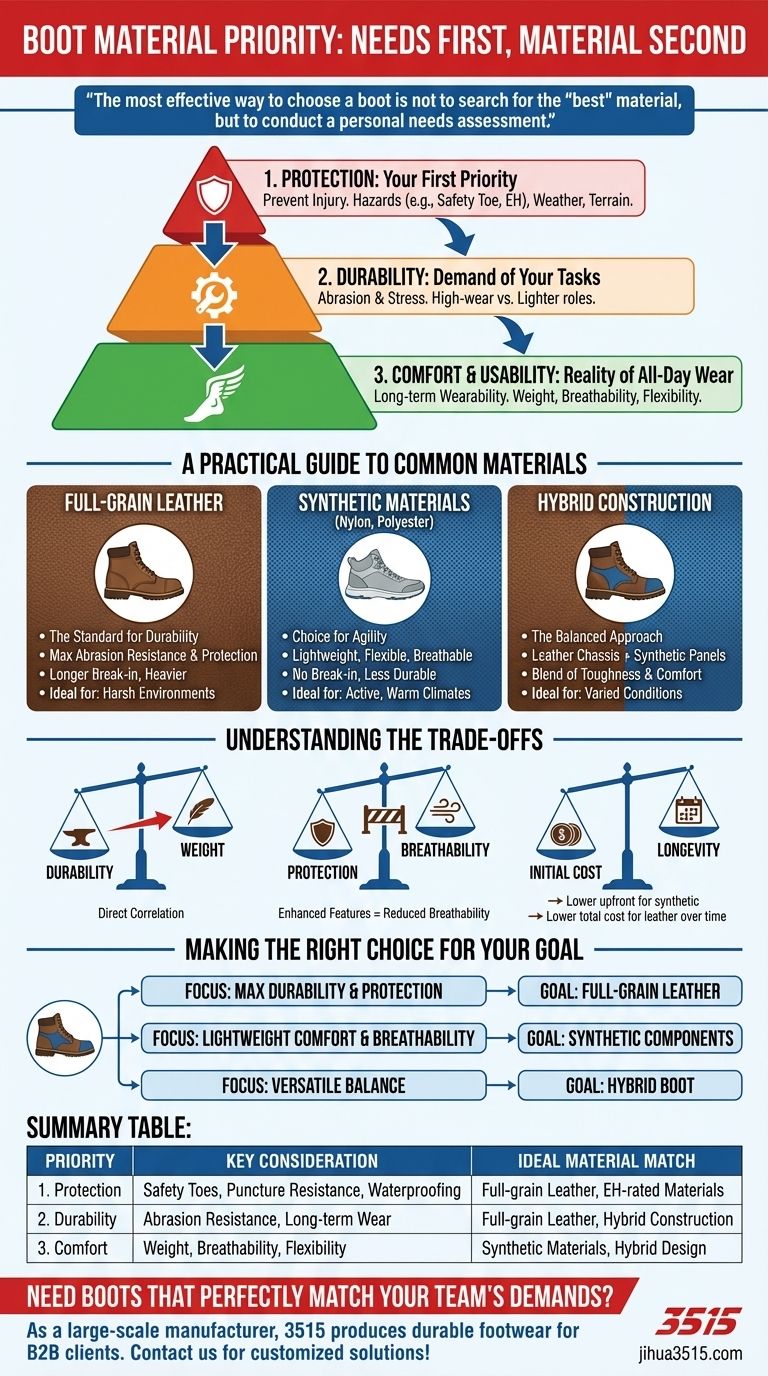
Visual Guide
Related Products
- High-Traction Suede Tactical Boots Wholesale & Custom Manufacturing
- Durable Leather Work Boots Wholesale Manufacturer & Custom Factory
- Durable Leather Work Boots for Wholesale & Custom Manufacturing
- Durable Leather Work Boots for Wholesale & Custom OEM Manufacturing
- Durable Leather Tactical Boots Wholesale & Custom Manufacturing for Brands
People Also Ask
- Why is sequential analysis utilized to evaluate tactical boots? Master Dynamic Boot Development and Ergonomic Performance
- How does the material of tactical boots affect their performance? Choose the Right Material for Your Mission
- How do tactical boots differ from regular boots? Performance, Durability & Design Explained
- How do military uniforms and tactical boots impact the prediction of thermal risk? Essential Safety Insights
- What are the benefits of integrating FES and sEMG into tactical boots? Safety, Reliability & Field-Ready Performance


















