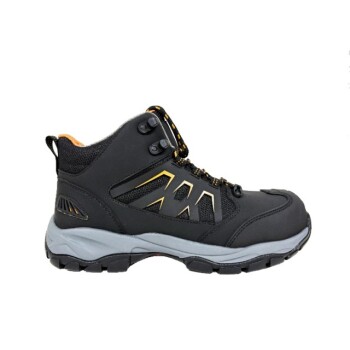
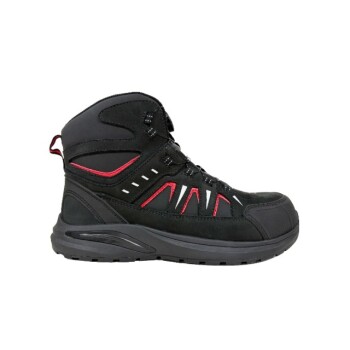
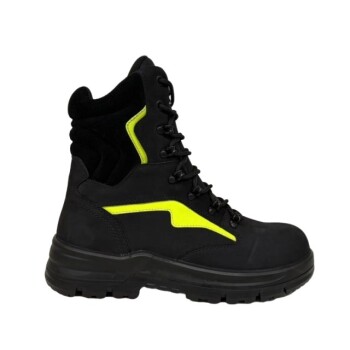
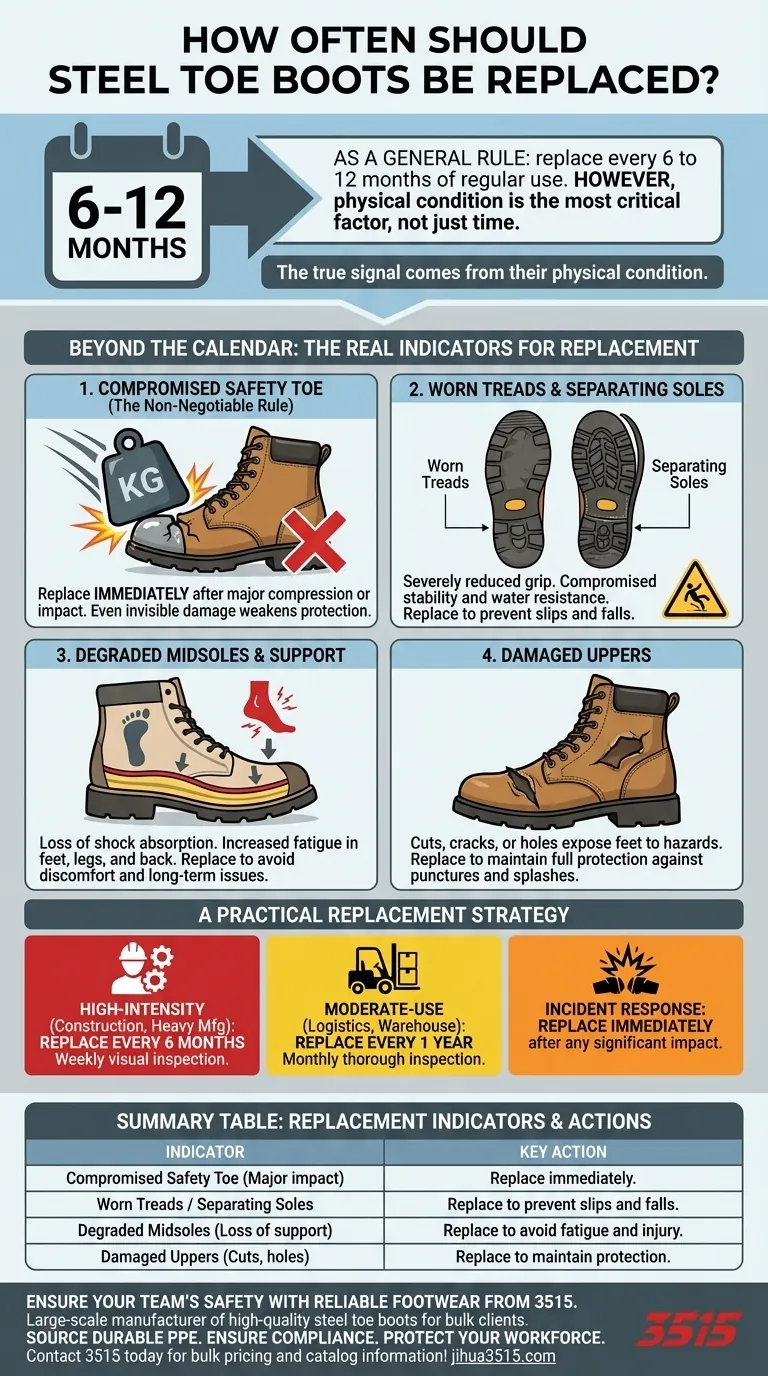
As a general rule, steel toe boots should be replaced every six to twelve months of regular use. However, this timeframe is only a guideline. The most critical factor determining replacement is the boot's physical condition and whether it can still provide the necessary protection.
The calendar is a helpful reminder, but the true signal for replacing your safety boots comes from their physical condition. A boot that can no longer protect you is a liability, regardless of its age.
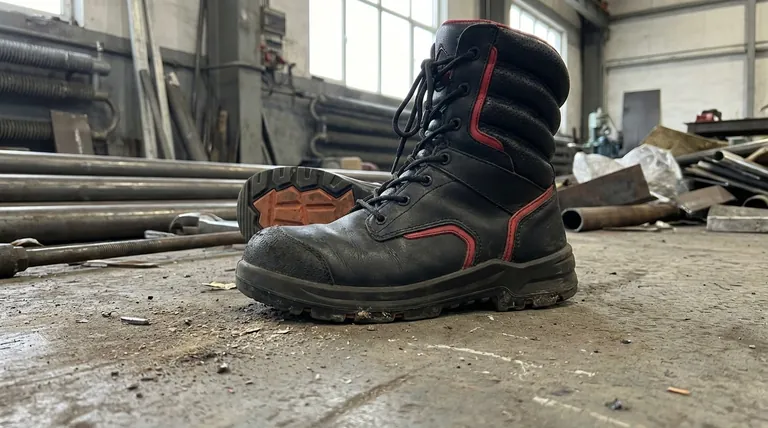
Beyond the Calendar: The Real Indicators for Replacement
While a 6-12 month replacement cycle is a sound policy for many jobs, relying solely on time can be misleading. A boot's safety is determined by its structural integrity. You must learn to recognize the specific signs of failure.
The Non-Negotiable Rule: A Compromised Safety Toe
This is the most critical inspection point. If your boot sustains a significant impact from a heavy or falling object, the steel toe cap must be considered compromised.
Even if there is no visible damage, the cap's internal structure may be weakened, failing to protect you from the next impact. Replace boots immediately after any major compression or impact event.
Worn Treads and Separating Soles
The outsole provides your primary defense against slips, trips, and falls. Once the tread pattern is significantly worn down, its ability to grip surfaces is severely reduced.
Look for areas that have become smooth or flat. Also, inspect the seam where the sole meets the upper part of the boot; any separation here compromises water resistance and stability.
Degraded Midsoles and Support
The midsole is the boot's shock absorber. Over time, it compresses and loses its ability to cushion your feet and support your arches.
If you feel increased fatigue in your feet, legs, and back, or if the boot feels "flat" and hard inside, the support structure has likely failed. This not only causes discomfort but can contribute to long-term musculoskeletal issues.
Damaged Uppers
The upper portion of the boot protects you from punctures, splashes, and abrasions. Inspect the leather or fabric for deep cuts, cracks, or holes.
Damaged uppers can expose your feet to chemical splashes, water, or physical hazards, negating a key safety feature of the boot.
Understanding the Trade-offs
Making the right decision on boot replacement requires balancing cost against the primary function of Personal Protective Equipment (PPE): your safety.
The Risk of Premature Replacement
Replacing boots too early results in unnecessary costs and waste. If a boot is still in excellent condition with no signs of wear, there is no safety reason to replace it simply because it has reached a certain age.
The Danger of Delayed Replacement
This is the far greater risk. Pushing a worn-out boot past its service life exposes you to severe injury. A failed safety toe can lead to amputation, worn treads can cause a debilitating fall, and a lack of support can create chronic pain. The cost of an injury far exceeds the cost of a new pair of boots.
A Practical Replacement Strategy
Use your work environment and daily tasks to create a smart replacement and inspection schedule.
- If your primary focus is safety in a high-intensity environment (construction, heavy manufacturing): Plan to replace your boots every 6 months and conduct a quick visual inspection weekly.
- If your primary focus is compliance in a moderate-use environment (logistics, warehouse work): Plan for a 1-year replacement cycle and conduct a thorough inspection monthly.
- If your primary focus is responding to incidents: Replace your boots immediately after any event that causes a significant impact or compression to the toe area, regardless of their age.
Ultimately, your personal safety is the only metric that matters.
Summary Table:
| Replacement Indicator | Key Action |
|---|---|
| Compromised Safety Toe (Major impact) | Replace immediately. |
| Worn Treads / Separating Soles | Replace to prevent slips and falls. |
| Degraded Midsoles (Loss of support) | Replace to avoid fatigue and injury. |
| Damaged Uppers (Cuts, holes) | Replace to maintain protection. |
Ensure Your Team's Safety with Reliable Footwear from 3515
Don't let worn-out safety boots become a liability. As a large-scale manufacturer, 3515 produces a comprehensive range of high-quality steel toe boots and footwear for distributors, brand owners, and bulk clients. Our production capabilities encompass all types of safety shoes and boots, ensuring durability, compliance, and superior protection for high-intensity work environments.
Partner with us to:
- Source durable PPE that stands up to rigorous use.
- Ensure compliance with industry safety standards.
- Protect your workforce with reliable, high-performance footwear.
Ready to equip your team with boots built to last? Contact 3515 today for bulk pricing and catalog information!
Visual Guide
Related Products
- Durable Steel Toe Safety Boots Wholesale & Custom Manufacturing
- Wholesale Durable Breathable Safety Boots Custom OEM Manufacturer
- Wholesale Durable 6-Inch Work Boots | Custom & Private Label Manufacturer
- Puncture-Resistant Velcro Safety Boots for Wholesale & Custom Manufacturing
- Premium Sport Style Safety Boots for Bulk Orders
People Also Ask
- Why are industrial safety boots with steel toes necessary for machine operators? Essential Foot Protection for Safety
- Why is it mandatory to wear safety shoes with steel toe protection during metal loading? Prevent Crushing Injuries
- What are the main materials used in steel toe safety shoes? A Guide to Protective Footwear Construction
- What are the characteristics of steel toe safety boots? Maximum Protection, Key Trade-offs
- Is it true that steel toes can cause toes to get cut off? Debunking the Dangerous Myth