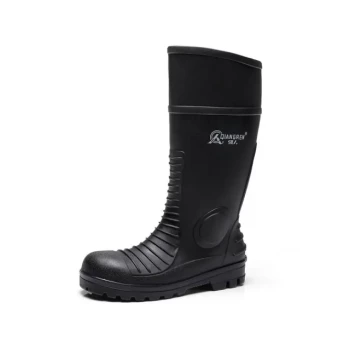
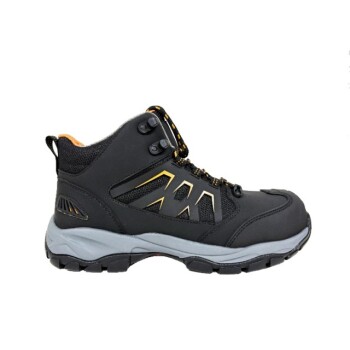
For thermal insulation, the difference is definitive: Composite toe boots are significantly better insulators than steel toe boots. Because steel is a metal, it readily conducts temperature, making your feet feel colder in cold environments and hotter in warm ones. Composite materials, by contrast, are non-conductive and act as a barrier against external temperatures.
The choice between steel and composite toe boots is not about which is safer—both must meet the same core ASTM safety standards. The real decision hinges on understanding the inherent properties of the materials and matching them to the specific demands of your work environment, especially regarding temperature, weight, and electrical conductivity.

The Core Difference: Thermal Conductivity
The primary reason for the performance gap in thermal insulation comes down to the fundamental physics of the materials used in the safety cap.
Why Steel Toes Fail in Extreme Temperatures
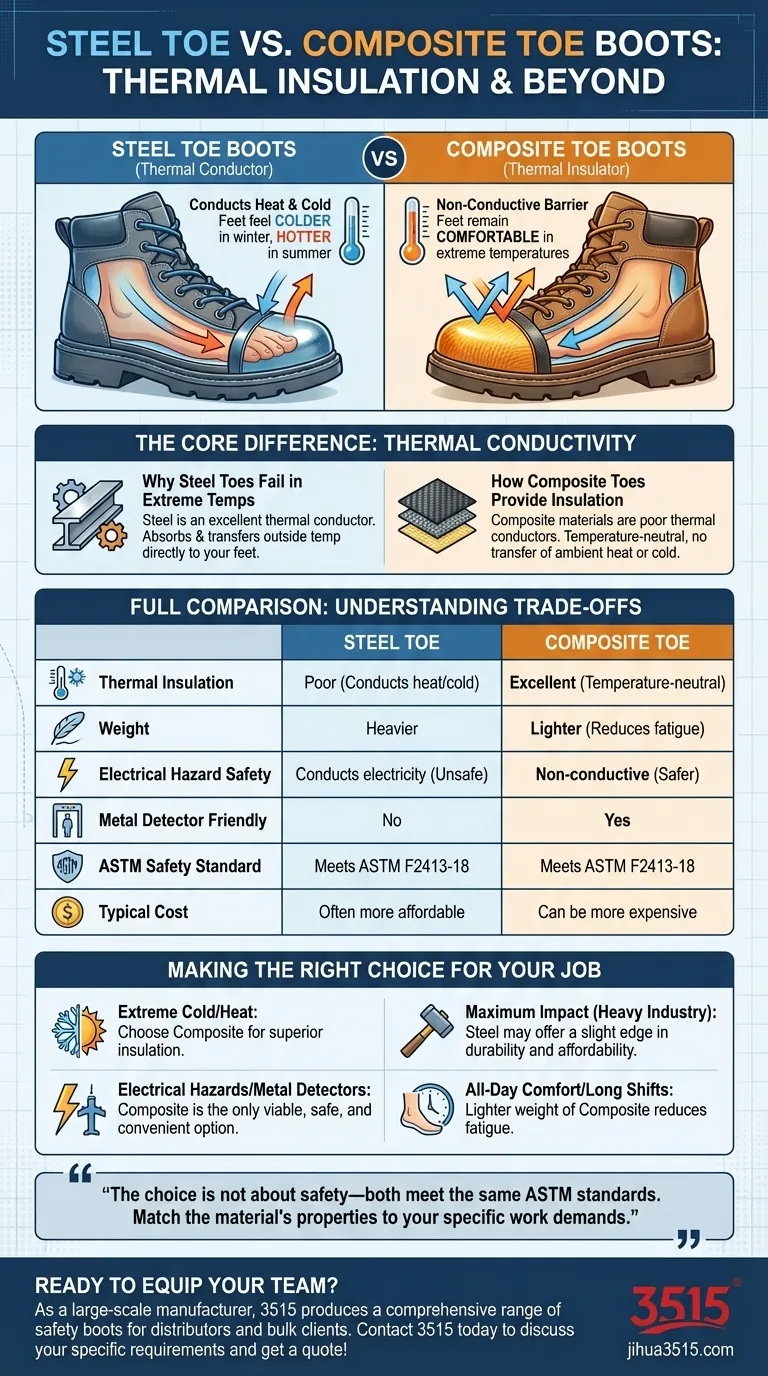
Steel is a metal and an excellent thermal conductor. This means it efficiently transfers heat and cold.
In cold weather, the steel cap will absorb the outside cold and transfer it directly to your toes, bypassing the boot's other insulation. In hot environments, it can absorb heat from machinery or the sun, creating a similar uncomfortable effect.
How Composite Toes Provide Insulation
Composite toe caps are made from non-metallic materials like carbon fiber, Kevlar, fiberglass, or specialized plastics. These materials are poor thermal conductors.
This property makes them temperature-neutral. They do not transfer ambient heat or cold to your foot, providing superior insulation and keeping your feet more comfortable in extreme weather conditions.
Beyond Insulation: A Full Comparison
While thermal performance is a key differentiator, it is only one piece of the puzzle. A proper decision requires weighing all the relevant factors.
Protection and Impact Resistance
Both steel and composite toe boots sold in the US must meet the same ASTM F2413-18 safety standards for impact and compression resistance.
However, steel is a stronger material. In cases of extreme impact or crushing forces beyond the ASTM standards, a steel toe may offer slightly more protection before failing. For most industrial and construction jobs, both are considered fully compliant and safe.
Weight and All-Day Comfort
This is a major advantage for composite materials. Composite toe boots are significantly lighter than their steel counterparts.
Over a long shift, this reduction in weight can lead to less fatigue and greater overall comfort, which is a critical factor for anyone on their feet all day.
Electrical Hazards
The difference here is absolute. Steel conducts electricity, making steel toe boots completely unsuitable for electricians or anyone working in an environment with a risk of electrical shock.
Composite toe boots are non-conductive, making them the essential choice for work involving electrical hazards.
Understanding the Trade-offs
Choosing the right boot means being aware of the downsides and common misconceptions associated with each type.
The Myth of "Less Protection"
A common misconception is that composite toe boots are inherently less safe. Any safety boot, regardless of material, must pass the same rigorous ASTM testing to be certified.
The choice is not about sacrificing safety but rather optimizing for other critical features like weight, thermal comfort, or electrical resistance.
The Durability and Cost Calculation
Steel toe boots are often more affordable and have a long track record of durability in harsh industrial environments.
Composite toe boots can be more expensive. While the composite cap itself is very durable, the lighter materials used in the rest of the boot may not always match the ruggedness of a traditional heavy-duty steel toe work boot.
The "Metal Detector" Factor
Because they are made of non-metallic materials, composite toe boots will not set off metal detectors.
This makes them the default choice for individuals who work in secure facilities, airports, or any location where passing through metal detectors is a regular occurrence.
Making the Right Choice for Your Job
Your daily work environment is the ultimate guide to selecting the correct safety boot.
- If your primary focus is working in extreme cold or heat: Composite toe is the superior choice due to its excellent thermal insulation.
- If your primary focus is maximum impact protection in a heavy industrial setting: Steel toe offers a slight edge in durability and resistance to extreme compression, and is often more affordable.
- If your primary focus is avoiding electrical hazards or passing through metal detectors: Composite toe is the only viable option as it is non-metallic and non-conductive.
- If your primary focus is all-day comfort and reducing fatigue: The lighter weight of composite toe boots makes them the better choice for long shifts.
Choosing the right safety boot means matching the material's properties to the unique demands of your workday.
Summary Table:
| Feature | Steel Toe Boots | Composite Toe Boots |
|---|---|---|
| Thermal Insulation | Poor (conducts heat/cold) | Excellent (temperature-neutral) |
| Weight | Heavier | Lighter (reduces fatigue) |
| Electrical Hazard Safety | Conducts electricity | Non-conductive (safer) |
| Metal Detector Friendly | No | Yes |
| ASTM Safety Standard | Meets ASTM F2413-18 | Meets ASTM F2413-18 |
| Typical Cost | Often more affordable | Can be more expensive |
Ready to equip your team with the right safety footwear?
As a large-scale manufacturer, 3515 produces a comprehensive range of safety boots for distributors, brand owners, and bulk clients. Whether your priority is thermal insulation for extreme environments, lightweight composite toes for all-day comfort, or durable steel toes for heavy industry, we have the production capabilities and expertise to meet your needs.
Contact 3515 today to discuss your specific requirements and get a quote!
Visual Guide
Related Products
- Wholesale Durable Safety Boots Manufacturer Customizable Steel Toe Work Boots
- Durable Leather Moc Toe Work Boots for Wholesale & Custom Manufacturing
- Wholesale Mesh Steel Toe Safety Shoes with Dial Closure Factory Production
- Wholesale Durable Breathable Safety Boots Custom OEM Manufacturer
- Wholesale Customizable Safety Boots Durable & Protective Footwear Manufacturing
People Also Ask
- What are the pros and cons of steel toe work boots? A Guide to Maximum Protection vs. Comfort
- What are the different types of steel toe work boots? Choose the Right Boot for Your Job
- What is the history of steel toe work boots? From German Invention to Modern Safety Standard
- How much weight can steel toe work boots withstand? Unpacking the 3,372 lb. Safety Standard
- What are some common myths about steel toe work boots? Debunked for Modern Workers