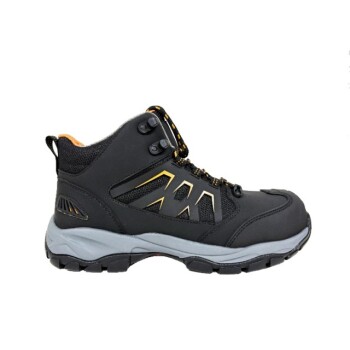
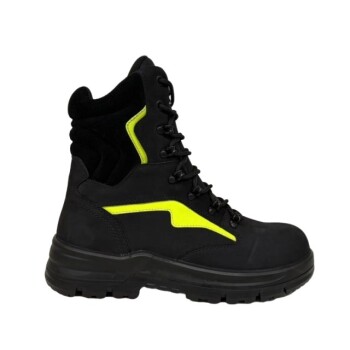
The fundamental benefit of steel toe boots is their uncompromising protection. They provide the highest available strength against crushing and impact forces from heavy objects, making them the original and often most trusted choice for hazardous work environments. This proven protection is combined with exceptional durability and affordability, cementing their role as a workplace safety staple.
While known for raw strength, the true value of steel toe boots lies in a specific balance of maximum impact resistance, cost-effectiveness, and durability. However, understanding their limitations—especially common misconceptions about electrical hazards—is critical to ensuring they are the right choice for your specific needs.
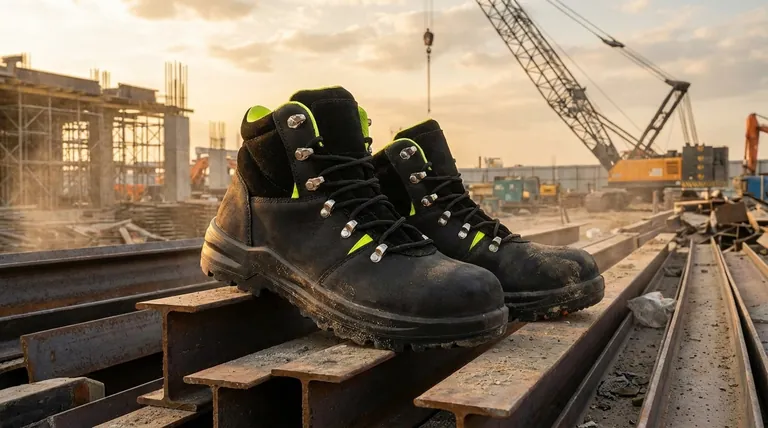
The Foundation of Workplace Safety: Unmatched Protection
The primary role of any safety boot is to protect the wearer from injury. Steel toe designs accomplish this with a level of reliability that has set industry standards for decades.
Maximum Impact and Compression Resistance
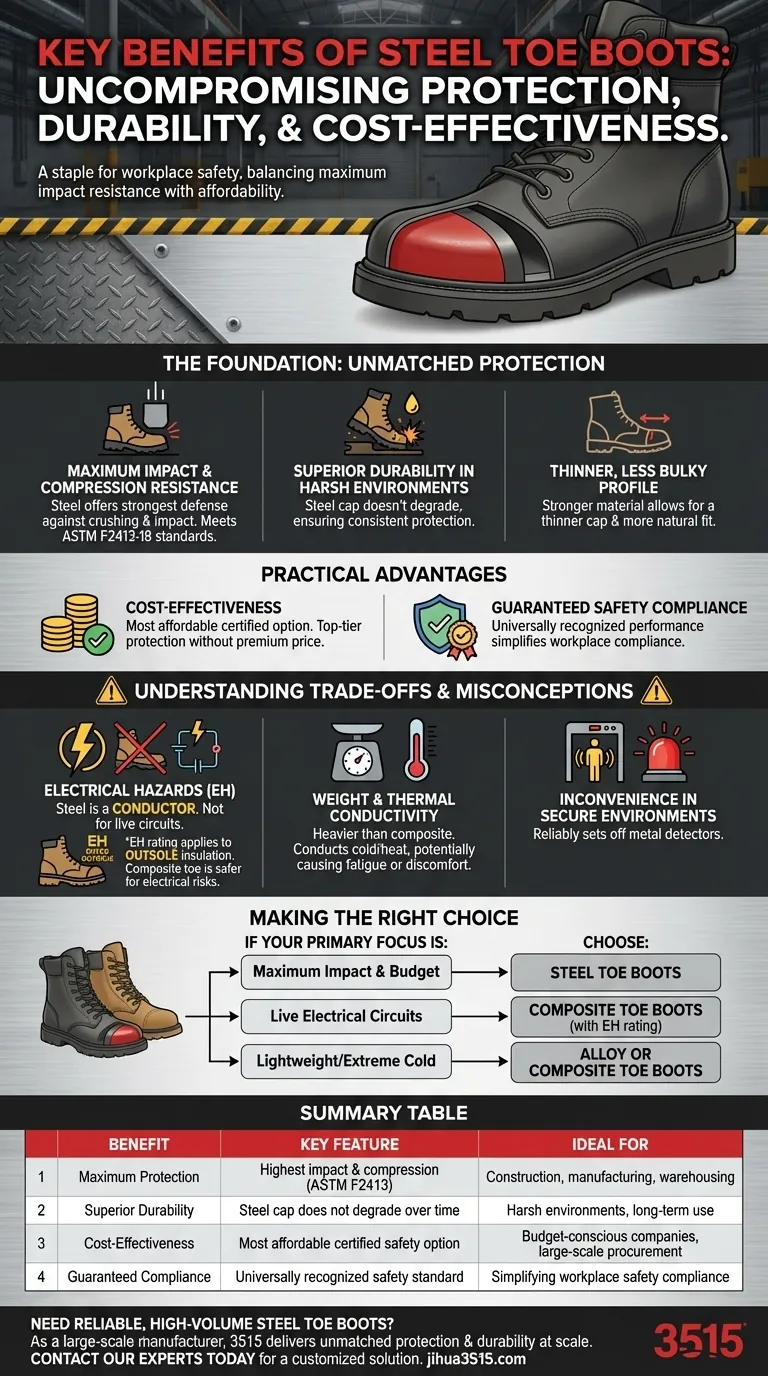
Steel offers the strongest defense against sudden impacts from falling tools or equipment and slow-crushing pressure from rolling machinery. Steel toe caps are engineered to meet or exceed strict safety standards, such as ASTM F2413-18, which defines the minimum requirements for protective footwear.
Superior Durability in Harsh Environments
The inherent strength of steel means the protective toe cap will not degrade or weaken over time due to environmental stress or repeated minor impacts. This ensures the boot remains protective for its entire lifespan, providing consistent peace of mind.
A Thinner, Less Bulky Profile
Because steel is so strong, the protective cap can be made thinner than those made from composite materials. This often results in a less bulky boot, providing a more comfortable and natural fit for many wearers.
Key Practical Advantages
Beyond pure strength, steel toe boots offer practical benefits that make them a popular choice across a wide range of industries, from construction to manufacturing.
Cost-Effectiveness
Steel is a relatively inexpensive material to source and manufacture. This makes steel toe boots the most affordable option for certified safety footwear, offering top-tier protection without a premium price tag.
Guaranteed Safety Compliance
The long history and proven performance of steel toe boots mean they are universally recognized as meeting workplace safety requirements. This simplifies compliance for both employers and employees.
Understanding the Trade-offs and Misconceptions
No safety product is perfect for every situation. Being an effective advisor means acknowledging the limitations and clarifying common points of confusion.
The Truth About Electrical Hazards
This is a critical point of misunderstanding. Steel is a conductor of electricity. Therefore, a standard steel toe boot is not suitable for work near live circuits.
However, many safety boots, including steel toe models, come with an Electrical Hazard (EH) rating. This rating applies to the outsole, which is built to insulate you from the ground. If your primary risk is electrical, a composite toe is a fundamentally safer, non-conductive alternative.
Weight and Thermal Conductivity
Steel is heavier than composite or alloy alternatives, which can lead to more fatigue over a long day. It also conducts temperature, meaning the toe area can feel very cold in winter or hot in direct sun if the boot isn't properly insulated.
Inconvenience in Secure Environments
The steel cap will reliably set off metal detectors. This makes them impractical for workers who must frequently pass through security checkpoints, such as in airports or secure facilities.
Making the Right Choice for Your Needs
Selecting the correct safety boot requires matching its features to the specific hazards of your job.
- If your primary focus is maximum impact protection and budget: Steel toe boots offer the highest level of strength at the most accessible price point.
- If you work around live electrical circuits: Prioritize a non-conductive composite toe boot, and always ensure any boot you choose has a specific EH rating.
- If your comfort depends on a lightweight boot or you work in extreme cold: An alloy or composite toe boot will likely be a better choice to reduce fatigue and thermal transfer.
Ultimately, the best safety boot is the one that correctly addresses the unique risks you face in your work environment.
Summary Table:
| Benefit | Key Feature | Ideal For |
|---|---|---|
| Maximum Protection | Highest impact & compression resistance (ASTM F2413) | Construction, manufacturing, warehousing |
| Superior Durability | Steel cap does not degrade over time | Harsh environments, long-term use |
| Cost-Effectiveness | Most affordable certified safety option | Budget-conscious companies, large-scale procurement |
| Guaranteed Compliance | Universally recognized safety standard | Simplifying workplace safety compliance |
Need reliable, high-volume steel toe boots for your workforce?
As a large-scale manufacturer, 3515 produces a comprehensive range of certified safety footwear for distributors, brand owners, and bulk clients. We deliver the unmatched protection and durability of steel toe boots at a scale and cost that meets your procurement needs.
Let's discuss your specific requirements: Contact our experts today for a customized solution.
Visual Guide
Related Products
- Wholesale Durable Breathable Safety Boots Custom OEM Manufacturer
- Durable Steel Toe Safety Boots Wholesale & Custom Manufacturing
- Wholesale Durable 6-Inch Work Boots | Custom & Private Label Manufacturer
- Puncture-Resistant Velcro Safety Boots for Wholesale & Custom Manufacturing
- Premium Sport Style Safety Boots for Bulk Orders
People Also Ask
- Why are industrial safety boots with steel toes necessary for machine operators? Essential Foot Protection for Safety
- Is it true that steel toes can cause toes to get cut off? Debunking the Dangerous Myth
- What are the characteristics of steel toe safety boots? Maximum Protection, Key Trade-offs
- Is there any truth to the myth about steel toe boots causing toe injuries upon impact? Debunking Common Safety Concerns
- Are steel toe boots comfortable for casual wear? Find Your Perfect Balance of Style & Safety