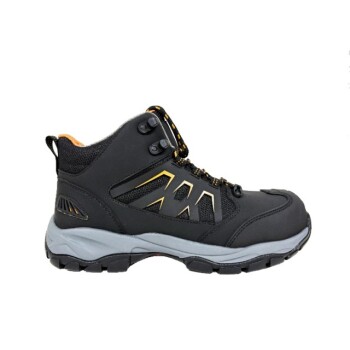
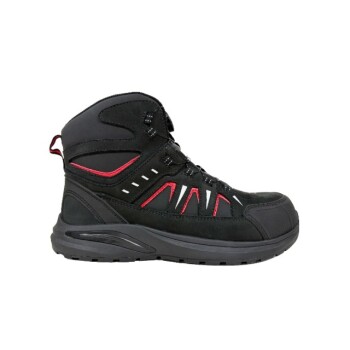
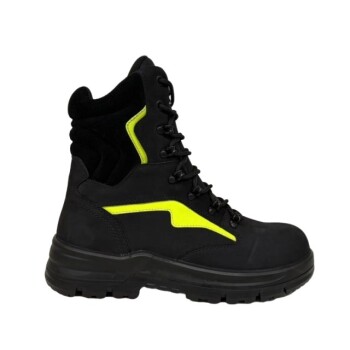
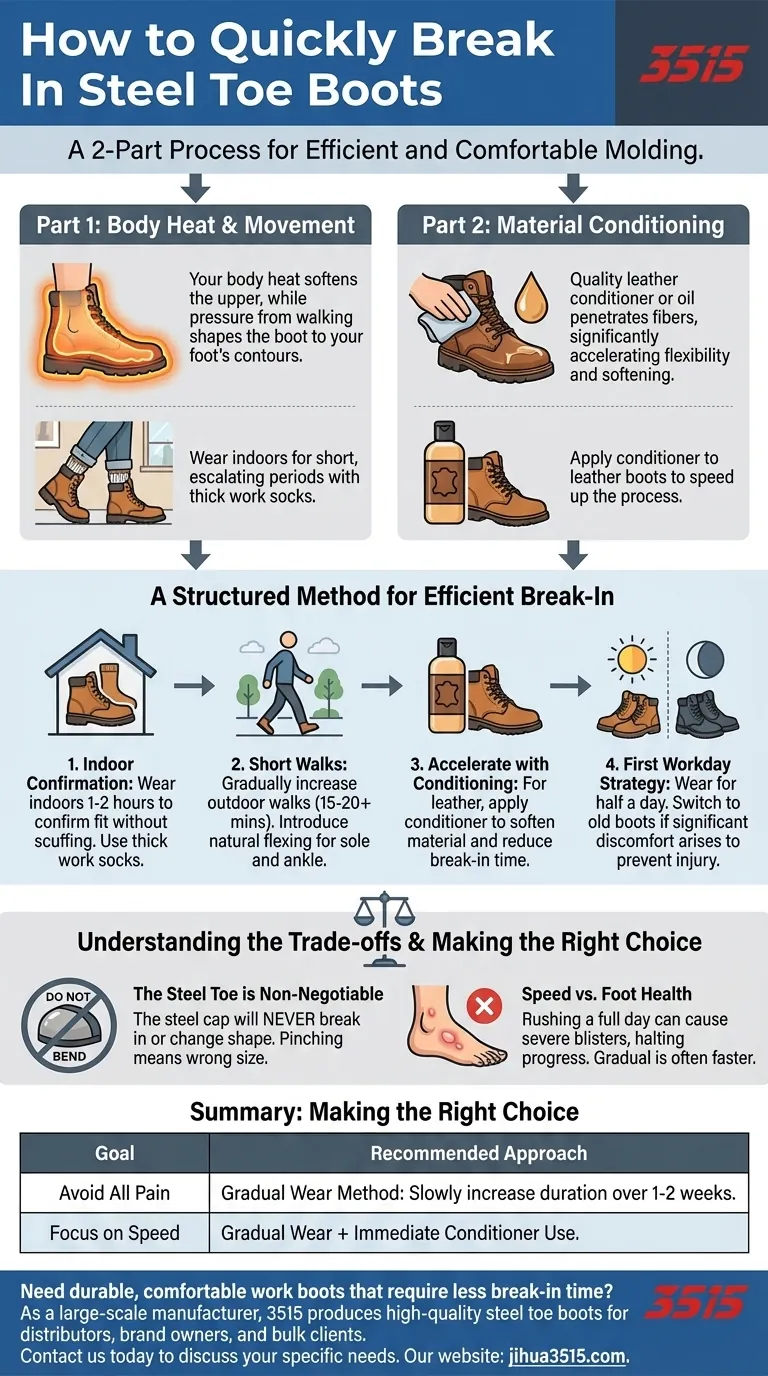
To quickly break in steel toe boots, the most effective method is a two-part process. First, wear them indoors for short, escalating periods with thick work socks to begin molding them with your body's heat and movement. Second, once you've confirmed the fit is correct, apply a quality leather conditioner or oil to soften the material, which significantly accelerates its flexibility.
The core principle isn't about forcing the boot to fit overnight, but about accelerating the natural process of the boot molding to your foot. A methodical approach that combines gradual wear with material conditioning is the safest and most efficient path to all-day comfort.
The Foundation: Why New Boots Hurt
New work boots, especially those with steel toes, are intentionally rigid. This rigidity provides the necessary support and protection for demanding environments. The break-in period is the process of making this stiff material conform to the unique shape of your feet.
The Role of Heat and Pressure
Your body heat is a critical tool in this process. As you wear the boots, the leather or synthetic upper slowly warms up, becoming more pliable. The pressure from your walking motion then begins to shape the material around the contours of your foot, especially at key flex points like the ankle and the ball of the foot.
The Problem of Friction
The initial stiffness of the boot creates friction points, particularly at the heel and around the toes. Without a proper break-in strategy, this friction leads directly to blisters and discomfort, which can make a workday unbearable and even set you back in the break-in process.
A Method for Efficient Break-In
Following a structured process prevents injury and ensures the boot forms correctly to your foot. This is the fastest sustainable way to achieve comfort.
Step 1: The Indoor Confirmation
Before anything else, wear your new boots around the house for an hour or two at a time. Always wear the same thick work socks you'll use on the job. This step is critical because it allows you to confirm the sizing is correct without scuffing the boots, preserving your ability to return them if they are genuinely the wrong fit.
Step 2: Introduce Short Walks
Once you're confident the fit is right, begin wearing the boots for short walks outside. Start with 15-20 minutes and gradually increase the duration over several days. This introduces the natural flexing motion of walking, which is essential for breaking in the sole and ankle areas.
Step 3: Accelerate with Conditioning
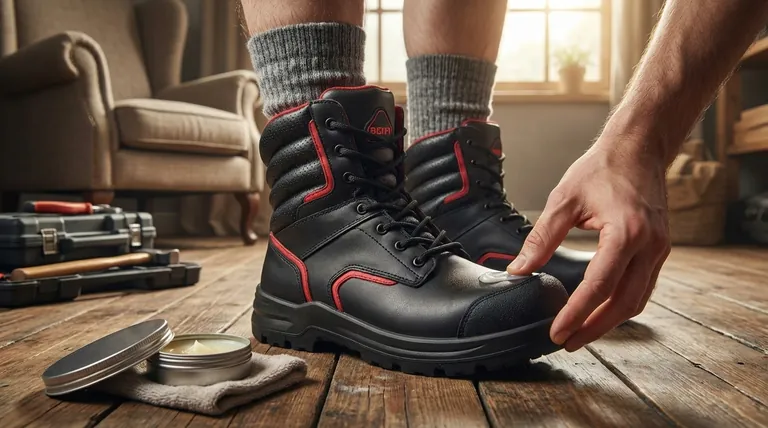
For leather boots, applying a leather conditioner or boot oil is the single best way to speed things up. The conditioner penetrates the leather's fibers, making them softer and significantly more flexible. Apply a light coat, let it absorb, and wipe off any excess. This dramatically reduces the time required for the leather to soften.
Step 4: The First Workday Strategy
When you're ready to wear them to work, do not commit to a full day. Bring your old, trusted pair of boots with you. Wear the new boots for the first half of the day and switch into your old ones if you start to feel any significant hot spots or discomfort. This allows you to make progress without risking debilitating pain.
Understanding the Trade-offs
While the goal is speed, rushing the process can be counterproductive. It's crucial to understand the balance between breaking in the boot and breaking down your feet.
The Steel Toe Is Non-Negotiable
Remember that the steel toe cap itself will never break in or change shape. If you feel pinching or rubbing from the steel cap, the boot is the wrong size or shape for your foot. No amount of break-in will fix this core fit issue.
Speed vs. Foot Health
Attempting to break in boots by wearing them for a full, active 10-hour day from the start is a recipe for severe blisters. An injury will force you back into old boots for days, completely halting your progress. A gradual approach is, paradoxically, often the faster route to the finish line.
Making the Right Choice for Your Goal
Your approach should be dictated by your tolerance for discomfort and your timeline.
- If your primary focus is avoiding all pain: Stick to the gradual wear method, slowly increasing the duration you wear the boots each day over a week or two.
- If your primary focus is speed: Combine the gradual wear method with the immediate use of a high-quality leather conditioner to soften the material from day one.
Ultimately, patience is your greatest asset in achieving a perfectly molded and comfortable work boot.
Summary Table:
| Break-In Step | Key Action | Expected Outcome |
|---|---|---|
| 1. Indoor Confirmation | Wear indoors with thick socks for 1-2 hours. | Confirm correct fit without damaging boots. |
| 2. Short Walks | Gradually increase outdoor walking time. | Soften the sole and ankle flex points. |
| 3. Conditioning | Apply leather conditioner to soften material. | Accelerate flexibility and reduce break-in time. |
| 4. First Workday | Wear for half a day; switch if discomfort arises. | Prevent blisters while making progress. |
Need durable, comfortable work boots that require less break-in time? As a large-scale manufacturer, 3515 produces a comprehensive range of high-quality steel toe boots for distributors, brand owners, and bulk clients. Our expertise in footwear manufacturing ensures superior comfort and durability from day one. Contact us today to discuss your specific needs and discover how we can provide the perfect footwear solution for your business.
Visual Guide
Related Products
- Durable Steel Toe Safety Boots Wholesale & Custom Manufacturing
- Wholesale Durable Breathable Safety Boots Custom OEM Manufacturer
- Wholesale Durable 6-Inch Work Boots | Custom & Private Label Manufacturer
- Puncture-Resistant Velcro Safety Boots for Wholesale & Custom Manufacturing
- Premium Sport Style Safety Boots for Bulk Orders
People Also Ask
- Why are industrial safety boots with steel toes necessary for machine operators? Essential Foot Protection for Safety
- Why is it mandatory to wear safety shoes with steel toe protection during metal loading? Prevent Crushing Injuries
- What are the main materials used in steel toe safety shoes? A Guide to Protective Footwear Construction
- What are the characteristics of steel toe safety boots? Maximum Protection, Key Trade-offs
- Is it true that steel toes can cause toes to get cut off? Debunking the Dangerous Myth