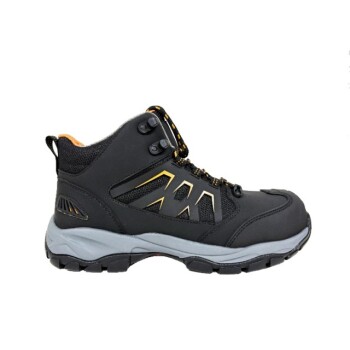
To be clear, both certified steel toe and composite toe boots are rated to withstand the same level of protection as mandated by safety standards. The key metric is the ASTM F2413 standard, which requires the safety toe cap to protect against 75 foot-pounds of impact and 2,500 pounds of compression. Therefore, any certified boot, regardless of material, can handle this specified weight.
The question isn't which material can handle more weight—it's about how they achieve the required safety rating and what trade-offs that creates. The choice between steel and composite depends entirely on secondary factors like boot weight, thermal insulation, and the shape of the toe box.
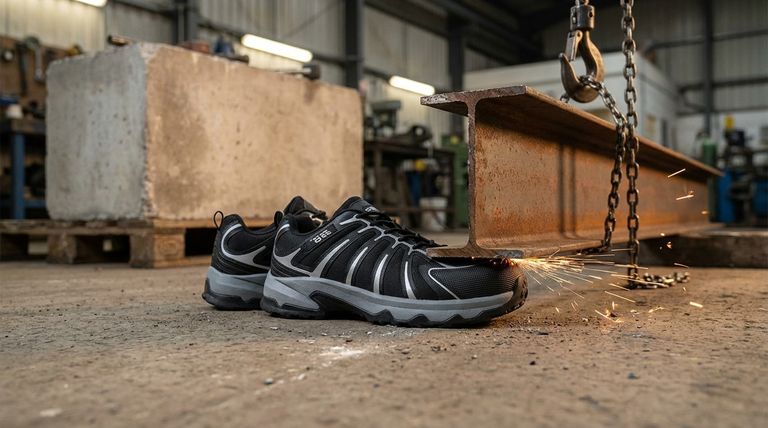
The Standard of Safety: Impact vs. Compression
Safety ratings for footwear are not based on a single, arbitrary weight number. Instead, they are determined by standardized tests for two distinct types of hazards.
The Impact Rating (I/75)
This rating measures the boot's ability to protect your toes from a falling object. The "75" signifies that the toe cap can withstand an impact of 75 foot-pounds of force, equivalent to a 50-pound object being dropped from a height of about 18 inches.
The Compression Rating (C/75)
This rating measures protection against crushing or rolling forces, such as a vehicle tire rolling over the foot. The "75" rating means the toe cap can withstand a compressive load of up to 2,500 pounds before it deforms significantly. Both certified steel and composite toes must pass this test.
Material Science: How They Achieve Protection
While both materials meet the same standard, the way they are engineered leads to significant differences in the final product.
Steel Toes: The Benchmark for Strength
Steel has an extremely high strength-to-volume ratio. This allows manufacturers to create a very strong, protective toe cap that is relatively thin and low-profile.
Composite Toes: The Engineering Challenge
Composite materials (like carbon fiber, Kevlar, or fiberglass) are not as inherently strong as steel by volume. To meet the same 2,500-pound compression standard, the composite toe cap must be made thicker and more voluminous. This often results in a bulkier, more "bulbous" looking toe box.
The Weight Advantage of Composites
Despite their larger size, composite toe caps are significantly lighter. On average, a composite safety toe is about 30% lighter than its steel equivalent, which can reduce foot fatigue over a long workday.
Understanding the Trade-offs
Choosing the right safety toe is a matter of prioritizing the features that matter most for your specific environment and physical needs.
Comfort and Fit
A steel toe cap can be built into a sleeker, more traditionally shaped boot. The bulkier nature of a composite toe box may not be comfortable for all foot shapes.
Performance in Extreme Temperatures
Steel is a highly conductive material. In extreme cold, it can transfer the cold to your feet, while in extreme heat, it can become uncomfortably warm. Composite materials are poor conductors, making them far superior for thermal insulation in either hot or cold environments.
Material Quality and Cost
The quality of steel used in safety toes is fairly consistent. However, the quality and strength of composite materials can vary widely between manufacturers. High-end composites using materials like carbon fiber offer excellent protection with less bulk, but often come at a higher price.
Making the Right Choice for Your Work Environment
Your decision should be based on a clear understanding of your daily tasks and working conditions.
- If your primary focus is a low-profile fit and maximum durability against abrasion: Steel toe is the most reliable and time-tested option.
- If your primary focus is all-day comfort and reducing leg fatigue: The significant weight savings of composite toes make them the ideal choice.
- If your primary focus is working in extreme heat or cold: Composite toes provide essential thermal insulation that steel cannot offer.
Ultimately, the best safety boot is one that meets the required standards while providing the comfort and features you need to perform your job safely and effectively.
Summary Table:
| Feature | Steel Toe | Composite Toe |
|---|---|---|
| Compression Rating | 2,500 lbs (ASTM F2413) | 2,500 lbs (ASTM F2413) |
| Impact Rating | 75 ft-lbs (ASTM F2413) | 75 ft-lbs (ASTM F2413) |
| Average Weight | Heavier | ~30% Lighter |
| Toe Box Profile | Sleeker, Low-Profile | Bulkier, More Voluminous |
| Temperature Conductivity | High (Gets Hot/Cold) | Low (Thermal Insulation) |
Need High-Quality Safety Footwear for Your Team?
As a large-scale manufacturer, 3515 produces a comprehensive range of certified safety boots and shoes for distributors, brand owners, and bulk clients. Our production capabilities encompass all types of industrial footwear, ensuring your team gets the perfect balance of protection, comfort, and durability.
Let us help you equip your workforce with the right safety solution.
Contact us today for a consultation
Visual Guide

Related Products
- Puncture-Resistant Velcro Safety Boots for Wholesale & Custom Manufacturing
- Durable Steel Toe Safety Boots Wholesale & Custom Manufacturing
- Wholesale Safety Footwear Manufacturer for Bulk & Custom OEM Orders
- Wholesale Mesh Steel Toe Safety Shoes with Dial Closure Factory Production
- Wholesale Durable Breathable Safety Boots Custom OEM Manufacturer
People Also Ask
- Why are industrial safety boots with steel toes necessary for machine operators? Essential Foot Protection for Safety
- What are the characteristics of steel toe safety boots? Maximum Protection, Key Trade-offs
- Is it true that steel toes can cause toes to get cut off? Debunking the Dangerous Myth
- What are the primary safety functions of safety boots with steel-toe designs? Essential Protection for Industry
- What are the different types of safety toe boots available? Choose the Right Protection for Your Job