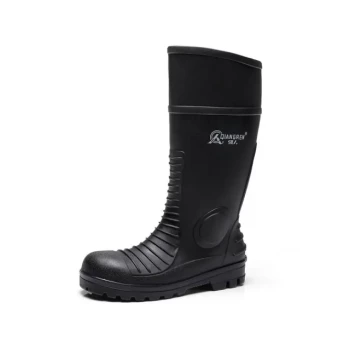
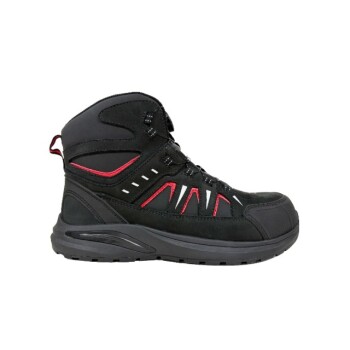
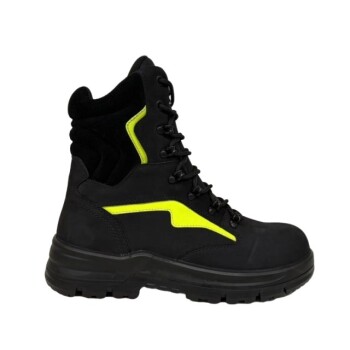
Beyond the obvious safety cap, steel toe work boots provide significant advantages in overall durability, all-weather performance, and long-term cost-effectiveness. High-quality models are engineered as a complete system, incorporating ergonomic features like shock-absorbing soles and arch support to enhance comfort and stability during long work hours.
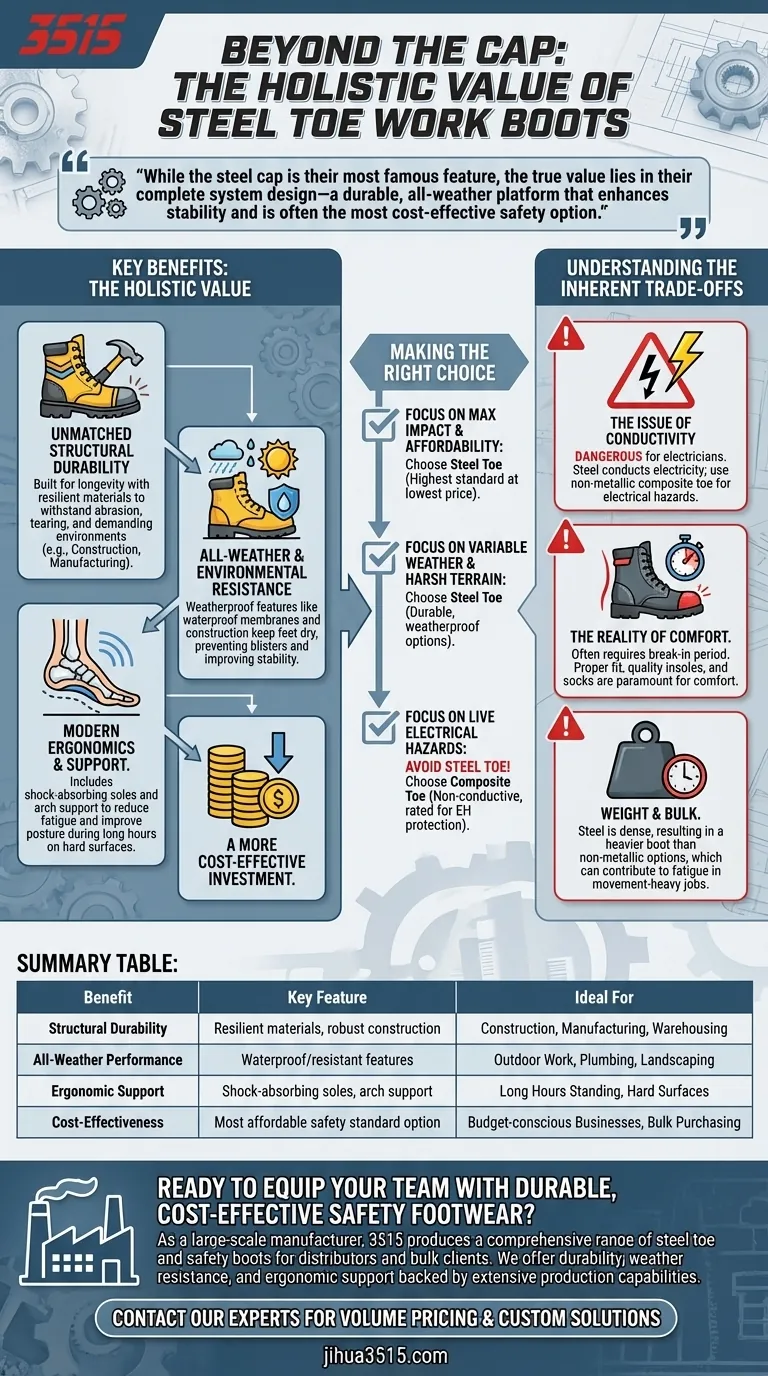
While the steel cap is their most famous feature, the true value of these boots lies in their complete system design. They are built as a durable, all-weather platform that enhances worker stability and confidence while often being the most cost-effective safety footwear option available.
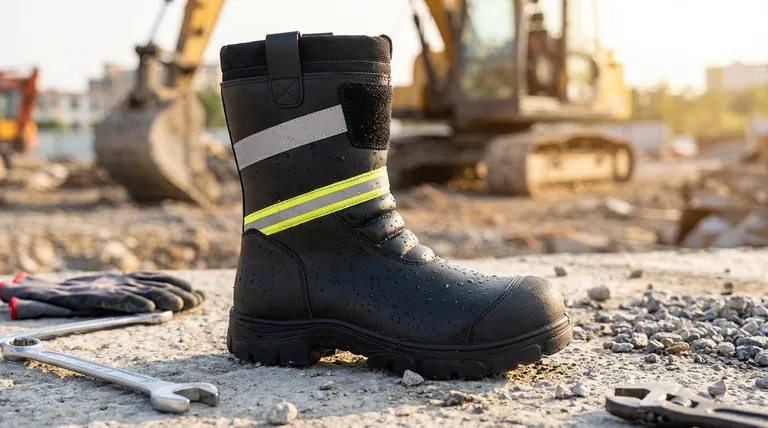
The Holistic Value of a Steel Toe Boot
Thinking of a steel toe boot as only a protective cap misses the bigger picture. The entire boot is designed around the principles of durability and safety, leading to several key benefits that support the wearer throughout the workday.
Unmatched Structural Durability
The materials and construction methods used in steel toe boots are chosen to withstand highly demanding work environments. This focus on resilience extends beyond the toe cap to the soles, stitching, and leather or synthetic uppers.
This means the boot as a whole is built for longevity, resisting abrasion, tearing, and degradation from exposure to job site materials.
All-Weather and Environmental Resistance
Many steel toe work boots are specifically designed to be weatherproof. They often feature waterproof or water-resistant materials and construction techniques to keep feet dry in wet conditions.
This feature is critical not only for comfort but also for safety, as it helps prevent blisters and maintains stable footing in challenging weather.
Modern Ergonomics and Support
While early designs prioritized protection over comfort, modern steel toe boots incorporate advanced ergonomic features. Look for shock-absorbing soles that reduce fatigue and arch-supporting technology that improves posture and stability.
These elements are crucial for professionals who spend the majority of their day standing or walking on hard surfaces.
A More Cost-Effective Investment
Compared to their composite or alloy toe counterparts, steel toe boots are generally less expensive to manufacture.
This lower production cost translates directly to a more affordable price for the consumer, making them the most accessible and cost-effective choice for meeting workplace safety standards.
Understanding the Inherent Trade-offs
To make an informed decision, it's crucial to be objective about the limitations of steel toe boots. Their specific properties create trade-offs that may make them unsuitable for certain jobs.
The Issue of Conductivity
Steel is an electrical conductor. This makes traditional steel toe boots unsuitable and dangerous for electricians or anyone working in environments with a significant risk of electrical hazards.
For these roles, a non-metallic composite toe boot is the required choice.
The Reality of Comfort
While modern boots are more comfortable, they often require a break-in period. Out-of-the-box comfort is not always guaranteed.
Proper fit is paramount, and comfort can be significantly enhanced by adding quality insoles and wearing cushioned, moisture-wicking socks.
Weight and Bulk
Although a steel toe cap can be made thinner than a composite one, steel is a dense material. This can result in a heavier boot compared to non-metallic options.
For jobs requiring constant, rapid movement, the weight of a steel toe boot can contribute to fatigue over a long shift.
Making the Right Choice for Your Goal
To make the right choice, align the boot's characteristics with your primary job function and work environment.
- If your primary focus is maximum impact protection and affordability: A steel toe boot offers the highest standard of protection against impact and compression at the most accessible price point.
- If your primary focus is working in variable weather and harsh terrain: The inherent durability and common weatherproof options of many steel toe models make them a reliable choice.
- If your primary focus is working around live electrical hazards: You must choose a non-conductive composite toe boot that is specifically rated for electrical hazard (EH) protection.
Ultimately, understanding these benefits and limitations empowers you to select safety footwear that serves as a true tool for the job.
Summary Table:
| Benefit | Key Feature | Ideal For |
|---|---|---|
| Structural Durability | Resilient materials for demanding environments | Construction, manufacturing, warehousing |
| All-Weather Performance | Waterproof/resistant features for wet conditions | Outdoor work, plumbing, landscaping |
| Ergonomic Support | Shock-absorbing soles and arch support | Long hours standing, hard surfaces |
| Cost-Effectiveness | Most affordable option meeting safety standards | Budget-conscious businesses, bulk purchasing |
Ready to equip your team with durable, cost-effective safety footwear?
As a large-scale manufacturer, 3515 produces a comprehensive range of steel toe and safety boots for distributors, brand owners, and bulk clients. We offer the durability, weather resistance, and ergonomic support your workforce needs, backed by our extensive production capabilities for all types of shoes and boots.
Contact our experts today for volume pricing and custom solutions tailored to your specific industry requirements.
Visual Guide
Related Products
- Wholesale Durable 6-Inch Work Boots | Custom & Private Label Manufacturer
- Wholesale Durable Safety Boots Manufacturer Customizable Steel Toe Work Boots
- Wholesale Durable Breathable Safety Boots Custom OEM Manufacturer
- Wholesale Heavy-Duty Waterproof Steel Toe Work Boots OEM Manufacturer
- Durable Steel Toe Safety Boots Wholesale & Custom Manufacturing
People Also Ask
- What are the pros and cons of steel toe work boots? A Guide to Maximum Protection vs. Comfort
- What is the history of steel toe work boots? From German Invention to Modern Safety Standard
- What are the different types of steel toe work boots? Choose the Right Boot for Your Job
- How much weight can steel toe work boots withstand? Unpacking the 3,372 lb. Safety Standard
- Is there any truth to the myth about steel toe boots causing toe injuries upon impact? Debunking Common Safety Concerns