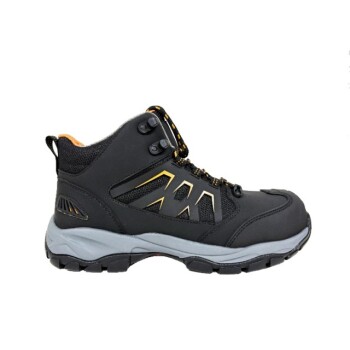
At its core, the need for steel toe shoes is dictated by one primary risk: impact from heavy falling or rolling objects. These protective shoes are essential in any work environment where such hazards are present, most notably in construction, manufacturing, warehouses, auto repair shops, and on farms where heavy machinery and materials are handled daily.
The decision to require steel toe footwear is the first step in a broader safety analysis. While essential for impact protection, the right safety shoe is one that comprehensively addresses all potential foot hazards in a specific work environment, from punctures and slips to chemical or electrical risks.
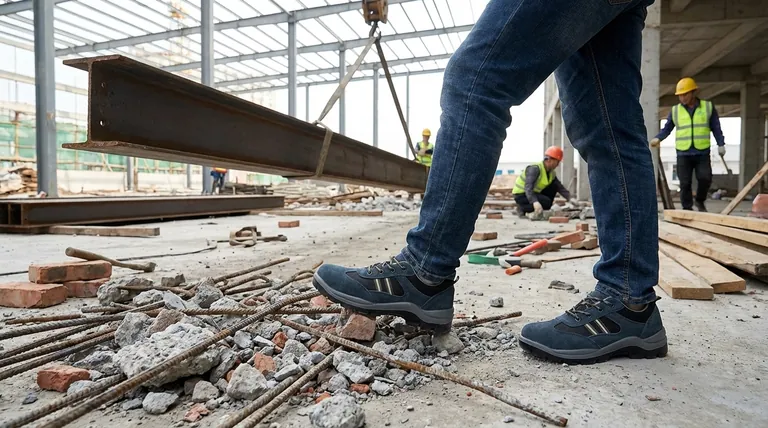
The Primary Environments Requiring Impact Protection
The fundamental purpose of a steel toe cap is to shield the foot from crushing and impact injuries. Certain industries present a constant and unavoidable risk of this nature.
Heavy Industry and Construction
On construction sites, the dangers are ever-present. Workers face risks from falling tools, shifting building materials, and the movement of heavy equipment. A steel toe cap is the baseline requirement, often paired with a puncture-resistant sole to protect against nails and other sharp debris.
Logistics and Warehousing
Warehouses are dynamic environments with significant foot-level hazards. The primary risks come from falling inventory, heavy pallets, and moving machinery like forklifts and pallet jacks. Steel toe shoes are critical for protecting feet from being crushed by rolling or dropped items.
Manufacturing and Assembly Lines
In factories and on assembly lines, workers handle heavy parts and operate powerful machinery. The potential for a dropped component or an accident involving moving equipment makes impact protection a necessity.
Specialized Trades and Repair
Trades such as auto mechanics and farming also demand robust foot protection. Mechanics work with heavy engine blocks and tools that can easily cause severe injury if dropped, while farm work involves large machinery and unpredictable livestock, both of which pose significant risks to feet.
Beyond Impact: Understanding Comprehensive Foot Protection
A steel toe cap addresses a single, critical hazard. However, a truly safe work environment requires footwear that accounts for the full spectrum of potential risks.
Protection from Punctures
In environments like construction, demolition, or waste management, the ground can be littered with sharp objects like nails, screws, and metal shards. A puncture-resistant midsole plate is a feature separate from the toe cap but is equally vital in these settings.
Guarding Against Slips and Falls
Many industrial and service environments, from factory floors to commercial kitchens, have surfaces that can become wet or oily. Slip-resistant outsoles are a specific feature designed to provide superior traction and are a leading factor in preventing workplace falls.
Mitigating Chemical and Electrical Risks
For those working in laboratories, chemical plants, or around live electrical circuits, specialized footwear is required. This includes shoes made from chemical-resistant materials or those with an Electrical Hazard (EH) rating, which are designed to impede the flow of electricity through the shoe to the ground.
Understanding the Trade-offs: Steel Toe vs. Alternatives
Choosing the right protective toe is a key part of the selection process. While steel is the traditional standard, modern materials offer other options with their own distinct advantages.
Steel Toe: The Standard for Heavy Duty
Steel caps provide the maximum level of protection against impact and compression. They are the go-to choice for heavy industrial environments where the risk of severe crushing injuries is highest. Their primary downside is their weight and their tendency to conduct heat and cold.
Composite Toe: The Lightweight Alternative
Composite toes are made from non-metal materials like Kevlar, carbon fiber, or plastic. They are significantly lighter than steel, which reduces foot fatigue over a long shift. They also do not conduct electricity or temperature, making them ideal for certain specialized environments. While they meet the same safety standards, steel is often preferred for the most extreme impact risks.
Making the Right Choice for Your Goal
Selecting the correct safety footwear requires a clear understanding of the specific hazards you face. A simple risk assessment of your environment will guide you to the most effective solution.
- If your primary focus is protection from heavy falling or rolling objects: A steel toe boot is the non-negotiable standard for maximum impact resistance.
- If your environment includes sharp ground debris like nails: Prioritize a shoe that features a puncture-resistant sole in addition to a protective toe cap.
- If your work involves slippery surfaces or electrical hazards: Ensure the shoe is specifically rated for slip resistance or Electrical Hazard (EH) protection, as a protective toe alone does not address these dangers.
- If you need impact protection in a metal-free or temperature-sensitive area: Consider a composite toe shoe as a viable, lightweight alternative to steel.
Choosing the right safety footwear is a foundational step in building a resilient and secure work environment.
Summary Table:
| Work Environment | Primary Hazards | Key Footwear Features Needed |
|---|---|---|
| Construction & Heavy Industry | Falling tools, heavy materials | Steel toe, puncture-resistant sole |
| Warehousing & Logistics | Falling inventory, forklifts | Steel toe, impact protection |
| Manufacturing & Assembly | Heavy parts, machinery | Steel toe, comprehensive safety rating |
| Auto Repair & Farming | Heavy tools, machinery, livestock | Steel toe, durable construction |
| Hazardous Environments | Chemicals, electricity, slips | EH rating, slip-resistant, chemical-resistant |
Need reliable safety footwear for your team? As a large-scale manufacturer, 3515 produces a comprehensive range of steel toe and safety shoes for distributors, brand owners, and bulk clients. Our production capabilities encompass all types of protective footwear designed to meet the specific hazards of your work environment—from maximum impact resistance to specialized features like puncture protection and EH ratings.
Contact us today to discuss your safety footwear requirements and benefit from our manufacturing expertise!
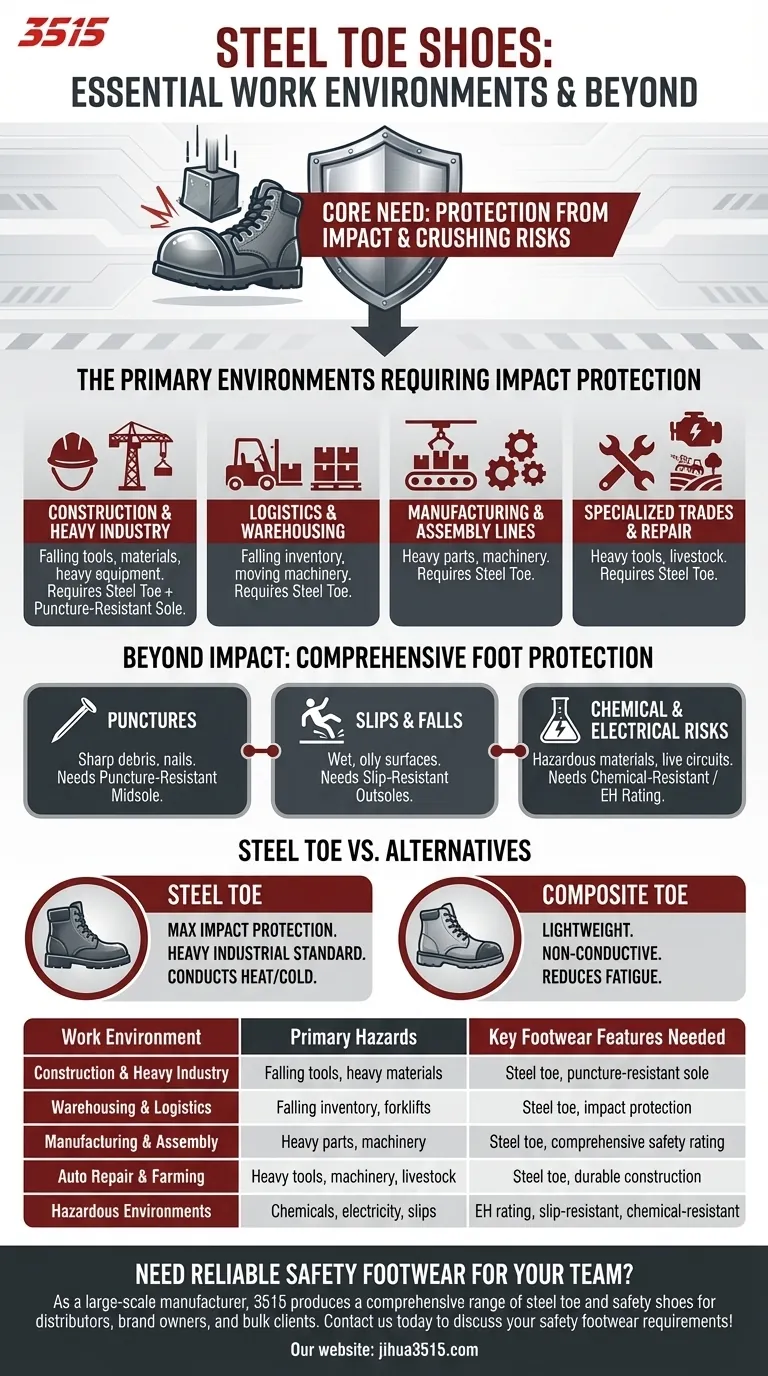
Visual Guide
Related Products
- Durable Steel Toe Safety Boots Wholesale & Custom Manufacturing
- Wholesale Mesh Steel Toe Safety Shoes with Dial Closure Factory Production
- Wholesale Safety Footwear Manufacturer for Bulk & Custom OEM Orders
- Durable Leather Safety Boots for Wholesale & Custom OEM Manufacturing
- Premium Wheat Nubuck Safety Shoes for Bulk Distribution
People Also Ask
- Why are industrial safety boots with steel toes necessary for machine operators? Essential Foot Protection for Safety
- Why is it mandatory to wear safety shoes with steel toe protection during metal loading? Prevent Crushing Injuries
- What are the main materials used in steel toe safety shoes? A Guide to Protective Footwear Construction
- What are the characteristics of steel toe safety boots? Maximum Protection, Key Trade-offs
- Is it true that steel toes can cause toes to get cut off? Debunking the Dangerous Myth