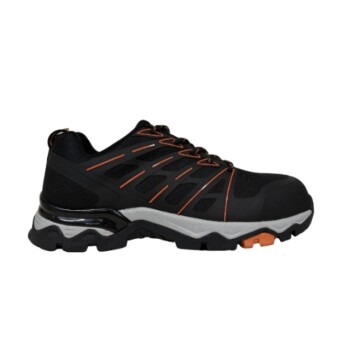
Video-based 2D pose estimation serves as a sophisticated, non-invasive diagnostic tool for analyzing footwear performance. It functions by extracting specific body keypoint coordinates directly from video footage, eliminating the need for the wearer to use intrusive body-mounted sensors or reflective markers. When paired with machine learning models, this technology allows researchers to monitor biomechanical loads in real-world environments, providing the data necessary to optimize the design, safety, and performance of training and safety shoes.
The core value of this technology lies in its ability to capture natural movement outside of a restrictive laboratory setting. By removing physical markers, manufacturers can assess how footwear performs under actual working or training conditions, leading to designs that genuinely enhance protection and reduce injury risks.
The Mechanics of Markerless Analysis
Eliminating Physical Constraints
Traditional biomechanical analysis often requires complex setups with markers attached to the subject's body. Video-based 2D pose estimation removes this barrier.
Because the system relies solely on visual data, it is non-invasive. This allows the wearer to move naturally without the psychological or physical encumbrance of testing equipment, ensuring the data reflects true behavior.
The Role of Machine Learning
The raw video footage is processed through machine learning models. These algorithms identify and track key anatomical points (such as the ankle, knee, and hip) frame by frame.
This computational approach converts standard video into quantitative data, enabling precise measurement of movement patterns without specialized hardware on the shoe or the person.
Application in Footwear Development
Monitoring Biomechanical Load
A primary application of this technology is the assessment of biomechanical load. By tracking how the body moves in specific footwear, researchers can estimate the stress placed on joints and muscles.
This is critical for safety shoes, where heavy or rigid materials can alter gait. The data reveals if a shoe is forcing a worker into movement patterns that could lead to long-term strain.
Optimizing Design and Protection
The insights gained from pose estimation provide critical data support for shoe design optimization. Manufacturers use this feedback to adjust cushioning, stability, and weight distribution.
For training footwear, this ensures the shoe enhances athletic performance. For safety footwear, it confirms that protection does not come at the cost of ergonomic health.
Understanding the Trade-offs
Field Utility vs. Laboratory Control
While video-based estimation excels in non-laboratory environments, it is dependent on visual clarity. Field data captures reality, but it introduces variables like lighting and obstructions.
Conversely, advanced setups utilizing technologies like High-Resolution Virtual Reality (VR) allow for controlled laboratory testing. As noted in supplementary research, VR can simulate realistic environments to trigger natural walking patterns, but it remains a simulated space.
Accuracy Considerations
2D pose estimation offers high accessibility, but it is limited to a single plane of view. It is highly effective for general gait analysis but may miss complex rotational movements that 3D marker systems capture.
Making the Right Choice for Your Goal
To effectively utilize 2D pose estimation in your footwear evaluation process, consider your specific objectives:
- If your primary focus is real-world validation: Deploy this technology in actual work or training environments to capture how the shoe performs under genuine fatigue and stress conditions.
- If your primary focus is rapid prototyping: Use this tool to quickly gather biomechanical feedback on design iterations without the setup time required for marker-based lab tests.
By integrating markerless tracking into your evaluation pipeline, you move beyond static measurements to understand how footwear truly interacts with the human body in motion.
Summary Table:
| Feature | Traditional Marker-Based Analysis | Video-Based 2D Pose Estimation |
|---|---|---|
| Equipment | Physical sensors & reflective markers | Standard video camera & ML software |
| Environment | Restricted to specialized laboratories | Real-world work sites & training fields |
| User Impact | Potential physical/psychological bias | Natural, unencumbered movement |
| Data Type | High-precision 3D coordinates | 2D anatomical keypoints & gait data |
| Best Use Case | Clinical research & fine rotations | Field validation & rapid prototyping |
Elevate Your Footwear Standards with 3515
At 3515, we bridge the gap between cutting-edge biomechanical insights and large-scale manufacturing excellence. As a premier partner for distributors and brand owners, we leverage advanced production capabilities to turn data into high-performance footwear. Whether you require our flagship Safety Shoes engineered for ergonomic protection, or bulk orders of Tactical Boots, Training Sneakers, and Dress Shoes, our facility is equipped to meet your strictest specifications.
Ready to scale your production with a partner who understands performance? Contact 3515 Today to Discuss Your Bulk Requirements
References
- Marion Mundt, Jacqueline Alderson. Estimating Ground Reaction Forces from Two-Dimensional Pose Data: A Biomechanics-Based Comparison of AlphaPose, BlazePose, and OpenPose. DOI: 10.3390/s23010078
This article is also based on technical information from 3515 Knowledge Base .
Related Products
- Premium Suede Sport Safety Shoes for Wholesale & Bulk Orders
- Premium Lightweight Safety Shoes for Wholesale & Bulk Orders
- Wholesale Anti-Smash & Puncture-Proof Safety Shoes Custom Manufacturing for Brands
- Premium KPU Injection Athletic Style Safety Shoes
- Premium Safety Shoes with Rotating Buckle Safety Sneakers
People Also Ask
- What are the primary functions of professional safety shoes? Maximize Safety in Water Supply Confined Spaces
- What industries have specific OSHA footwear requirements? Ensure Compliance & Protect Your Workforce
- What role do specialized safety shoes play in preventing falls? Engineering Stability in Industrial Environments
- What are the main safety features of S1-S5 shoes? The 3 Essential Protections Explained
- Why are customized foot sensors or professional safety shoes incorporated into biomechanical testing? Precision Insights