
Appropriate work footwear is a critical component of personal safety because it serves as the primary defense against a wide range of preventable workplace injuries. This specialized equipment is designed to mitigate specific, predictable hazards—from slips and falls to impact from falling objects—while ensuring compliance with mandatory safety regulations.
Beyond simply meeting a requirement, the right footwear is a foundational piece of personal protective equipment (PPE). It directly reduces the most common workplace risks, safeguarding both employee well-being and overall business productivity.
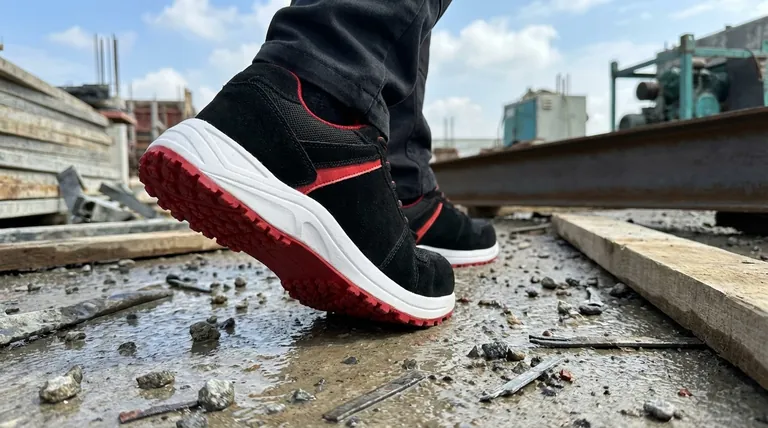
The Core Function of Footwear as PPE
Proper footwear isn't just an accessory; it's a piece of engineered safety equipment. It forms the base of a worker's physical interaction with their environment.
Defining Personal Protective Equipment
Personal Protective Equipment, or PPE, refers to any equipment worn to minimize exposure to hazards that cause serious workplace injuries and illnesses.
Safety footwear is one of the most common and essential forms of PPE, designed specifically to protect the feet from a variety of dangers.
A Foundation for a Safer Work Environment
Outfitting employees with appropriate footwear is a preventive measure that plays a major role in reducing the frequency and severity of injuries.
This contributes to a stronger safety culture, where potential risks are actively managed rather than reactively addressed after an incident.
Mitigating Specific Workplace Hazards
Different jobs present different risks. Specialized footwear is engineered to provide targeted protection against the most likely hazards in a given environment.
Preventing Slips, Trips, and Falls
Slips, trips, and falls are among the most frequent causes of workplace injuries. Slip-resistant shoes are designed with special tread patterns and materials to provide superior traction.
They are critical in industries with wet, oily, or otherwise slippery surfaces, such as commercial kitchens, healthcare facilities, and manufacturing plants.
Shielding Against Impact and Compression
In environments like construction sites or warehouses, feet are vulnerable to injury from falling objects or heavy rolling equipment.
Steel toe boots and other footwear with reinforced safety toes are designed to withstand significant impact and compression forces, protecting the wearer from potentially severe crushing injuries.
Protection from Punctures and Sharp Objects
Job sites can often be littered with nails, screws, metal shards, and other sharp debris.
Footwear with puncture-resistant soles adds a vital layer of protection, preventing sharp objects from penetrating the bottom of the shoe and causing serious injury.
Guarding Against Other Dangers
Specialized footwear also offers protection against less common but equally dangerous hazards. This includes resistance to chemical spills, insulation from electrical shocks, and waterproof designs for wet conditions.
The Business Case for Proper Footwear
Investing in appropriate footwear is not just a safety measure; it's a sound business decision with tangible returns.
Reducing Injuries and Costs
The most direct benefit is a reduction in foot-related injuries. This, in turn, minimizes lost work hours and lowers the frequency of costly workers' compensation claims.
Boosting Productivity and Morale
When employees feel safe and properly equipped for their tasks, morale and confidence increase. This sense of security allows them to focus better on their work, leading to improved overall productivity.
Ensuring Regulatory Compliance
In many industries, providing and mandating appropriate safety footwear is a legal requirement. Ensuring compliance protects the business from fines and legal liability while reinforcing its commitment to employee safety.
Common Pitfalls to Avoid
Simply providing any "safety shoe" is not enough. Understanding the nuances and potential mistakes is key to an effective footwear program.
The Myth of "One-Size-Fits-All"
Different hazards require different solutions. A slip-resistant shoe for a chef offers no impact protection for a construction worker. The footwear must be matched to the specific risks of the job.
Overlooking Comfort and Fit
Even a compliant safety shoe can cause problems if it doesn't fit properly. Poorly fitting footwear can lead to blisters, chronic pain, and fatigue, which can become a distraction and a safety risk in itself.
Underestimating "Low-Risk" Environments
Serious slip-and-fall injuries can happen in any environment, not just on an industrial site. Assuming an office or retail space requires no special footwear can be a costly oversight.
How to Select the Right Footwear for Your Role
The first step should always be to consult your employer or safety manager to understand the specific requirements for your job.
- If your primary focus is working on wet or oily surfaces: Prioritize certified slip-resistant shoes to provide critical traction and prevent falls.
- If your primary focus is working around heavy objects: Mandate footwear with certified impact and compression resistance, such as steel or composite toe boots.
- If your primary focus is navigating environments with sharp debris: Ensure your footwear includes a puncture-resistant sole plate.
- If your primary focus is facing a combination of hazards: Identify footwear that offers comprehensive protection tailored to all the specific risks of your role.
Investing in the right work footwear is a fundamental commitment to personal safety and operational excellence.
Summary Table:
| Hazard Type | Recommended Footwear Feature | Key Benefit |
|---|---|---|
| Slips & Falls | Slip-Resistant Soles | Superior traction on wet/oily surfaces |
| Impact & Compression | Steel/Composite Toe Caps | Protects against heavy falling objects |
| Sharp Debris | Puncture-Resistant Midsole | Prevents penetration from nails, glass, etc. |
| Electrical Risks | Electrical Hazard (EH) Rated | Reduces risk of shock in live environments |
| Chemical Exposure | Chemical-Resistant Materials | Shields feet from spills and corrosive liquids |
Protect your workforce and enhance productivity with professional-grade safety footwear from 3515.
As a large-scale manufacturer, we produce a comprehensive range of certified work boots and shoes designed for distributors, brand owners, and bulk clients. Our production capabilities encompass all types of safety footwear—from steel toe boots for construction to slip-resistant shoes for hospitality—ensuring your team has the precise protection they need.
✅ Reduce workplace injuries and associated costs
✅ Boost employee morale and productivity
✅ Ensure full compliance with safety regulations
Contact 3515 today for a custom quote and equip your team with footwear that combines safety, comfort, and durability.
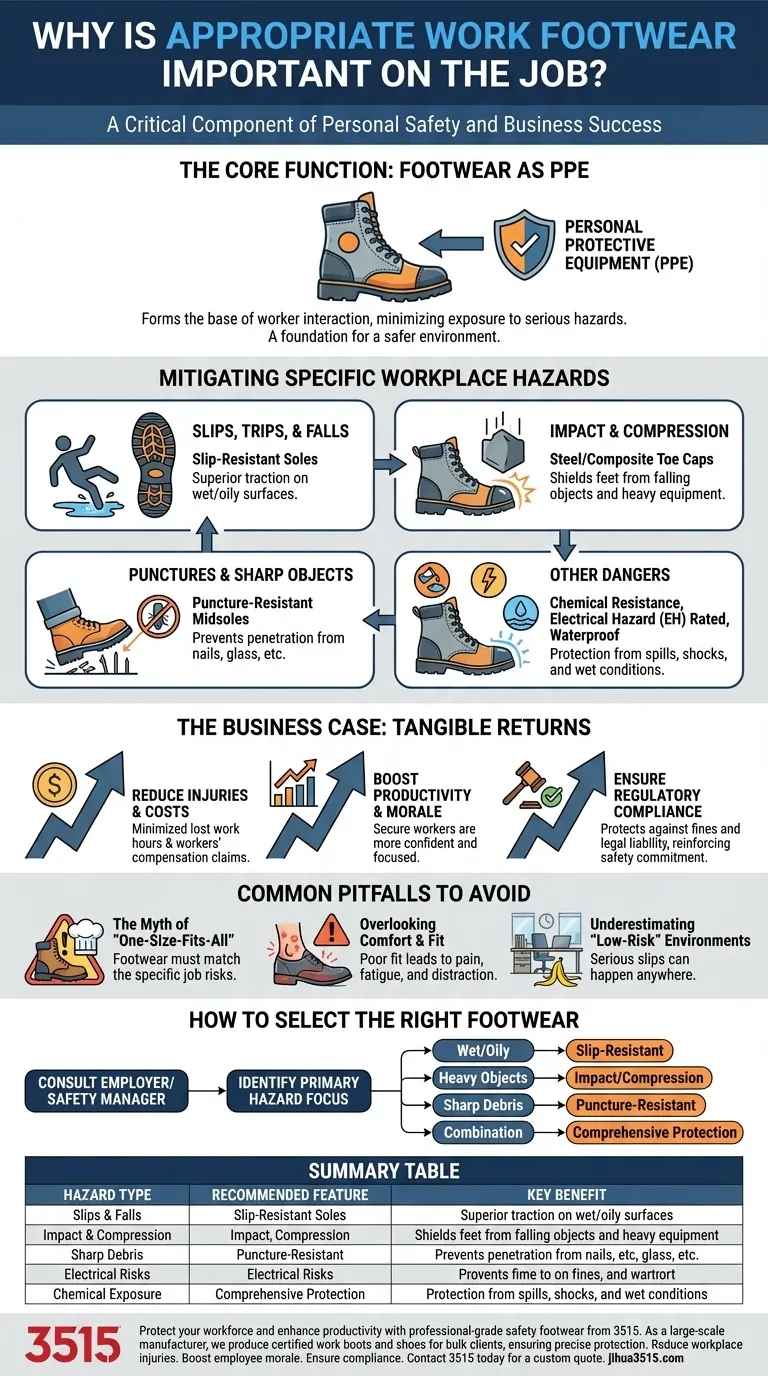
Visual Guide
Related Products
- Durable Leather Work Boots for Wholesale & Custom Manufacturing
- Wholesale Leather Work Boots with Customizable Wedge Sole for Brands
- Durable Leather Work Boots for Wholesale & Custom OEM Manufacturing
- Durable Leather Work Boots Wholesale Manufacturer & Custom Factory
- Durable Goodyear Welt Leather Work Boots for Wholesale & Private Label
People Also Ask
- What is the difference between full-grain and top-grain leather? Premium Material Guide for Boot Manufacturers
- What are the common workplace hazards that can be mitigated with the right work boots? Protect Your Workforce
- What are the common foot issues workers face due to uncomfortable work boots? Prevent Pain & Deformities
- What are the advantages of leather versus synthetic work boots? A Guide to Choosing the Right Material
- What are the key components of modern work boots? Engineered for Ultimate Durability and Comfort
















