The protective advantage of a tall PVC boot extends far beyond the foot itself. While any waterproof boot can handle a small puddle, the extended height of a tall PVC boot provides comprehensive coverage for the entire lower leg. This design is critical for shielding against deep water, significant liquid splashes, and physical hazards that would easily bypass shorter footwear.
The height of a PVC boot is not just about coverage; it's a fundamental design choice that transforms its function from simple foot protection to a comprehensive safety system for your entire lower leg, enhancing both environmental shielding and biomechanical stability.
The Principle of Extended Coverage
The most immediate benefit of a taller boot is the increased surface area it protects. This simple geometric advantage has significant implications in hazardous environments.
Shielding Against Liquids and Contaminants
A boot's primary defense against liquids is directly proportional to its height. Ankle-height boots offer protection for the feet, but they are vulnerable to anything deeper than a few inches.
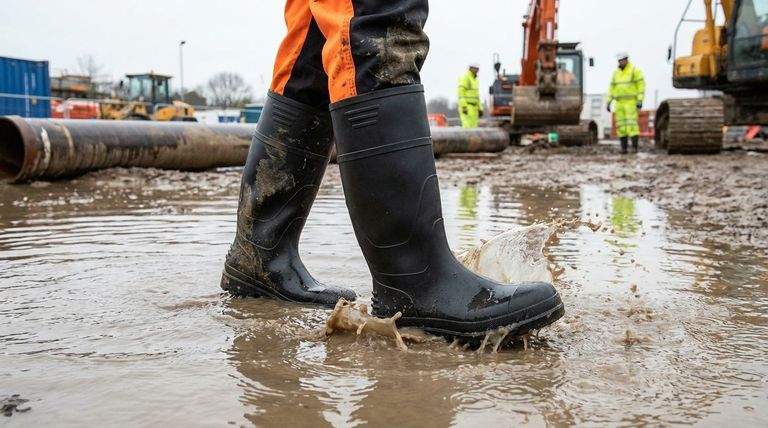
Knee-high PVC boots create a continuous, impermeable barrier that protects the shins and calves. This is essential when wading through deep puddles, dealing with large-scale spills, or working in environments where splashes can come from any direction.
Defense Against Physical Hazards
The lower leg, particularly the shin, is susceptible to impacts, scrapes, and abrasions from equipment, debris, or rough terrain.
A tall boot shaft acts as a physical shield. It provides a layer of protection against common workplace hazards that could otherwise cause significant injury to an exposed leg.
Enhancing Biomechanical Support
Beyond acting as a barrier, the rigid structure of a tall boot provides critical mechanical support to the user's leg and ankle, directly impacting stability and injury prevention.
Increased Ankle and Leg Stability
Tall boots encase the entire ankle joint and a significant portion of the lower leg. This structure provides maximum stability, restricting the side-to-side movements that often lead to sprains and strains.
This support is invaluable when navigating uneven, slippery, or unpredictable surfaces, where the risk of a misstep is high.
Control Over Rotation and Movement
The rigid shaft of a tall PVC boot offers superior control over rotational forces. It helps prevent the kind of twisting motions that can cause serious joint and ligament injuries.
By immobilizing the lower leg, the boot ensures that the foot, ankle, and leg move as a single, more stable unit.
Understanding the Trade-offs
While offering superior protection, the design of tall boots introduces necessary compromises that are important to consider for specific tasks.
Reduced Flexibility
The same rigidity that provides support can also limit mobility. Tasks requiring deep crouching, climbing, or significant ankle flexion can be more challenging in a tall, structured boot.
Increased Weight and Heat
More material naturally means more weight, which can contribute to fatigue over a long workday. The impermeable PVC material can also trap heat and moisture, leading to discomfort in warmer climates.
Slower Donning and Doffing
Taller boots are inherently more cumbersome to put on and take off compared to shorter, slip-on styles. This can be a minor inconvenience but is a practical consideration for daily use.
Making the Right Choice for Your Goal
The ideal boot height is determined entirely by the specific hazards of your environment and the physical demands of your work.
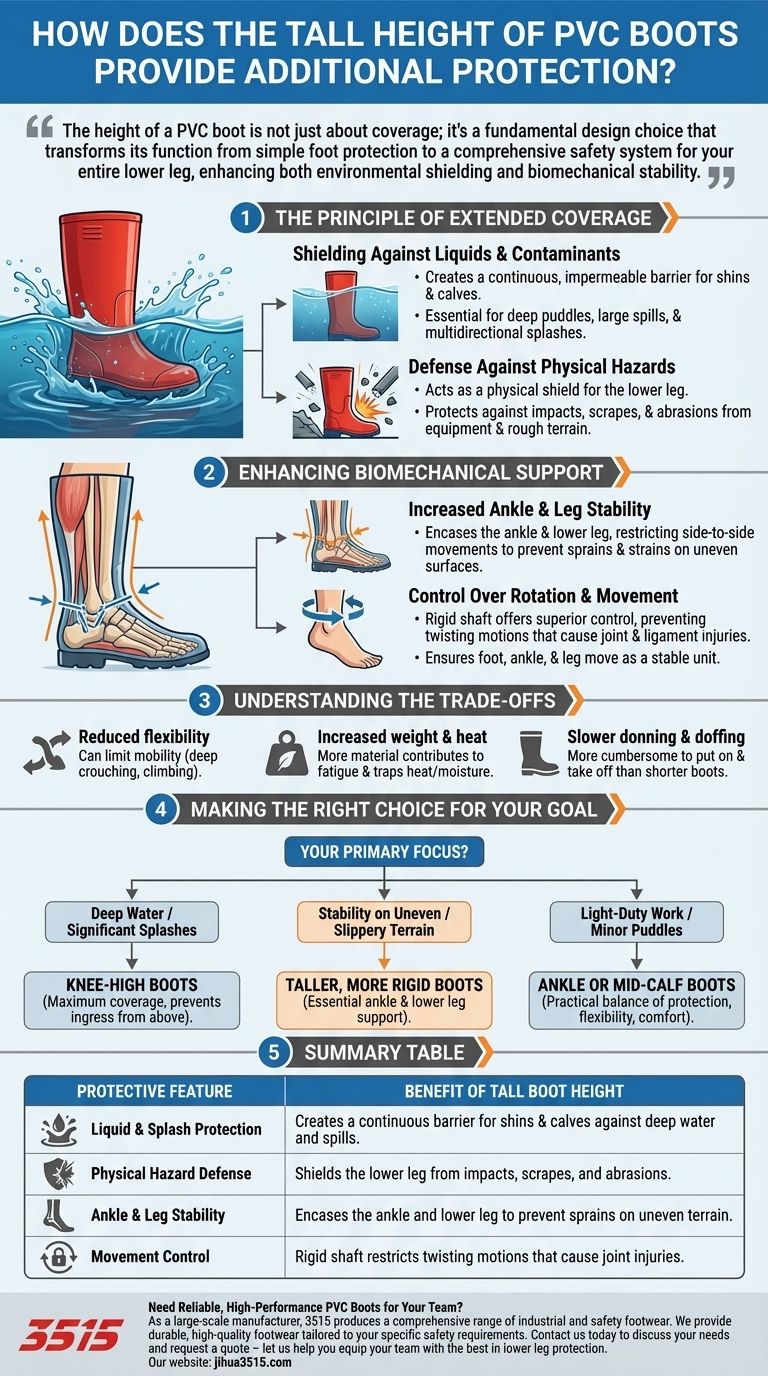
- If your primary focus is deep water or significant liquid splashes: Opt for knee-high boots to ensure maximum coverage and prevent any ingress from above.
- If your primary focus is stability on uneven or slippery terrain: A taller, more rigid boot provides the essential ankle and lower leg support needed to prevent twists and sprains.
- If your primary focus is light-duty work with minor puddles: An ankle or mid-calf boot may offer a more practical balance of protection, flexibility, and comfort.
Ultimately, selecting the right boot height is a deliberate safety decision based on a clear understanding of your environment's specific risks.
Summary Table:
| Protective Feature | Benefit of Tall Boot Height |
|---|---|
| Liquid & Splash Protection | Creates a continuous barrier for shins and calves against deep water and spills. |
| Physical Hazard Defense | Shields the lower leg from impacts, scrapes, and abrasions. |
| Ankle & Leg Stability | Encases the ankle and lower leg to prevent sprains on uneven terrain. |
| Movement Control | Rigid shaft restricts twisting motions that cause joint injuries. |
Need Reliable, High-Performance PVC Boots for Your Team?
As a large-scale manufacturer, 3515 produces a comprehensive range of industrial and safety footwear for distributors, brand owners, and bulk clients. Our production capabilities encompass all types of protective boots, including the tall PVC designs highlighted here, ensuring your workforce has the right protection for deep water, contaminants, and unstable ground.
We provide durable, high-quality footwear tailored to your specific safety requirements. Contact us today to discuss your needs and request a quote – let us help you equip your team with the best in lower leg protection.
Visual Guide
Related Products
- Premium Wholesale Waterproof Safety Boots High Performance Protection for Industrial Markets
- High-Traction Suede Tactical Boots Wholesale & Custom Manufacturing
- High Performance Fire-Retardant Waterproof Safety Boots
- Premium Waterproof High-Cut Industrial Safety Boots for Wholesale and Bulk Orders
- Wholesale Waterproof Tactical Boots Custom Suede & High-Traction Soles
People Also Ask
- What weather and chemical protections do premium boots offer? Your Complete Guide to Safety & Performance
- Why are waterproof safety boots recommended for certain work environments? Essential Protection for Wet & Hazardous Jobs
- What are the primary protective functions of industrial safety boots in oil palm plantations? Master Rough Terrain Safety
- Why are oil-resistant and anti-slip properties critical for industrial safety boots? Expert Outsole Engineering Guide
- What are the best types of shoes for different gardening conditions? Find Your Perfect Match.