The study of adsorption kinetics is the critical scientific driver behind the material engineering of specialized protective boots. By quantifying how fast and how deeply Polycyclic Aromatic Hydrocarbons (PAHs) adhere to boot components, developers can optimize rubber formulations and steel toe designs to resist toxic accumulation.
Understanding the specific rates at which contaminants bind to boot materials allows manufacturers to create denser surfaces and functional coatings. This data is essential for ensuring boots can be effectively decontaminated and do not become health hazards themselves over time.
Optimizing Material Formulations
Identifying Vulnerable Components
Research into adsorption kinetics specifically targets how different parts of the boot interact with contaminants.
Developers focus heavily on materials like rubber and steel toes, which are high-contact areas. By mapping accumulation patterns on these specific components, engineers can identify which parts of the boot are most susceptible to saturation.
Improving Surface Density
Kinetic data reveals how porous a material is to specific chemical agents.
To counter deep penetration of PAHs, manufacturers use this data to improve surface density. A denser material structure physically blocks contaminants from embedding deep within the boot's matrix.
Applying Functional Coatings
Beyond the base material, adsorption studies dictate the need for external barriers.
Insights into surface interaction allow for the development of functional coatings designed to repel PAHs. These coatings act as a first line of defense, keeping contaminants on the surface rather than allowing them to bond with the boot material.
Enhancing Maintenance and Safety
Simplifying Decontamination
The primary operational benefit of this research is reducing the difficulty of cleaning gear.
When PAHs are prevented from adsorbing deeply, the decontamination process becomes significantly easier. Surface-level contaminants can be washed away, whereas deeply absorbed chemicals are often impossible to remove completely.
Mitigating Health Risks
Protective gear that retains toxins becomes a secondary source of exposure for the user.
By minimizing the accumulation of toxic substances, manufacturers reduce the long-term health risks associated with handling contaminated boots. This ensures the gear protects the wearer even after the initial exposure event.
The Risks of Ignoring Kinetic Data
Accelerated Material Degradation
One of the most critical pitfalls in boot design is failing to account for chemical interaction.
If PAHs are allowed to accumulate, they can cause chemical degradation of the rubber and synthetic materials. This structural breakdown compromises the physical integrity of the boot, reducing its protective lifespan.
Persistent Contamination
Without optimized formulations, boots effectively become sponges for toxins.
Ignoring adsorption kinetics leads to persistent accumulation of hazardous substances. This turns the safety equipment itself into a hazardous waste item that cannot be safely reused.
Making the Right Choice for Your Safety Goals
When selecting protective footwear for environments with potential PAH exposure, consider how the manufacturer has addressed material interactions.
- If your primary focus is efficient maintenance: Prioritize boots with functional coatings and high surface density, as these features drastically reduce decontamination time.
- If your primary focus is equipment longevity: Look for boots with optimized rubber formulations designed to resist chemical degradation from toxic accumulation.
By leveraging the science of adsorption kinetics, you ensure your protective equipment remains a safety asset rather than a hidden health liability.
Summary Table:
| Feature Affected | Impact of Kinetics Research | Benefit to Wearer |
|---|---|---|
| Material Formulation | Increases surface density and reduces porosity | Prevents deep chemical penetration |
| Functional Coatings | Guides development of repellent barriers | Simplifies decontamination processes |
| Structural Integrity | Prevents chemical-induced material degradation | Extends the operational lifespan of boots |
| Safety Compliance | Minimizes long-term toxin accumulation | Reduces secondary exposure health risks |
Partner with 3515 for Advanced Protective Solutions
As a large-scale manufacturer serving distributors and brand owners worldwide, 3515 leverages scientific research to deliver high-performance footwear. Our comprehensive production capabilities allow us to integrate advanced adsorption kinetics insights into our flagship Safety Shoes series, ensuring your bulk orders meet the highest standards of chemical resistance and durability.
From tactical boots and training shoes to professional dress and formal footwear, we provide tailored manufacturing excellence to protect your users and grow your brand. Contact us today to discuss your bulk requirements!
References
- Anna Rabajczyk, Łukasz Bąk. Sorption Processes of Selected PAHs on Selected Fire-Resistant Materials Used in Special Firefighter Clothing. DOI: 10.3390/ma17081741
This article is also based on technical information from 3515 Knowledge Base .
Related Products
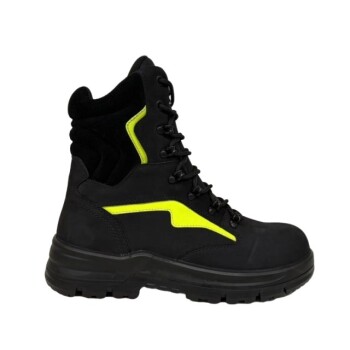
- Premium Wholesale Tactical Style Safety Shoes Boots with Quick Lacing
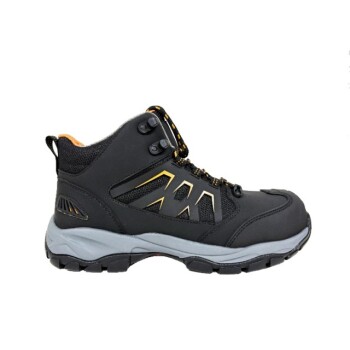
- Premium Grain Leather Safety Boots for Bulk Supply
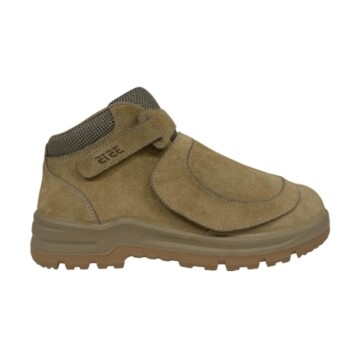
- Wholesale Customizable Safety Boots Durable & Protective Footwear Manufacturing
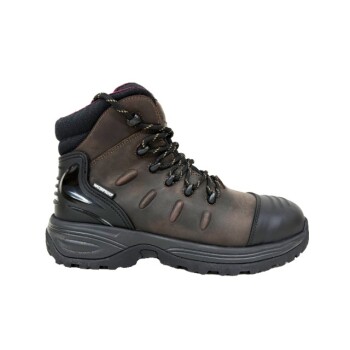
- Premium Waterproof Nubuck Safety Boots for Wholesale
- Wholesale Safety Boots Manufacturer for Custom & Private Label Orders
People Also Ask
- How are gait analysis research findings applied to the functional design of safety shoes and tactical boots?
- How do quality certification standards for safety shoes reduce perceived risk? Buy Online with Technical Certainty
- How can specialized footwear mitigate safety risks? High-Volume OEM/ODM Solutions since 1951
- Why is the synchronization of craftsmanship and UX development emphasized for bulk customization of safety shoes?
- How does anthropomorphic design influence material selection? Enhance Footwear Performance through Biological Alignment