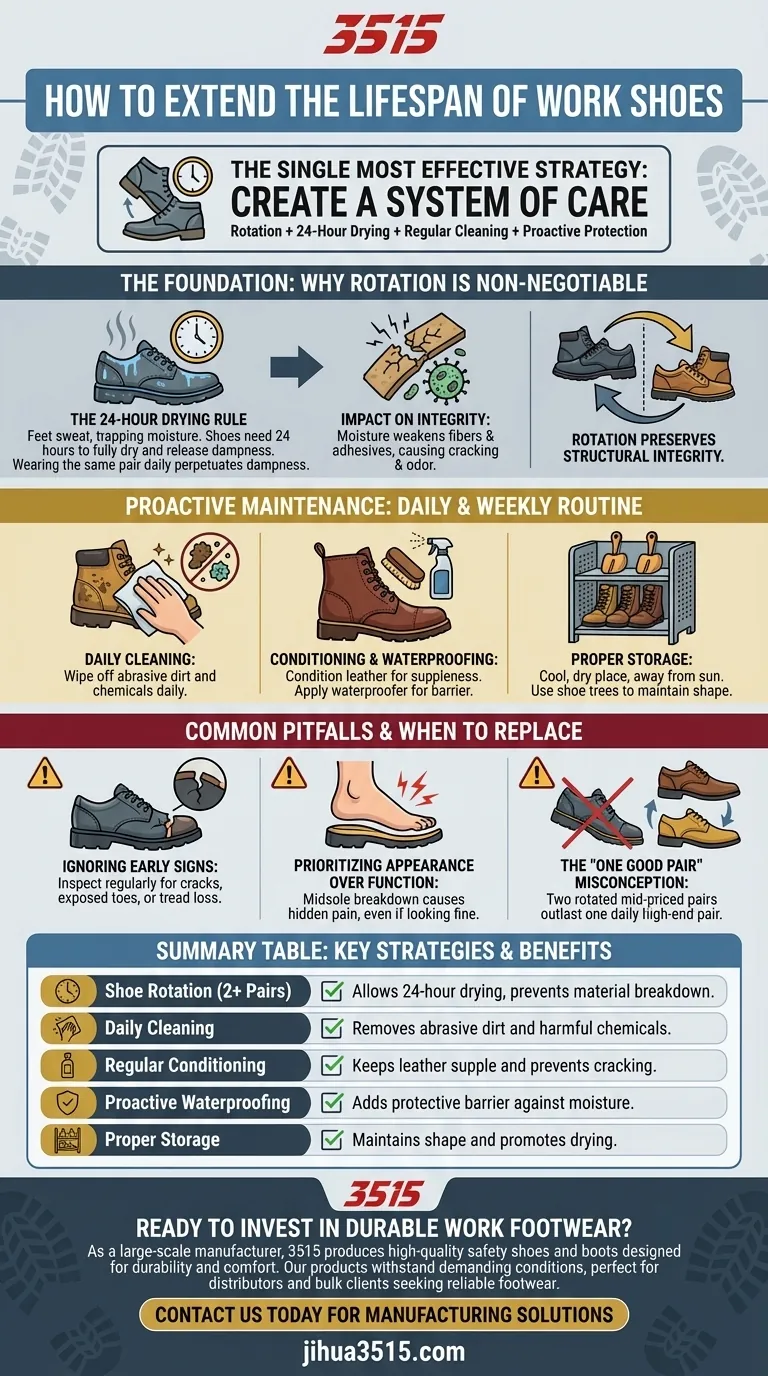
The single most effective strategy for extending the lifespan of your work shoes is to create a system of care, not just perform a single action. This involves rotating between at least two pairs, allowing each to fully dry, combined with regular cleaning and proactive protection.
The core principle is simple: a shoe's greatest enemies are constant moisture and abrasive wear. By systematically managing both, you can often double the functional life of your footwear, protecting your investment and ensuring continued safety.
The Foundation: Why Rotation is Non-Negotiable
The most common point of failure for work shoes isn't a single catastrophic event, but the slow, steady breakdown of materials. Rotation directly addresses the primary cause of this degradation.
The 24-Hour Drying Rule
Your feet sweat, introducing moisture into the shoe's materials throughout the day. Leather and other absorbent materials can take up to 24 hours to fully dry and release this trapped moisture.
Wearing the same pair every day means you are putting them on while they are still damp from the previous day. This creates a cycle of perpetual dampness.
The Impact on Material Integrity
Trapped moisture weakens the fibers of leather, synthetics, and adhesives, making them brittle and prone to cracking. It also creates a breeding ground for bacteria, leading to odor and material decay.
By rotating pairs, you give each shoe the essential time it needs to dry completely. This simple act preserves the structural integrity of the materials from the inside out.
Proactive Maintenance: Your Daily and Weekly Routine
A consistent care routine prevents the accumulation of damage. Think of it as preventative maintenance that takes minutes but adds months of life to your shoes.
Daily Cleaning
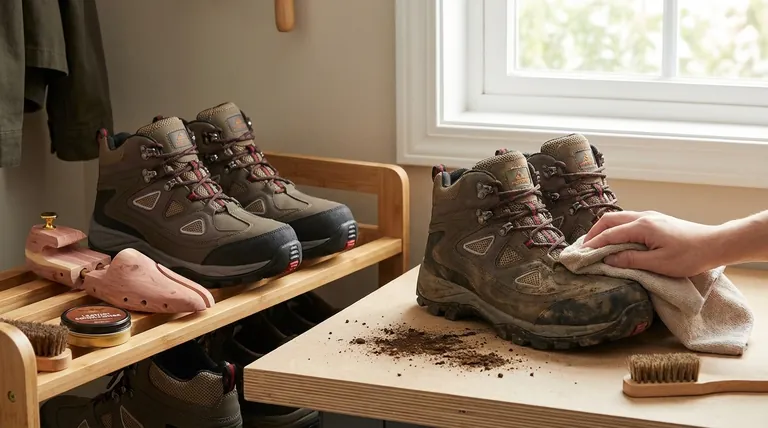
At the end of each day, take a moment to wipe off any dirt, dust, or chemicals. Debris can be abrasive, wearing down surfaces, while chemicals can actively degrade the shoe's materials.
Periodic Conditioning and Waterproofing
For leather shoes, regular conditioning is critical. A quality leather conditioner keeps the material supple and prevents it from drying out and cracking.
Applying a waterproofing treatment adds a protective barrier against external moisture, further protecting the shoe's structure.
Proper Storage
Store your shoes in a cool, dry place away from direct sunlight. Avoid tossing them in a pile or a sealed container where moisture can remain trapped. Using shoe trees can also help maintain their shape and absorb residual moisture.
Common Pitfalls and When to Replace
Even with perfect care, work shoes are consumable items with a finite lifespan. Knowing what to avoid and when to retire a pair is crucial for safety and comfort.
Ignoring Early Warning Signs
Don't wait for a total failure. Inspect your shoes regularly for signs of significant wear. This includes cracked soles, exposed steel or composite toe caps, or a loss of tread that reduces slip resistance.
These are not merely cosmetic issues; they are indicators that the shoe's protective capabilities have been compromised.
Prioritizing Appearance Over Function
A well-cared-for shoe can look good long after its structural support has failed. The midsole, which provides cushioning and support, breaks down over time. If you experience new foot, leg, or back pain, your shoes may be the culprit, even if they look fine.
The Misconception of "One Good Pair"
Investing in a single, expensive pair of shoes without a rotation strategy is a false economy. Two mid-priced pairs that are properly rotated will almost always outlast a single high-end pair worn daily.
Making the Right Choice for Your Goal
Your approach to shoe care should align with your primary objective.
- If your primary focus is maximizing lifespan on a budget: Implement a strict two-pair rotation system and commit to daily cleaning, as these habits cost nothing but time.
- If your primary focus is protecting a high-value investment: Add proactive steps like having a cobbler add a protective sole before the first wear and applying conditioner and waterproofer regularly.
- If your primary focus is unwavering safety and compliance: Be vigilant about inspection and replace your shoes as soon as you see signs of irreversible wear, regardless of their age.
Ultimately, a systematic approach to shoe care transforms an expense into a long-term investment in your comfort and safety.
Summary Table:
| Key Strategy | Primary Benefit |
|---|---|
| Shoe Rotation (2+ Pairs) | Allows 24-hour drying, prevents material breakdown from moisture. |
| Daily Cleaning | Removes abrasive dirt and harmful chemicals that degrade materials. |
| Regular Conditioning | Keeps leather supple and prevents cracking. |
| Proactive Waterproofing | Adds a protective barrier against external moisture and stains. |
| Proper Storage | Maintains shape and promotes drying in a cool, dry place. |
Ready to invest in durable, long-lasting work footwear?
As a large-scale manufacturer, 3515 produces a comprehensive range of high-quality safety shoes and boots designed for durability and comfort. Our products are built to withstand demanding conditions, perfect for distributors, brand owners, and bulk clients seeking reliable footwear that maximizes lifespan from the start.
Contact us today to discuss your needs and discover how our manufacturing capabilities can provide the durable footwear solution your business relies on.
Visual Guide
Related Products
- Durable Canvas Work Shoes with Rubber Lug Sole | Wholesale Manufacturer
- Durable Leather Work Boots for Wholesale & Custom OEM Manufacturing
- Durable Leather Work Boots for Wholesale & Custom Manufacturing
- Durable Goodyear Welt Leather Work Boots for Wholesale & Private Label
- Durable Leather Moc Toe Work Boots for Wholesale & Custom Manufacturing
People Also Ask
- What are the properties of canvas as a shoe material? A Guide to Lightweight Comfort & Style
- Why is the selection of high-strength fabric materials necessary in the production of canvas shoes and training shoes?
- What types of jobs are canvas work boots suitable for? Ideal for Light-Duty, High-Mobility Roles
- Can canvas shoes be worn in rainy conditions? The Truth About Water Resistance
- What are the functional advantages of choosing rubber soles over leather soles for work boots? Superior Safety & Durability