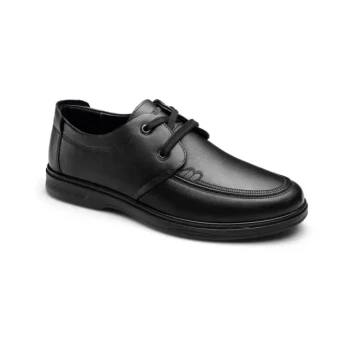
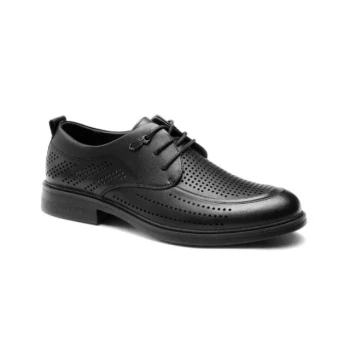
At its core, a vegan or synthetic leather work shoe offers a cost-effective, low-maintenance, and cruelty-free alternative to traditional leather. These shoes are designed to mimic the appearance of real leather while often providing better resistance to water and spills, making them a practical choice for many work environments.
The decision between vegan and genuine leather work shoes is a direct trade-off. Vegan leather excels in affordability and ease of care, while genuine leather offers superior long-term durability and the ability to mold to your foot for a custom fit over time.

The Anatomy of a Work Shoe
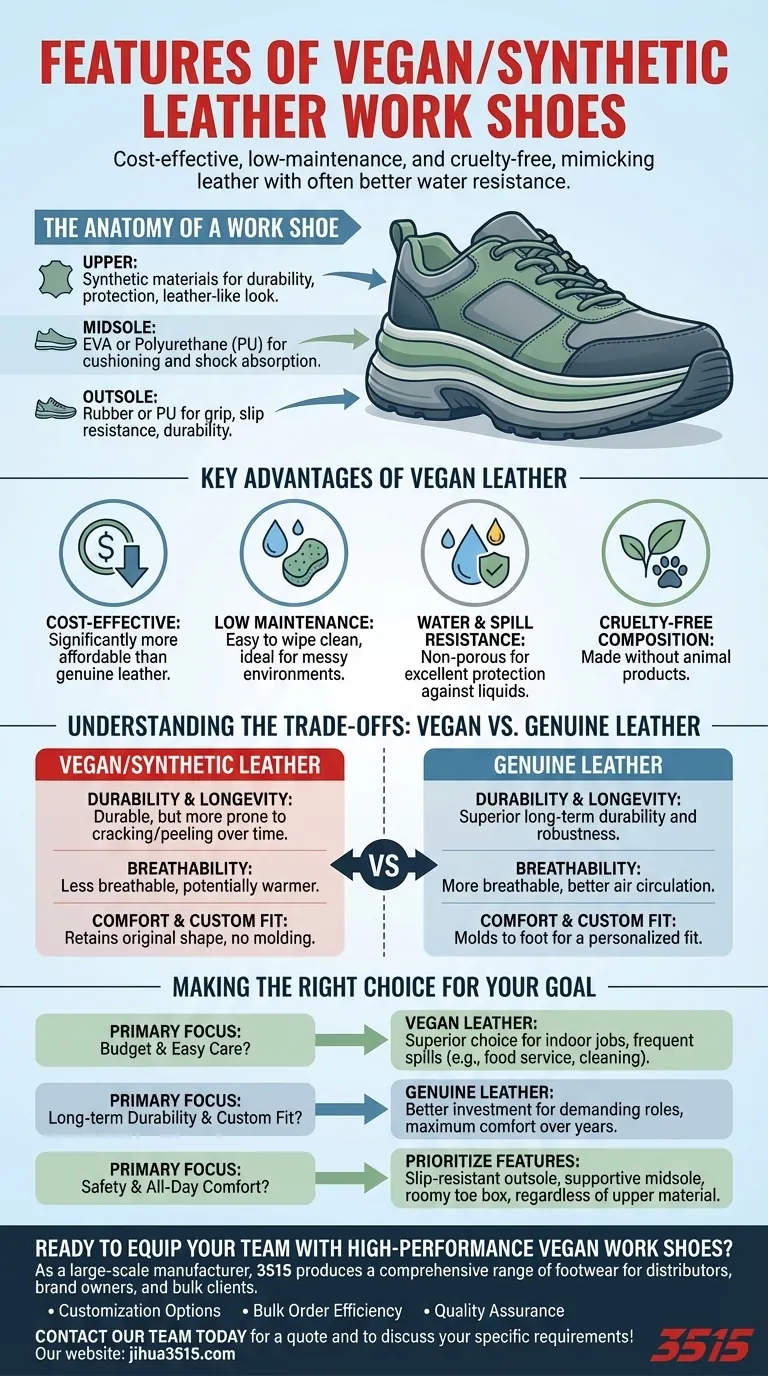
To understand any work shoe's features, it's essential to know its three main components. The choice of material for the "upper" is what defines it as a vegan or genuine leather shoe.
The Upper
This is the section that wraps around the top of your foot. In vegan work shoes, this is made from synthetic materials designed for durability, protection, and a leather-like look.
The Midsole
Located between your foot and the outsole, this layer provides cushioning and support. It's typically made from materials like EVA or polyurethane (PU) to absorb shock and reduce fatigue during long shifts.
The Outsole
This is the bottom of the shoe that makes contact with the ground. It's engineered from rubber or PU for grip, slip resistance, and durability against abrasive surfaces.
Key Advantages of Vegan Leather in the Workplace
Synthetic materials bring a distinct set of benefits, particularly for certain professional environments.
Cost-Effectiveness
Vegan leather is significantly more affordable than genuine leather, making it an accessible option for those who need functional work footwear without a large investment.
Low Maintenance
Unlike genuine leather, which requires conditioning and careful cleaning, synthetics are easy to wipe clean. This makes them ideal for messy environments like kitchens or workshops.
Water and Spill Resistance
Many synthetic materials are non-porous, offering excellent protection against water, oil, and other spills. This is a critical safety and comfort feature in the food service industry.
Cruelty-Free Composition
For many, the most important feature is that these shoes are made without any animal products, aligning with ethical or lifestyle choices.
Understanding the Trade-offs: Vegan vs. Genuine Leather
Choosing vegan leather involves accepting a few compromises compared to its traditional counterpart. Being aware of these differences is key to making the right decision.
Durability and Longevity
Genuine leather is known for its robustness and long lifespan. While quality synthetics are durable, they can be more prone to cracking or peeling over time and may not withstand heavy-duty wear as well as real leather.
Breathability
As a natural material, genuine leather is porous and allows air to circulate, which helps keep feet dry and comfortable. Synthetic leather is less breathable, which can lead to warmer feet during long hours of wear.
Comfort and Custom Fit
The standout feature of genuine leather is its ability to stretch and mold to the unique shape of your foot over time, creating a personalized and highly comfortable fit. Vegan leather does not have this property and will retain its original shape.
Making the Right Choice for Your Goal
Ultimately, the best material depends entirely on your job's demands and your personal priorities.
- If your primary focus is budget and easy care: Vegan leather is the superior choice, especially for indoor jobs or roles with frequent spills like food service or cleaning.
- If your primary focus is long-term durability and a custom fit: Genuine leather is a better investment, particularly for demanding roles that require maximum comfort over years of use.
- If your primary focus is safety and all-day comfort: Pay closest attention to features like a slip-resistant outsole, a supportive midsole, and a roomy toe box, regardless of the upper material.
Understanding these material differences empowers you to select a work shoe that truly supports your daily demands.
Summary Table:
| Feature | Vegan/Synthetic Leather | Genuine Leather |
|---|---|---|
| Cost | More affordable | Higher initial investment |
| Maintenance | Easy to wipe clean | Requires conditioning |
| Water Resistance | Excellent (non-porous) | Good, but can absorb moisture |
| Breathability | Less breathable | More breathable |
| Durability | Durable, but may crack/peel over time | Superior long-term durability |
| Fit | Retains original shape | Molds to foot for a custom fit |
| Ethical Consideration | Cruelty-free | Uses animal products |
Ready to Equip Your Team with High-Performance Vegan Work Shoes?
As a large-scale manufacturer, 3515 produces a comprehensive range of footwear for distributors, brand owners, and bulk clients. Our production capabilities encompass all types of shoes and boots, including a full line of durable, cost-effective vegan and synthetic leather work shoes designed for the demands of the food service, hospitality, and light industrial sectors.
We provide:
- Customization Options: Tailor styles, colors, and branding to meet your market needs.
- Bulk Order Efficiency: Benefit from our scale for competitive pricing and reliable supply.
- Quality Assurance: Every pair is built to meet professional standards for safety and comfort.
Let us help you source the perfect work footwear for your customers. Contact our team today for a quote and to discuss your specific requirements!
Visual Guide
Related Products
- Durable Leather Work Boots for Wholesale & Custom OEM Manufacturing
- Durable Leather Work Boots for Wholesale & Custom Manufacturing
- Wholesale Durable Leather Work Boots | 8-Inch Goodyear Welt Manufacturer
- Durable Goodyear Welt Leather Work Boots for Wholesale & Private Label
- Durable Leather Work Boots Wholesale Manufacturer & Custom Factory
People Also Ask
- What is the difference between full-grain and top-grain leather? Premium Material Guide for Boot Manufacturers
- What are the key benefits of high-quality work boots? Unlock Safety, Comfort & Long-Term Value
- What features distinguish work boots from other types of cowboy boots? A Guide to Safety vs. Riding Performance
- Why perform macrofoam swab sampling on work boots? Ensure Site Safety & Prevent Hazardous Cross-Contamination
- What should you do when your work boots no longer serve their purpose? Don't Gamble with Your Safety