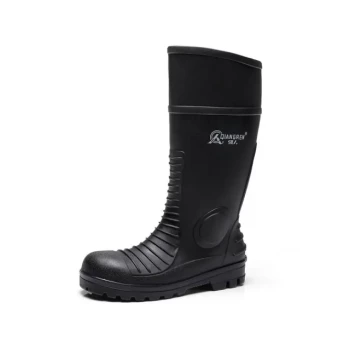
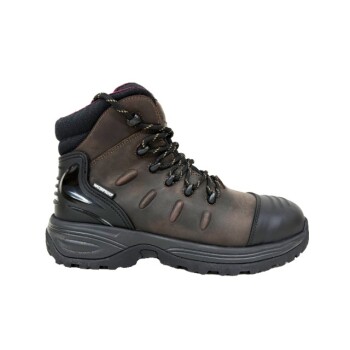
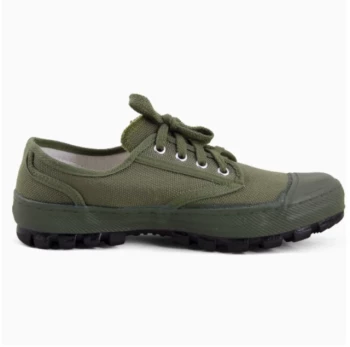
Choosing the right work cowboy boots is a critical decision that balances occupational safety, long-term durability, and all-day comfort. The ideal choice is determined not by brand or appearance, but by a clear-eyed assessment of your job's specific demands, from environmental hazards to the type of surfaces you walk on daily.
Your work boot isn't a style choice; it's a piece of personal protective equipment (PPE). The selection process should begin with a thorough analysis of your work environment's hazards, making function and safety the primary drivers of your decision.
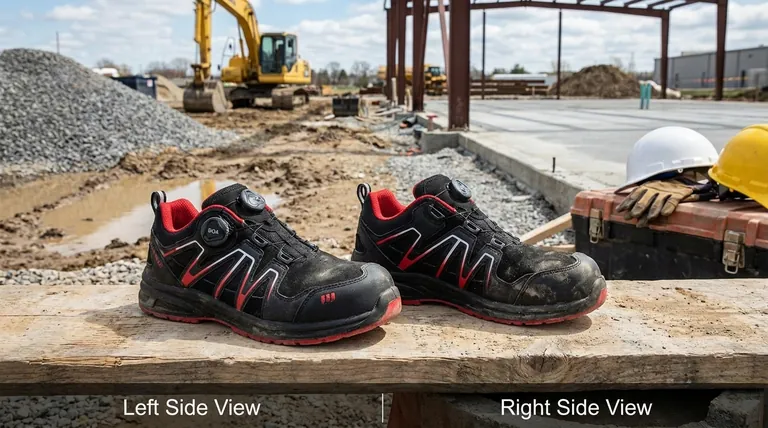
The Foundation: Start with Your Work Environment
Before you look at a single boot, you must define the problems the boot needs to solve. The environment dictates the necessary features.
Assess Your Daily Hazards
The most critical factor is the specific dangers you face. A boot that is perfect for a rancher is dangerously inadequate for an industrial electrician.
Consider if your job involves risks of impact or compression (from falling objects), punctures (from nails or sharp debris), or slips. Each of these requires a specific protective feature.
Define Your Primary Terrain
The ground beneath your feet determines the necessary outsole. An aggressive, heavy-lugged sole provides excellent traction in mud and on uneven natural ground.
Conversely, a lower-profile, wedge-style sole offers better surface contact and comfort on hard, flat surfaces like concrete or asphalt, reducing the risk of tripping.
Factor in Climate and Conditions
Will you be working in extreme heat, cold, or wet conditions? A boot's material and construction must match the climate.
Waterproofing is essential for wet environments, but it can reduce breathability. In hot climates, a moisture-wicking lining is crucial for keeping feet dry and preventing blisters.
Deconstructing the Boot Itself
Once you understand your environment's demands, you can evaluate the components of a boot to see if it meets those needs.
The Upper: Leather and Materials
The boot's upper protects the top of your foot. Full-grain leather is the premium standard, offering maximum durability and water resistance, though it requires a longer break-in period.
Other leathers or synthetic materials may offer more flexibility or a lower cost, but often at the expense of long-term resilience.
The Toe Box: Protection and Shape
The toe is a boot's first line of defense. If your job has any risk of falling objects or compression, a safety toe is non-negotiable.
Steel toes offer maximum protection but are heavy. Composite toes are lighter, don't conduct cold, and won't set off metal detectors, making them a popular modern alternative. Always check that the boot meets specific safety certifications (like ASTM F2413).
The Outsole: Your Connection to the Ground
The outsole is where function is most apparent. For most work sites, a rubber outsole is superior to traditional leather because it offers better traction and is often oil- and slip-resistant.
Look for specific ratings like SR (Slip-Resistant) or EH (Electrical Hazard) if your job requires them.
The Heel: Stability Over Style
Traditional cowboy boots have a tall, angled heel designed to lock into a stirrup. For a work boot, this is often a liability.
A low, block-style "work" heel provides a much wider, more stable base for walking, standing, and climbing on job sites, significantly reducing the risk of ankle rolls.
Understanding the Trade-offs
There is no single "perfect" work boot; every feature comes with a corresponding compromise. Understanding these trade-offs is key to making an informed choice.
Durability vs. Break-in Period
The toughest, most durable boots are often made from thick, full-grain leather. While they will last for years, they typically require a significant and sometimes uncomfortable break-in period.
Waterproofing vs. Breathability
A fully waterproof boot with an internal membrane is excellent at keeping water out. However, that same membrane can trap sweat and heat, making the boot uncomfortable in hot, dry conditions.
Maximum Safety vs. All-Day Comfort
Features like steel toes and thick, puncture-resistant midsoles provide essential protection. However, they add significant weight and rigidity, which can lead to fatigue over a long workday.
Making the Right Choice for Your Job
To select the ideal boot, align your choice with your primary daily requirement.
- If your primary focus is safety on an industrial or construction site: Prioritize a certified safety toe (steel or composite), a puncture-resistant sole, and an EH rating if necessary.
- If your primary focus is all-day stability on a farm or ranch: Choose a boot with a lower block heel, a durable but flexible leather upper, and a moderately treaded outsole.
- If your primary focus is working in wet, muddy, or slippery conditions: Ensure the boot is genuinely waterproof and features an aggressive, high-traction rubber outsole.
- If your primary focus is comfort while standing on concrete all day: Look for a boot with a cushioned insole, a supportive shank, and a wedge-style sole for maximum surface contact.
A well-chosen work boot is not an accessory; it is an essential tool that protects your most valuable asset on the job.
Summary Table:
| Key Factor | What to Look For |
|---|---|
| Work Environment | Assess hazards (impact, puncture, slips), terrain (mud, concrete), and climate (wet, hot, cold). |
| Boot Upper | Full-grain leather for maximum durability and water resistance. |
| Toe Box | Certified safety toe (steel or composite) for protection from impact/compression. |
| Outsole | Rubber sole with specific ratings (SR for slip, EH for electrical hazard) for traction and safety. |
| Heel | Low, block-style heel for stability on job sites, reducing ankle roll risk. |
Need Durable, Safe Work Boots for Your Team? Partner with 3515.
As a large-scale manufacturer, we produce a comprehensive range of footwear for distributors, brand owners, and bulk clients. Our production capabilities encompass all types of work boots, including cowboy styles built for occupational safety and long-term performance.
We can help you source or customize the perfect work boot for your specific industry needs. Contact our experts today to discuss your requirements and get a quote.
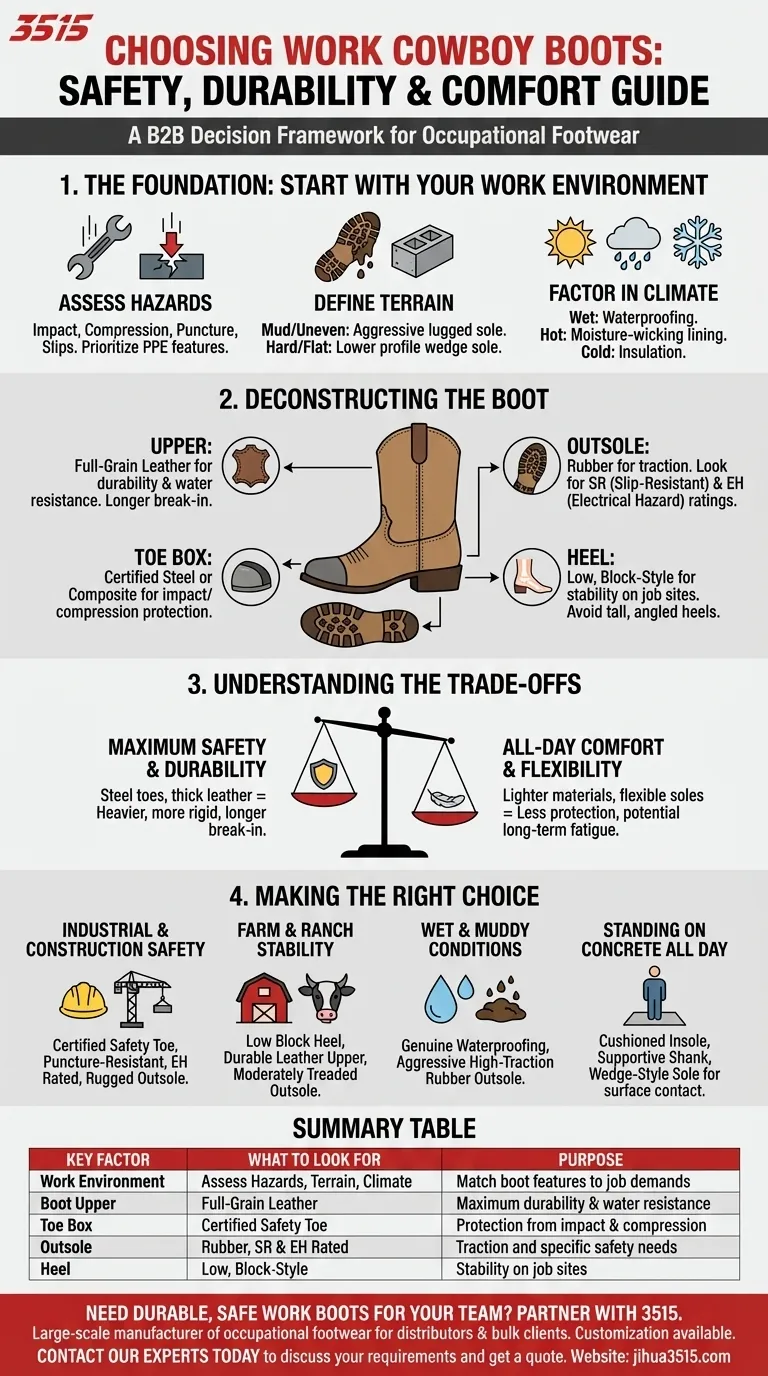
Visual Guide
Related Products
- Durable Leather Work Boots for Wholesale & Custom OEM Manufacturing
- Durable Leather Work Boots for Wholesale & Custom Manufacturing
- Durable Leather Work Boots Wholesale Manufacturer & Custom Factory
- Durable Leather Moc Toe Work Boots for Wholesale & Custom Manufacturing
- Wholesale Leather Work Boots with Customizable Wedge Sole for Brands
People Also Ask
- What is the difference between full-grain and top-grain leather? Premium Material Guide for Boot Manufacturers
- What should you do when your work boots no longer serve their purpose? Don't Gamble with Your Safety
- What are the key benefits of high-quality work boots? Unlock Safety, Comfort & Long-Term Value
- Why perform macrofoam swab sampling on work boots? Ensure Site Safety & Prevent Hazardous Cross-Contamination
- What features distinguish work boots from other types of cowboy boots? A Guide to Safety vs. Riding Performance