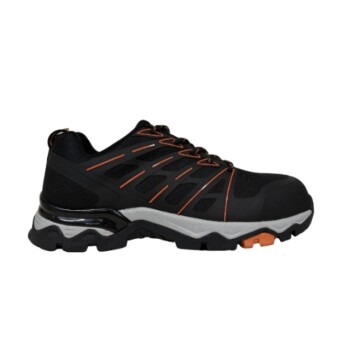
Standard compliance serves as the critical baseline for physical protection within any sustainable construction safety framework. It ensures that protective equipment, such as safety footwear and clothing, meets rigorous physical performance benchmarks established by authoritative bodies and national IS codes.
By adhering to these standards, safety gear functions as a "hardware-level buffer." This ensures that even when cognitive or operational errors occur on-site, the equipment provides a verified level of protection to mitigate unsafe conditions.
The Role of Standards in Risk Mitigation
Establishing Physical Benchmarks
Compliance is not merely a bureaucratic requirement; it is the verification of physical capability.
It guarantees that equipment has passed specific testing thresholds set by national IS codes. This validates that the gear can withstand the actual physical forces present on a construction site.
Reducing Unsafe Conditions
Implementing compliant equipment is a direct, proactive strategy for site safety.
By standardizing the quality of gear, you automatically lower the baseline risk of the environment. It removes variables regarding equipment quality, allowing safety managers to focus on behavioral factors.
The "Hardware Buffer" Principle
Compensating for Human Error
In a high-pressure construction environment, cognitive and operational mistakes are inevitable.
Compliance ensures that safety equipment compensates for these lapses. If a worker loses focus, the equipment remains effective because its performance is engineered into the material, not dependent on the user's attention.
Providing a Reliable Safety Net
This concept creates a hardware-level safety net.
Regardless of the worker's state of fatigue or stress, the equipment offers a consistent level of defense. This reliability is the core significance of maintaining standard compliance.
Understanding the Limitations
Compliance vs. Application
While compliance guarantees the potential performance of the gear, it does not guarantee safety if the gear is used incorrectly.
A compliant helmet offers no protection if it is not secured properly. Compliance certifies the tool, but training ensures the proper application of that tool.
The Floor, Not the Ceiling
Meeting national IS codes should be viewed as the minimum requirement, not the ultimate goal.
Over-reliance on meeting the bare minimum standard can lead to complacency. It is vital to remember that unique site hazards may require protection that exceeds standard regulatory benchmarks.
Making the Right Choice for Your Safety Framework
To integrate standard compliance effectively into your safety strategy, consider the following:
- If your primary focus is Procurement: Verify that every piece of equipment explicitly references the specific national IS code it meets to guarantee physical performance benchmarks.
- If your primary focus is Risk Management: Treat compliant gear as a redundancy system intended to protect workers specifically when their cognitive focus fails.
Standard compliance transforms safety equipment from simple accessories into reliable engineering controls that save lives.
Summary Table:
| Aspect of Compliance | Description/Benefit | Key Takeaway |
|---|---|---|
| Physical Benchmarks | Guarantees equipment meets national IS codes. | Verifies physical capability and performance. |
| Risk Mitigation | Proactively lowers baseline site risk. | Standardizes gear quality, reduces variables. |
| Hardware Buffer | Compensates for cognitive & operational errors. | Provides consistent defense, a reliable safety net. |
| Limitations | Compliance is minimum; requires correct application. | Not a guarantee without proper training/use. |
As a large-scale manufacturer serving distributors and brand owners, 3515 is your trusted partner for high-quality, compliant footwear. From our flagship Safety Shoes series to work and tactical boots, outdoor shoes, training shoes, sneakers, and Dress & Formal shoes, we offer comprehensive production capabilities to meet your diverse bulk requirements. Ensure superior protection and compliance for your customers – contact 3515 today to discuss your needs!
References
- S. Ajith, Mariusz Szóstak. A Framework for Systematic Assessment of Human Error in Construction Sites – A Sustainable Approach. DOI: 10.13189/cea.2022.100503
This article is also based on technical information from 3515 Knowledge Base .
Related Products
- Premium Suede Sport Safety Shoes for Wholesale & Bulk Orders
- Premium Lightweight Safety Shoes for Wholesale & Bulk Orders
- Wholesale Anti-Smash & Puncture-Proof Safety Shoes Custom Manufacturing for Brands
- Premium KPU Injection Athletic Style Safety Shoes
- Premium Safety Shoes with Rotating Buckle Safety Sneakers
People Also Ask
- What industries have specific OSHA footwear requirements? Ensure Compliance & Protect Your Workforce
- What are the primary functions of professional safety shoes? Maximize Safety in Water Supply Confined Spaces
- What role do specialized safety shoes play in preventing falls? Engineering Stability in Industrial Environments
- Why must safety training be synchronized with the provision of physical safety shoes? Achieve Optimal Workplace Protection
- How does professional industrial cleaning equipment maintain the performance stability of safety shoes? Pro Maintenance