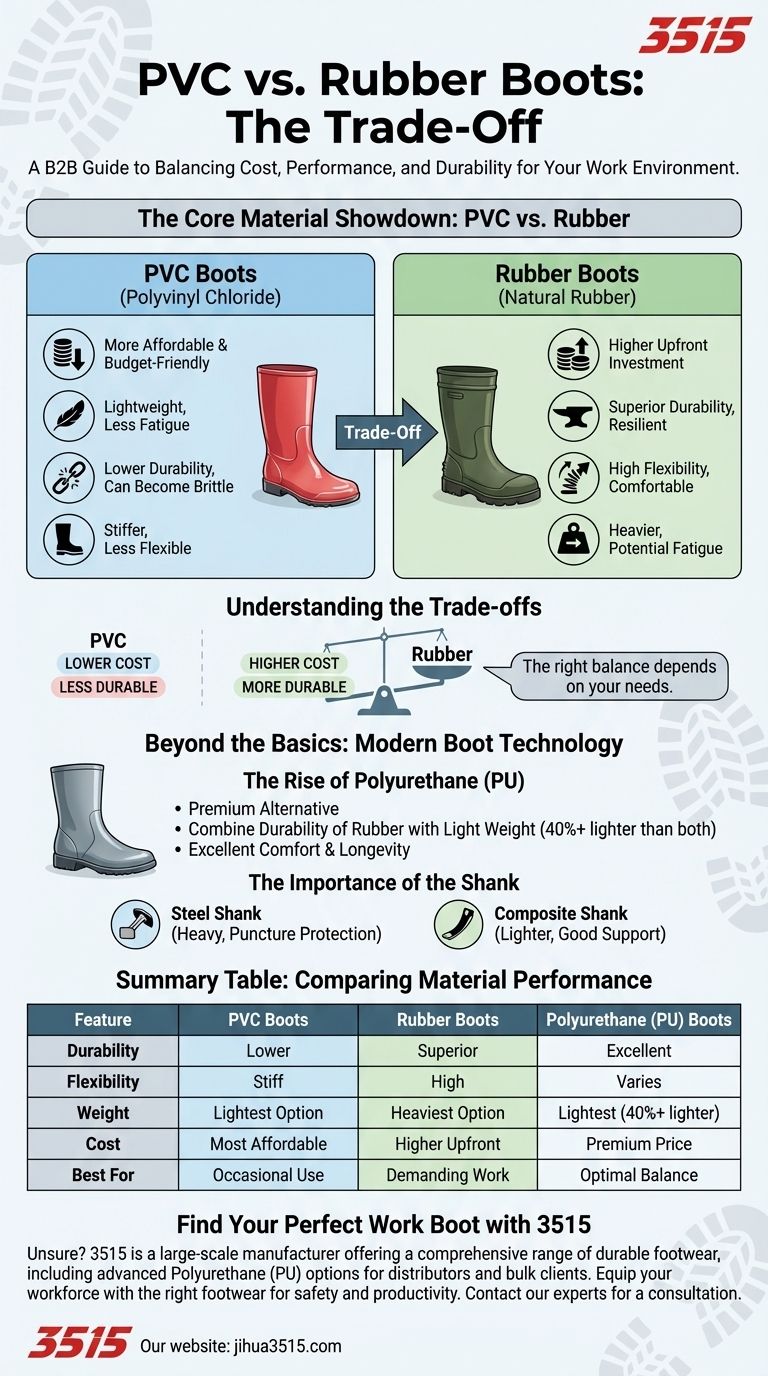
When choosing between PVC and rubber boots, the decision hinges on a trade-off between cost and performance. Natural rubber boots offer superior durability, flexibility, and long-term waterproof integrity. In contrast, PVC (Polyvinyl Chloride) boots are a more affordable and lightweight alternative, but they are less resilient to wear and tear.
The core issue isn't which material is definitively "better," but which one provides the right balance of durability, comfort, and cost for your specific environment and the demands of your work.
The Core Material Showdown: PVC vs. Rubber
Durability and Lifespan
Natural rubber is inherently more durable than PVC. Its elasticity allows it to resist punctures, cuts, and cracks far more effectively, especially in cold temperatures where PVC can become brittle.
This resilience means a quality pair of rubber boots will typically outlast PVC boots in demanding, high-use environments.
Flexibility and Comfort
Rubber provides significantly better flexibility. This natural pliability moves with you, making it more comfortable for tasks that require frequent squatting, kneeling, or walking over uneven terrain.
PVC is a much stiffer material. While this can offer a feeling of protection, it often leads to less comfort during prolonged wear and can restrict natural foot movement.
Weight and Fatigue
One of PVC's primary advantages is its lighter weight. A typical PVC boot is noticeably lighter than its rubber counterpart.
This weight reduction can lead to less fatigue over a long workday. It's a key reason why PVC is considered for less strenuous applications where comfort over many hours is a priority.
Cost and Accessibility
PVC is significantly less expensive to manufacture, making it the clear budget-friendly option. This makes it ideal for occasional use or for equipping large teams where initial cost is a major factor.
Rubber boots represent a higher upfront investment due to the costs of natural materials and more complex manufacturing processes.
Understanding the Trade-offs
The Myth of "Absolute Best"
There is no single "best" material for all situations. A high-end, well-constructed PVC boot can outperform a poorly made, cheap rubber boot. The quality of construction is just as important as the base material.
The Hidden Cost of PVC
While cheaper initially, PVC's lower durability can lead to a higher long-term cost. In abrasive or chemically harsh environments, you may need to replace PVC boots far more frequently than a single pair of rubber boots.
The Weight Penalty of Rubber
The primary downside of traditional rubber boots is their weight. For jobs that require extensive walking, the extra ounces can contribute to fatigue by the end of the day, making lighter alternatives more appealing.
Beyond the Basics: Modern Boot Technology
The Rise of Polyurethane (PU)
Modern boot technology has introduced Polyurethane (PU) as a premium alternative. PU boots are remarkably lightweight—often more than 40 percent lighter than both PVC and rubber.
This material combines the durability of rubber with a weight that is even less than PVC, offering an exceptional balance of comfort and longevity for professionals.
The Importance of the Shank
The shank is the supportive structure built into the sole of the boot between the heel and the outsole.
A traditional steel shank offers maximum durability and stiffness for puncture protection. However, modern composite shanks (made of fiberglass or nylon) provide excellent support while being significantly lighter, reducing the boot's overall weight and making them better for jobs where every ounce matters.
Making the Right Choice for Your Work
Ultimately, the best boot is the one that aligns with your specific needs and budget.
- If your primary focus is affordability and occasional use: PVC is the most logical and cost-effective choice.
- If your primary focus is maximum durability and daily demanding work: Natural rubber is the superior long-term investment.
- If your primary focus is the best balance of modern comfort, light weight, and durability: A Polyurethane (PU) boot is the premium professional option.
Choosing the right boot is about matching the material's inherent strengths to the demands of your day.
Summary Table:
| Feature | PVC Boots | Rubber Boots | Polyurethane (PU) Boots |
|---|---|---|---|
| Durability | Lower, can become brittle | Superior, highly resilient | Excellent, combines durability & lightness |
| Flexibility | Stiff, less comfortable | High, moves with you | Varies, often flexible |
| Weight | Lightest option | Heaviest option | Lightest (40%+ lighter than rubber) |
| Cost | Most affordable, budget-friendly | Higher upfront investment | Premium price point |
| Best For | Occasional use, large teams, low cost | Demanding daily work, maximum longevity | Optimal balance of comfort & durability |
Find Your Perfect Work Boot with 3515
Still unsure which boot material is right for your team's specific needs? As a large-scale manufacturer, 3515 produces a comprehensive range of durable footwear for distributors, brand owners, and bulk clients. Our production capabilities encompass all types of work boots, including advanced Polyurethane (PU) options that offer the ideal blend of lightweight comfort and long-lasting performance.
Let us help you equip your workforce with the right footwear for maximum safety and productivity. Contact our experts today for a consultation and discover the 3515 difference!
Visual Guide
Related Products
- Premium Wholesale Waterproof Safety Boots High Performance Protection for Industrial Markets
- High-Traction Suede Tactical Boots Wholesale & Custom Manufacturing
- High Performance Fire-Retardant Waterproof Safety Boots
- Premium Waterproof High-Cut Industrial Safety Boots for Wholesale and Bulk Orders
- Wholesale Waterproof Tactical Boots Custom Suede & High-Traction Soles
People Also Ask
- What weather and chemical protections do premium boots offer? Your Complete Guide to Safety & Performance
- Why are waterproof safety boots recommended for certain work environments? Essential Protection for Wet & Hazardous Jobs
- What are the primary protective functions of industrial safety boots in oil palm plantations? Master Rough Terrain Safety
- Why are oil-resistant and anti-slip properties critical for industrial safety boots? Expert Outsole Engineering Guide
- What are the best types of shoes for different gardening conditions? Find Your Perfect Match.