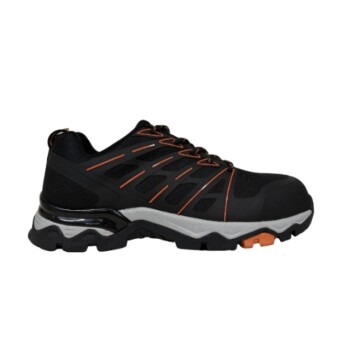
Professional safety shoes mitigate dual risks through a multi-layered construction strategy. They utilize advanced anti-slip outsole designs to maintain traction on floors compromised by lubricants or coolants, while simultaneously employing reinforced internal barriers—specifically puncture-resistant midsoles and impact-resistant toe caps—to shield the foot from sharp steel chips and falling heavy objects.
Core Takeaway To operate safely in mechanical environments, footwear must act as both an anchor and a shield. The most effective safety shoes integrate fluid-displacing tread patterns to prevent slips with rigid structural reinforcements that deflect crushing forces and impenetrable debris.
Solving the "Wet Surface" Challenge
In mechanical manufacturing, the primary slip hazards are not just water, but viscous fluids like lubricants, oils, and coolants. Professional footwear addresses this through specific outsole engineering.
Advanced Outsole Designs
The foundation of slip resistance lies in the outsole geometry. Manufacturers create specialized patterns designed to channel fluids away from the sole, maximizing the contact area between the shoe and the floor. This provides reliable traction even when the surface is coated in slippery industrial fluids.
Stability on Oily Terrains
Beyond simple water resistance, these outsoles are formulated to resist degradation from oils and chemicals. By maintaining structural integrity and friction on oily surfaces, the footwear significantly reduces the risk of slip-and-fall accidents, which are common during maintenance operations or fluid spills.
Solving the "Debris and Impact" Challenge
Mechanical environments are characterized by "complex terrain"—a floor often littered with sharp byproducts (swarf, chips) and the constant threat of dropped tools or components.
Barrier Against Sharp Objects
To protect against sharp steel chips or metal shavings that can pierce standard rubber soles, professional safety shoes incorporate puncture-resistant midsoles. These reinforced layers act as a shield, preventing sharp debris from penetrating the bottom of the shoe and causing foot injuries.
Protection from Crushing Forces
The risk of falling heavy objects—such as automotive components or tooling—is mitigated by impact-resistant toe caps. Typically made of steel or high-strength composites, these caps create a hardened shell over the toes to prevent crush injuries, a fundamental requirement for industrial foot safety.
Understanding the Trade-offs
While high-level protection is essential, adding reinforcement layers introduces specific compromises that must be managed.
Weight vs. Fatigue
Integrating steel toe caps and puncture-resistant midsoles inevitably increases the weight of the shoe. Heavier footwear can lead to lower limb fatigue over long shifts. However, high-quality safety shoes mitigate this by incorporating ergonomic sole structures and shock absorption to stabilize biomechanics and reduce strain.
Stiffness vs. Agility
Puncture-resistant materials can make the sole stiffer, potentially limiting natural foot movement. This rigidity is necessary for protection but requires ergonomic arch support and shock-absorbing properties to ensure the worker can still move efficiently and maintain correct posture without developing musculoskeletal disorders.
Making the Right Choice for Your Environment
Selecting the correct footwear depends on which of the dual risks poses the greater immediate threat in your specific facility.
- If your primary focus is Fluid Hazards: Prioritize shoes with specialized outsole patterns tested for oil resistance to ensure maximum traction on lubricant-covered floors.
- If your primary focus is Sharp Debris: Ensure the footwear features a certified puncture-resistant midsole to block steel chips and metal shavings from penetrating the footbed.
- If your primary focus is Heavy Components: Verify the impact rating of the protective toe cap (steel or composite) to guarantee it can withstand the specific weight of potential falling objects in your workflow.
The ideal safety shoe balances aggressive traction control with impenetrable physical armoring to turn a hazardous mechanical floor into a manageable workspace.
Summary Table:
| Hazard Category | Protection Mechanism | Material/Feature |
|---|---|---|
| Wet/Oily Surfaces | Fluid Displacement & Traction | Oil-resistant outsoles with channel treads |
| Sharp Debris | Penetration Prevention | Puncture-resistant midsoles (Steel/Composite) |
| Heavy Falling Objects | Impact & Crush Resistance | Impact-resistant toe caps (Steel/Composite) |
| Physical Strain | Fatigue Reduction | Ergonomic arch support & shock-absorbing soles |
Secure Your Workforce with Industrial-Grade Footwear Solutions
As a large-scale manufacturer serving distributors and brand owners, 3515 offers comprehensive production capabilities for all footwear types, anchored by our flagship Safety Shoes series. Whether your clients operate in heavy mechanical manufacturing or rugged industrial sites, our extensive portfolio—including work and tactical boots, outdoor shoes, training shoes, sneakers, and Dress & Formal shoes—is designed to meet diverse bulk requirements with uncompromising quality.
Partner with 3515 to provide your customers with the ultimate anchor and shield. Contact us today to discuss your bulk manufacturing needs and see how our expertise can strengthen your product lineup.
References
- Miroslav Žitňák, Magdaléna Mazur. Risk Management in Manufacturing Practice Using the Point Method. DOI: 10.2478/czoto-2023-0035
This article is also based on technical information from 3515 Knowledge Base .
Related Products
- Premium Suede Sport Safety Shoes for Wholesale & Bulk Orders
- Premium Lightweight Safety Shoes for Wholesale & Bulk Orders
- Wholesale Anti-Smash & Puncture-Proof Safety Shoes Custom Manufacturing for Brands
- Premium KPU Injection Athletic Style Safety Shoes
- Premium Safety Shoes with Rotating Buckle Safety Sneakers
People Also Ask
- What industries have specific OSHA footwear requirements? Ensure Compliance & Protect Your Workforce
- What are the primary functions of professional safety shoes? Maximize Safety in Water Supply Confined Spaces
- What role do specialized safety shoes play in preventing falls? Engineering Stability in Industrial Environments
- Why wear protective masks, gloves, and safety shoes in 5S Shine? Elevate Safety and Discipline
- Why are customized foot sensors or professional safety shoes incorporated into biomechanical testing? Precision Insights