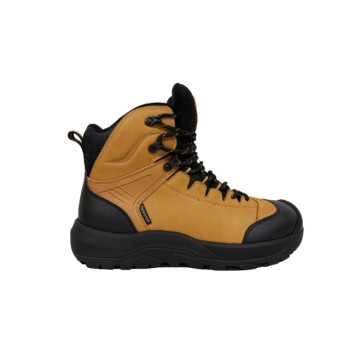
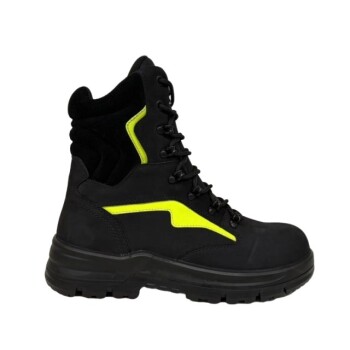
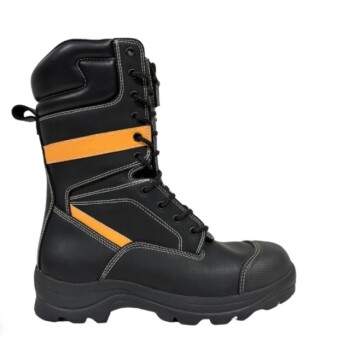
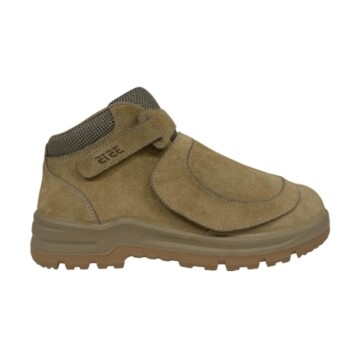
The primary function of insulating foot protection is to break the electrical path to the ground. By electrically isolating your body from the earth, these safety shoes prevent a complete circuit from forming should you accidentally touch a live component within a rectifier or power control panel. This isolation is the critical factor that prevents your body from acting as a conductor for current.
Insulating footwear acts as a "circuit breaker" for the human body, ensuring you do not become the path of least resistance for electricity seeking ground during maintenance on live equipment.
The Mechanics of Electrical Isolation
Interrupting the Circuit
Electricity naturally seeks the path of least resistance to the ground. If you are standing on the floor without protection and touch a live wire, your body completes that circuit.
Insulating safety shoes introduce a layer of extremely high electrical resistance between your feet and the floor. This effectively "cuts" the circuit, stopping the current from flowing through you.
Transitioning Risk Levels
The primary reference highlights that these shoes transition electrical hazards from high-risk to controlled states.
While the hazard (the live voltage) still exists, the likelihood of a fatal shock is drastically reduced because the return path for the current is blocked.
Critical Protection Scenarios
Accidental Contact
Maintenance on equipment like rectifiers or Main Distribution Panels (MDP) often involves working in tight spaces with exposed busbars.
If a technician accidentally brushes against a live component, insulating footwear ensures the contact does not result in a shock. It serves as a passive safety net when human error occurs.
Equipment Leakage
Sometimes, the danger does not come from direct contact with a wire, but from leakage current.
If equipment insulation fails, the casing of a machine can become energized. Insulating shoes protect the worker from this "invisible" hazard by maintaining isolation from the ground.
Understanding the Limitations
Not a Primary Control
While insulating shoes are vital, they should never be the primary method of safety.
They are Personal Protective Equipment (PPE), which is the last line of defense in the hierarchy of controls. They do not replace the need to de-energize and lock out equipment whenever possible.
Environmental Compromise
The insulating properties of safety footwear function only when dry and clean.
Water, oil, or conductive debris on the soles can bridge the insulation, re-establishing the circuit to the ground and rendering the protection useless.
Making the Right Choice for Your Goal
To maximize safety when working with power control panels and rectifiers, consider the following applications:
- If your primary focus is active maintenance: Verify that the insulation rating of the footwear exceeds the maximum voltage potential of the equipment you are servicing.
- If your primary focus is safety protocol design: Mandate insulating footwear as a redundancy measure, acknowledging that it protects against the residual risks that remain after lockout/tagout procedures.
True safety relies on the understanding that while your hands do the work, your feet provide the isolation that keeps you alive.
Summary Table:
| Feature | Primary Function & Benefit |
|---|---|
| Core Purpose | Breaks the electrical path to ground by isolating the body |
| Mechanism | Introduces high electrical resistance between feet and floor |
| Primary Risk Mitigation | Prevents complete circuit formation during accidental contact |
| Secondary Protection | Shields against leakage current from energized equipment casings |
| Critical Limitation | Protection is compromised by water, oil, or conductive debris |
Partner with 3515 for Professional-Grade Electrical Protection
As a premier large-scale manufacturer serving global distributors and brand owners, 3515 delivers high-performance footwear engineered for the most demanding environments. Our flagship Safety Shoes series includes specialized electrical insulation models designed to protect technicians during high-risk maintenance.
Beyond electrical safety, we offer comprehensive production capabilities for work and tactical boots, outdoor shoes, training sneakers, and formal dress footwear to meet your bulk procurement needs. Ensure your team or customers have the ultimate last line of defense.
Contact us today to discuss your bulk requirements and custom production needs.
References
- M. Jainul Amri Lubis, Andika Bayu Hasta Yanto. Analisis Resiko Kecelakaan Kerja Menggunakan Metode HIRARC Pada PT. Telkom Indonesia Jakarta Utara. DOI: 10.31294/imtechno.v5i1.2414
This article is also based on technical information from 3515 Knowledge Base .
Related Products
- Premium Insulated Safety Boots and Shoes for Wholesale & Bulk Orders
- Premium Wholesale Waterproof Safety Boots High Performance Protection for Industrial Markets
- Premium Waterproof Nubuck Safety Boots for Wholesale
- Premium Flame-Retardant Waterproof Safety Boots and Shoes
- Premium Suede Sport Safety Shoes for Wholesale & Bulk Orders
People Also Ask
- What are the recommended insulation ratings for mild winter conditions? A Guide for Active & Stationary Workers
- How does insulation thickness correlate with temperature ranges? A Guide to Choosing the Right Warmth
- What insulation level is needed for severe cold and stationary work? 1200g or Higher is Essential
- What safety advantages do insulated boots offer beyond warmth? Dielectric Protection & Superior Grip
- How does fleece lining contribute to the warmth of insulated boots? Trapping Air for Superior Cold Protection