
When choosing penetration-resistant insoles, modern textile options offer significant advantages over traditional steel in flexibility, weight, thermal comfort, and total foot coverage. While steel has its place, advanced fabrics provide a superior combination of safety and all-day wearability for many work environments.
The core decision between textile and steel insoles is a trade-off between comprehensive comfort and specialized threat protection. Textile offers better ergonomics and full coverage, while steel provides maximum resistance against extremely fine-point objects.
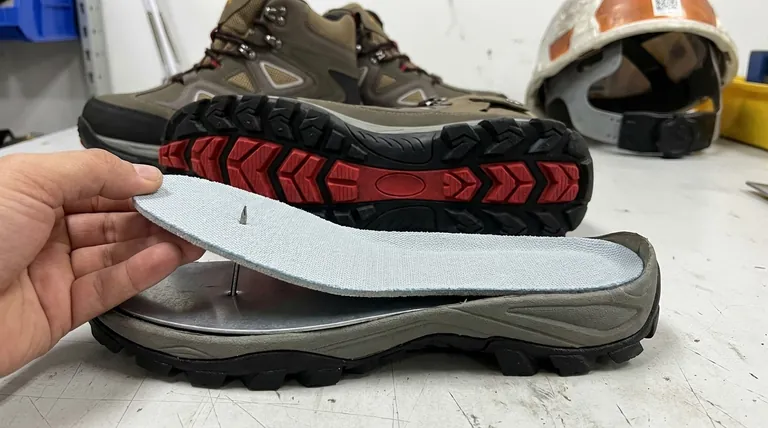
A Deeper Look at Material Advantages
Understanding how each material performs is key to selecting the right protection. The benefits of textile extend beyond simple compliance and have a direct impact on user comfort and safety.
Coverage: The Full-Foot Shield
Textile insoles are cut to the full shape of the shoe's last. This provides edge-to-edge protection, covering 100% of the sole area against perforation.
In contrast, some steel insoles are narrower than the shoe itself. This can leave small but significant gaps along the edges of the foot, creating potential points of failure if a sharp object strikes at an angle.
Flexibility: Moving With Your Foot
Safety footwear must often be worn for long shifts that involve walking, climbing, or crouching. Textile insoles are highly flexible, bending naturally with the foot's movement.
This flexibility dramatically improves comfort and reduces foot fatigue. Steel plates are rigid, which can make the shoe feel stiff and unnatural, hindering agility and contributing to discomfort over time.
Weight: Reducing All-Day Fatigue
Textile penetration-resistant materials are significantly lighter than their steel counterparts. While a small difference, the weight savings add up over thousands of steps taken each day.
Lighter footwear reduces the overall energy expenditure required from the wearer, contributing to less fatigue and greater comfort throughout the workday.
Thermal Insulation: The Comfort Barrier
Steel is an excellent thermal conductor. This creates a "cold bridge" in winter, transferring cold from the ground directly to the foot, and can similarly transfer heat in hot conditions.
Textile insoles have no metallic components, providing superior thermal insulation. This keeps feet warmer in the cold and cooler in the heat, creating a more stable and comfortable internal environment.
Understanding the Trade-offs: Steel's Role
While textile offers broad advantages, steel remains a viable option for specific, high-risk scenarios. Objectivity requires acknowledging where the traditional choice still holds merit.
Resistance to Fine-Point Threats
Steel plates offer exceptional resistance against very thin, sharp objects. This is why they are still commonly specified for environments like construction sites, where the risk from fine nails can be a primary concern.
Textile materials are tested and certified to the same safety standards (e.g., EN ISO 20345), but steel's inherent hardness provides a distinct advantage against the very finest of sharp points.
Making the Right Choice for Your Environment
Your specific work conditions should dictate your choice. Use your primary daily challenge as your guide.
- If your primary focus is all-day comfort, agility, and reduced fatigue: Choose textile insoles for their lightweight and flexible properties.
- If your primary focus is working in very hot or cold environments: Opt for textile insoles to prevent thermal transfer and maintain foot comfort.
- If your primary focus is maximum protection against fine nails on a construction site: Consider steel insoles for their exceptional resistance to these specific threats.
Ultimately, matching the material's properties to your specific daily risks ensures both safety and comfort.
Summary Table:
| Feature | Textile Insole | Steel Insole |
|---|---|---|
| Flexibility | High (Bends with foot) | Low (Rigid) |
| Weight | Lightweight | Heavy |
| Coverage | Full-foot, edge-to-edge | Potential gaps at edges |
| Thermal Comfort | Excellent insulator (No cold/heat transfer) | Conducts temperature (Cold bridge effect) |
| Best For | All-day comfort, varied environments | Maximum protection vs. fine-point threats (e.g., nails) |
Need to source the right safety footwear for your team?
As a large-scale manufacturer, 3515 produces a comprehensive range of footwear for distributors, brand owners, and bulk clients. Our production capabilities encompass all types of safety shoes and boots, including models with advanced textile penetration-resistant insoles that provide optimal protection without sacrificing comfort.
Contact our experts today to discuss your specific needs and discover how we can deliver high-quality, comfortable safety footwear for your market.
Visual Guide

Related Products
- Wholesale Waterproof Tactical Boots Custom Suede & High-Traction Soles
- Puncture-Resistant Velcro Safety Boots for Wholesale & Custom Manufacturing
- Wholesale Durable Safety Boots | Custom Steel Toe & Puncture-Resistant Manufacturing
- Wholesale Durable & Breathable Training Shoes for Custom Brands
- Durable Leather Moc Toe Work Boots for Wholesale & Custom Manufacturing
People Also Ask
- What waterproof technology is used in tactical boots? Unlock All-Weather Performance & Protection
- What are the advantages and disadvantages of waterproof tactical boots? A Guide to the Key Trade-Offs
- What is the significance of waterproof functionality in tactical boots? Essential for Health & Performance
- What is the role of professional 3D medical imaging software in optimizing tactical boot design and performance?
- What features enhance breathability and comfort in tactical boots? A Guide to Superior Footwear Performance



