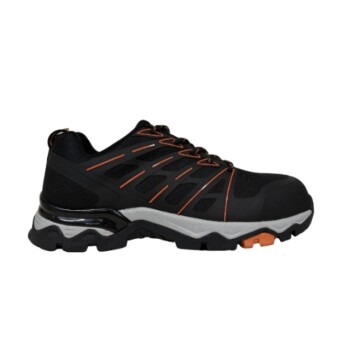
Professional safety shoes offer specific structural reinforcements tailored to compensate for physical rehabilitation needs. For stroke survivors returning to the workforce, the primary protective features are reinforced steel toes and puncture-resistant chassis designs. These elements are engineered not just to block external hazards, but to actively balance foot pressure and support the affected limb against residual motor dysfunction.
The critical value for a stroke survivor lies in the shoe's internal engineering. The combination of balanced pressure distribution and rigid structural support compensates for motor deficits, providing stability that goes beyond simple impact protection.
Structural Support for Motor Deficits
Reinforced Toe Protection
The defining feature for industrial reintegration is the reinforced toe cap, typically composed of steel or high-strength composite materials.
This feature is vital for stroke survivors who may experience "foot drop" or slower reaction times in the affected limb. It provides a hardened shield against crushing injuries from falling heavy objects, such as cargo containers or luggage in transport sectors.
Engineered Pressure Distribution
Professional safety footwear utilizes specific chassis engineering to manage how weight is transferred through the sole.
This design helps balance the distribution of pressure across the foot. For a survivor, this assists the affected limb in maintaining support, stabilizing the gait even when muscle control is not fully restored.
Protection Against Environmental Hazards
Puncture-Resistant Chassis
Industrial environments often contain sharp debris, such as nails or metal fragments, which pose a significant risk to individuals with reduced sensation (neuropathy) in their feet.
Safety shoes incorporate puncture-resistant layers within the sole assembly. This prevents sharp objects from penetrating the chassis, ensuring that the foot remains protected even if the wearer cannot feel the hazard immediately.
Critical Traction Control
Falls are a primary concern for those with compromised balance. Industrial-grade shoes feature specialized anti-slip outsoles designed for high-risk surfaces.
These outsoles provide essential grip on floors contaminated by hydraulic oil, aviation fuel, or water. This friction is essential for preventing falls in environments like airport aprons or casting stations where ground conditions are unpredictable.
Understanding the Trade-offs
While the protective benefits are clear, there are physical implications to consider regarding the weight and rigidity of these shoes.
The Weight Factor Steel-toed boots add significant weight to the foot. For a survivor with residual weakness in one leg, this additional mass can increase fatigue or alter gait mechanics over a long shift.
Sensory Feedback The thick, puncture-resistant soles that protect the foot also reduce ground feel (proprioception). Survivors relying heavily on sensory feedback from their feet to maintain balance may find this isolation challenging initially.
Making the Right Choice for Your Goal
Selecting the correct footwear depends on the specific demands of your post-stroke role.
- If your primary focus is heavy industry or logistics: Prioritize reinforced steel toes and pressure-balancing engineering to protect against crushing hazards and support the affected limb under heavy loads.
- If your primary focus is security or patrol: Prioritize composite toes and high-traction anti-slip soles to reduce weight fatigue while ensuring maximum stability on slick surfaces.
The right safety shoe acts as an external skeleton, bridging the gap between physical recovery and workplace demands.
Summary Table:
| Feature | Protection Benefit | Rehabilitation Support |
|---|---|---|
| Reinforced Toe Cap | Protects against crushing/impact | Compensates for foot drop & slow reactions |
| Balanced Chassis | Distributes weight evenly | Stabilizes gait & supports weakened limbs |
| Puncture-Resistant Sole | Blocks sharp objects/nails | Protects feet with reduced sensory feedback |
| Anti-Slip Outsole | Prevents falls on oil/water | Enhances balance & traction on slick surfaces |
| Composite Materials | Impact resistance | Reduces weight fatigue for survivors |
Partner with 3515 for High-Performance Safety Footwear
As a large-scale manufacturer serving global distributors and brand owners, 3515 offers comprehensive production capabilities for all footwear types, anchored by our flagship Safety Shoes series. Whether you are sourcing for industrial logistics, security patrols, or specialized medical reintegration needs, our extensive portfolio covers everything from steel-toe work boots to lightweight tactical and outdoor shoes.
Why choose 3515?
- Advanced Engineering: We specialize in pressure-balancing and puncture-resistant designs that bridge the gap between workplace demands and user safety.
- Diverse Portfolio: From formal dress shoes to rugged sneakers and training boots, we meet diverse bulk requirements with precision.
- Scalable Manufacturing: Tailored solutions for brand owners looking for durability and comfort at scale.
Ready to elevate your product line with industry-leading protection? Contact us today to discuss your bulk manufacturing needs!
References
- Li Khim Kwah, Shamala Thilarajah. What influences stroke survivors with physical disabilities to be physically active? A qualitative study informed by the Theoretical Domains Framework. DOI: 10.1371/journal.pone.0292442
This article is also based on technical information from 3515 Knowledge Base .
Related Products
- Premium Suede Sport Safety Shoes for Wholesale & Bulk Orders
- Premium Lightweight Safety Shoes for Wholesale & Bulk Orders
- Wholesale Anti-Smash & Puncture-Proof Safety Shoes Custom Manufacturing for Brands
- Premium KPU Injection Athletic Style Safety Shoes
- Premium Safety Shoes with Rotating Buckle Safety Sneakers
People Also Ask
- What are the primary functions of professional safety shoes? Maximize Safety in Water Supply Confined Spaces
- What industries have specific OSHA footwear requirements? Ensure Compliance & Protect Your Workforce
- What role do specialized safety shoes play in preventing falls? Engineering Stability in Industrial Environments
- Why are customized foot sensors or professional safety shoes incorporated into biomechanical testing? Precision Insights
- What are the main components of safety shoes? A Guide to Protective Footwear Design